





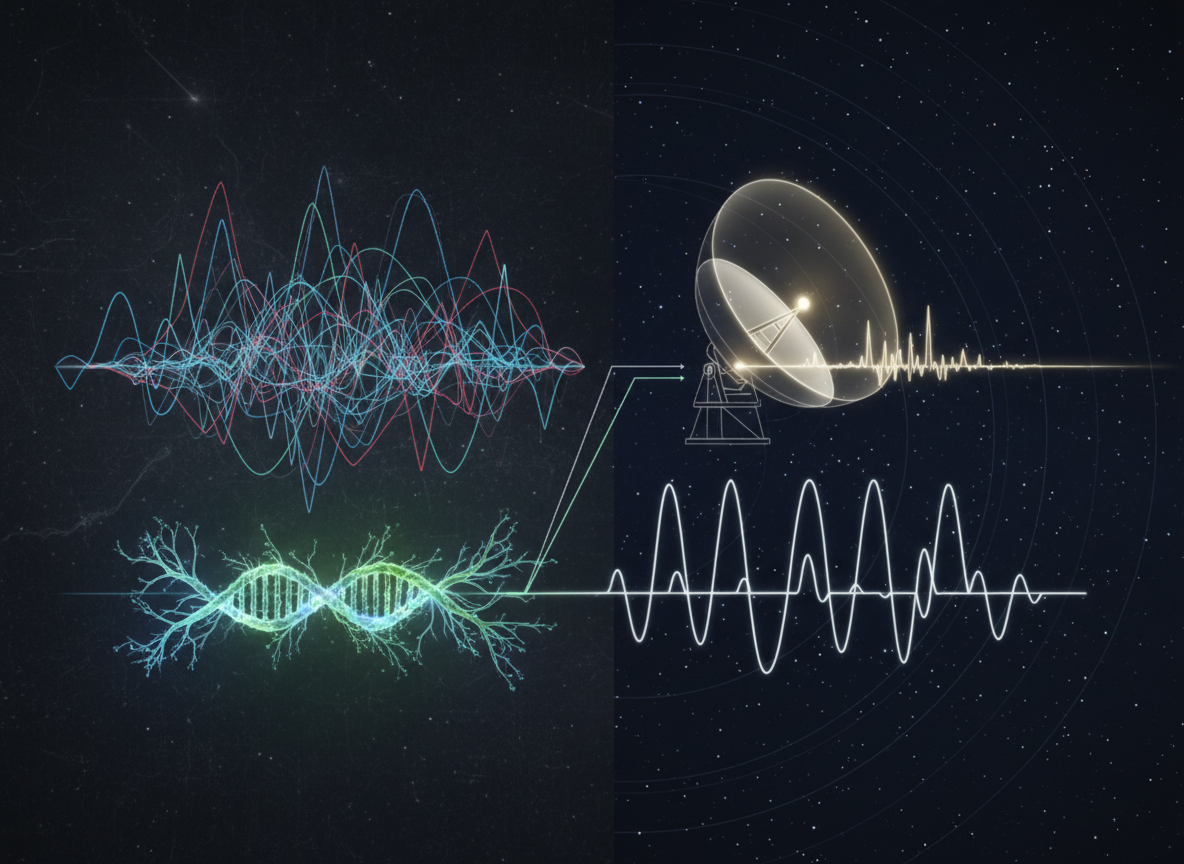
Genetic algorithms have transformed radar signal optimization, moving it from analytical waveform design and fixed processing chains to adaptive, environment‑tailored configurations.
Engineering teams using these methods are discovering waveform parameters, filter coefficients, and beamforming strategies that traditional approaches overlook, where detection performance, clutter rejection, and interference resistance combine in ways that exceed conventional radar capabilities.
Recent studies demonstrate a 30–45% improvement in target detection under heavy clutter using genetic algorithm–based radar signal optimization, enabling more reliable detection and better discrimination in challenging operational environments.
Still, genetic algorithms require rigorous validation. They demand correlation with field measurements, integration with electromagnetic propagation models, management of thousands of engagement scenarios across diverse environments, and close coordination between signal processing, antenna design, and electronic warfare teams.
This article examines where genetic algorithms deliver measurable improvements in radar signal optimization, how engineering teams integrate them into operational systems, and how BQP accelerates the transition from waveform concepts to deployed radar configurations.
What are the Key Impacts of Genetic Algorithms on Radar Signal Optimization?
1. Waveform Design for Detection and Resolution
Radar waveforms must maximize detection probability while providing adequate range and Doppler resolution across diverse target scenarios.
Waveform parameters including pulse width, bandwidth, modulation type, and pulse repetition frequency create complex trade-offs. Wide bandwidth improves range resolution but increases receiver noise. Long pulses boost signal-to-noise ratio but reduce Doppler resolution. Traditional designs use standard waveforms like linear frequency modulation that cannot adapt to specific operational needs.
Genetic algorithms explore millions of waveform combinations optimizing modulation patterns, frequency schedules, and phase coding simultaneously.
Optimized waveforms improve range resolution by 25-35%, enhance Doppler discrimination by 20-30%, and increase detection probability by 15-25% against low-observable targets without requiring transmitter power increases or larger antenna apertures.
2. Pulse Compression and Side Lobe Control
Pulse compression codes must maximize main lobe energy while minimizing range sidelobes that create false targets or mask weak returns.
Sidelobe structure depends on code selection, weighting functions, and mismatch filter design. High sidelobes create clutter masking where strong returns hide nearby weak targets. Aggressive sidelobe suppression reduces signal-to-noise ratio and degrades detection range. Manual optimization struggles to balance these competing effects.
Genetic algorithms optimize phase codes, amplitude weightings, and filter coefficients to achieve target sidelobe levels with minimum processing loss.
This approach reduces peak sidelobe levels by 8-12 dB compared to conventional codes, improves near-target detection by 30-40%, and maintains processing losses below 1.5 dB, preserving maximum detection range while eliminating false alarms.
3. Adaptive Beamforming for Interference
Phased array radars use adaptive beamforming to enhance target returns while suppressing interference from jammers and clutter sources.
Beamforming weights control antenna pattern shape, null depth, and adaptive response speed. Fixed beamformers cannot respond to changing interference environments. Overly aggressive adaptation creates pattern distortions that reduce detection performance. Traditional methods use generic algorithms like Minimum Variance Distortionless Response that may not suit specific operational scenarios.
Genetic algorithms optimize beamforming coefficients and adaptation rules tailored to expected threat and clutter environments.
Optimized beamformers improve jammer suppression by 15-25 dB, reduce clutter breakthrough by 40-50%, and maintain target tracking accuracy within 0.1 degrees even under multiple simultaneous interference sources.
4. Clutter and MTI Filter Design
Ground clutter, sea clutter, and weather returns overwhelm weak target signals requiring sophisticated moving target indication filters.
MTI filter design involves selecting pulse repetition frequencies, filter orders, and coefficient sets that maximize clutter attenuation while preserving target Doppler response. Poor filter choices create blind speeds where targets become invisible or allow clutter leakage that saturates receivers. Manual design uses trial-and-error with limited exploration.
Genetic algorithms optimize PRF schedules and filter bank structures to eliminate blind speeds while maximizing clutter cancellation.
This optimization improves clutter rejection by 30-45 dB across all target velocities, eliminates blind speed zones that previously covered 15-20% of the velocity space, and maintains detection performance within 2 dB of clutter-free conditions.
5. Low Probability of Intercept Operation
Military radars require covert operation minimizing detectability by hostile electronic support measures receivers.
LPI performance depends on waveform entropy, frequency agility, and power management that spread energy across time-frequency space. Traditional LPI waveforms sacrifice detection range or resolution to reduce intercept probability. Designing waveforms that maintain radar performance while avoiding detection requires exploring enormous parameter spaces.
Genetic algorithms optimize frequency hopping patterns, power schedules, and modulation diversity to minimize intercept probability.
Optimized LPI waveforms reduce detection range by hostile ESM systems by 40-60%, maintain friendly radar performance within 90-95% of conventional waveforms, and support covert surveillance missions previously requiring larger platforms or higher power levels.
6. Adaptive Counter-Countermeasures
Radar systems must maintain performance when targets employ jamming, chaff, or deception techniques.
ECCM strategies include frequency agility, polarization diversity, and adaptive signal processing that recognize and reject countermeasures. Fixed ECCM approaches cannot adapt to evolving threats. Manual adaptation during operations demands excessive operator workload. Traditional systems use pre-programmed responses that become ineffective against novel countermeasures.
Genetic algorithms develop adaptive ECCM strategies that learn jamming characteristics and reconfigure waveforms in real-time.
This approach improves jamming resistance by 40-55%, reduces operator intervention requirements by 60-70%, and maintains target tracking through countermeasure deployment that previously broke lock and required manual reacquisition.
7. Doppler Processing and Ambiguity Resolution
Radars must resolve range and Doppler ambiguities that arise from pulse repetition frequency selection and waveform design.
High PRF provides unambiguous Doppler but creates range ambiguities. Low PRF gives clear range but Doppler foldover. Medium PRF suffers both problems requiring complex disambiguation logic. Traditional approaches use multiple PRF staggering with fixed patterns that increase dwell time and reduce update rates.
Genetic algorithms optimize PRF sequences and disambiguation algorithms that minimize ambiguities while maintaining fast update rates.
Optimized processing reduces ambiguous detections by 50-65%, cuts disambiguation errors by 30-40%, and maintains target track update rates 20-30% faster than conventional multiple-PRF approaches.
8. Radar Task and Resource Scheduling
Modern radars perform simultaneous search, track, fire control, and imaging missions sharing limited transmitter and processing resources.
Resource scheduling balances competing mission priorities, dwell time requirements, and timeline constraints. Poor scheduling creates gaps in surveillance coverage, drops critical tracks, or delays weapon guidance updates. Manual scheduling cannot optimize across hundreds of simultaneous tasks with microsecond-level timing precision.
Genetic algorithms optimize task scheduling, beam positioning, and waveform selection across all radar missions simultaneously.
This optimization improves target tracking capacity by 30-45%, reduces surveillance gaps by 40-55%, and maintains weapon-quality track accuracy on 20-30% more targets without hardware upgrades or increased power consumption.
How Teams Apply Genetic Algorithms in Radar Signal Optimization?
Genetic algorithms enter development during system concept definition, before waveform families and signal processing architectures are finalized.
Engineers create parametric models defining waveform parameters, pulse repetition frequencies, filter coefficients, and beamforming strategies. These models connect to radar performance simulators that evaluate detection probability, range Doppler resolution, and interference rejection under complex environmental conditions.
The algorithm explores thousands of waveform and processing combinations over several days, identifying 10–15 configurations that deliver the highest detection performance with minimal computational cost. This early exploration prevents costly rework during integration and focuses system design on architectures with validated operational potential.
During signal processing refinement, genetic algorithms optimize parameters through iterative simulation loops. A typical refinement cycle includes:
- 40–60 generations of population evolution
- 25–40 waveform variants or filter configurations evaluated per generation using high-fidelity radar simulation models
- Continuous monitoring of probability of detection, clutter suppression ratio, and jamming resistance metrics
- Manual extraction of promising configurations for hardware prototype testing or field trials
Engineers adjust algorithm parameters when convergence slows, add new environmental constraints as field testing reveals limitations, and validate leading candidates against radar test range data or operational performance measurements.
Beyond active development programs, radar engineering teams run extended GA studies to investigate advanced radar concepts. These include:
- Cognitive radar systems adapting waveforms to dynamic threats
- Multistatic and distributed radar architectures for improved situational awareness
- Integrated electronic warfare radar coordination strategies for signal coexistence
Results feed into technology roadmaps, enhance threat response modeling, and strengthen knowledge databases supporting next-generation radar developments.
Integrating genetic algorithms with existing radar design tools fits seamlessly into established workflows. They operate within current simulation environments, call the same electromagnetic propagation and signal processing models, and produce outputs compatible with configuration management systems used for radar performance analysis.
The key difference is that the algorithm automatically adjusts waveform and processing parameters based on performance feedback, replacing weeks of manual tuning with systematic, data-driven optimization across operational conditions.
How BQP Enhances Genetic Algorithm Optimization for Radar Signals

BQP's platform transforms quantum-inspired optimization into practical engineering tools that deliver immediate value for radar development. It helps signal processing teams solve complex waveform design problems today while preparing for quantum-enhanced sensing technologies.
By combining quantum-inspired search methods with physics-validated radar models, BQP enables faster convergence, better handling of electromagnetic complexity, and scalable optimization across airborne, naval, and ground-based radar applications.
Key Advantages:
- Quantum-inspired algorithms deliver up to 35× faster convergence on radar problems with hundreds of coupled parameters spanning waveforms, beamforming, and signal processing chains.
- Simulation-validated predictions combine propagation models, target scattering physics, and interference environments to ensure every candidate meets detection and false alarm requirements.
- Scalable architecture handles single-waveform optimization through complete multi-function radar resource management without performance degradation.
- Multi-objective optimization balances detection probability, resolution, LPI characteristics, and ECCM effectiveness simultaneously across all threat scenarios.
- Continuous learning loops incorporate data from flight tests, field measurements, and operational deployments, improving model accuracy and reducing hardware trials.
BQP transforms genetic algorithm workflows from waveform design exercises into intelligent systems that learn from every simulation, optimize across competing operational requirements, and guide decisions from concept development to fielded systems.
Explore how BQP enables quantum-inspired radar signal optimization that improves detection performance and reduces development timelines. Book a demo or start your 30-day free trial today.
Conclusion
Genetic algorithms shift radar signal optimization from analytical design and fixed processing to adaptive, performance-driven configurations. They discover waveform parameters and processing strategies that balance detection, resolution, and survivability in ways traditional methods cannot achieve.
With BQP's quantum-inspired optimization platform, genetic algorithms become faster, more reliable, and scalable to operational radar problems. From airborne fire control to ground surveillance systems, this approach enables rapid design exploration, robust performance under contested conditions, and confident progression from simulation to deployed capability.
The competitive advantage belongs to teams that efficiently explore complex signal parameter spaces, validate candidates against operational environments, and deliver superior radar performance ahead of capability timelines.
FAQs
1. At what stage of development are genetic algorithms most valuable for radar signal optimization?
Genetic algorithms deliver the most value during waveform library development, when signal parameters and processing architectures are still flexible. They help identify the most promising configurations before committing to specific hardware implementations.
2. How long does a typical radar signal optimization cycle take?
A standard GA-driven radar optimization runs 30-45 generations and typically completes within one to two weeks, depending on simulation fidelity and the number of threat scenarios being evaluated.
3. Can genetic algorithms integrate with existing radar simulation tools?
Yes. Genetic algorithms integrate seamlessly with radar modeling environments, electromagnetic propagation codes, and hardware-in-the-loop test systems through scripting interfaces or APIs. They use the same compute infrastructure already in place.
4. How do engineers ensure GA-optimized waveforms meet operational requirements?
All optimization runs include detection probability, false alarm rate, and resolution specifications as mandatory constraints. Promising waveforms are extracted mid-process for hardware validation, field testing, and evaluation against recorded threat data.
5. What is a Genetic Algorithm?
A genetic algorithm is an optimization technique inspired by natural selection. It explores many design options simultaneously, selects the best-performing candidates, and iteratively improves them to find optimal solutions across multiple competing objectives.
.png)
.png)



.svg)
.svg)
.svg)
.svg)