





Modern aerospace missions rely on constant innovation in materials, propulsion, autonomy, and digital systems. Designs that worked decades ago no longer meet the demands of electric vertical takeoff, hypersonic flight, or sustainable aviation. Advancing technology is no longer optional; it determines whether a program stays competitive or falls behind.
Adopting new technologies directly impacts mission success, operational efficiency, and readiness. Programs that use advanced materials reduce weight and improve performance, while autonomy and digital systems increase flexibility and speed up development. Digital twins and simulation further help teams test and optimize designs while reducing risk.
Understanding these technologies helps engineers plan for next-generation missions and integration challenges. This guide explores key aerospace technology domains, real-world examples, adoption challenges, and how platforms like BQP help teams evaluate and integrate technologies effectively.
Major Technology Domains in Aerospace
Aerospace innovation spans several technology domains, each addressing performance, efficiency, or capability gaps. Modern programs usually combine advances across multiple areas to achieve optimal results.
Advanced Materials & Manufacturing
Modern aerospace relies on lightweight composites, additive manufacturing, and high-temperature alloys to build stronger, lighter, and more efficient designs. Carbon fiber composites can cut weight by up to 50% compared to aluminum while maintaining similar strength. Additive manufacturing allows complex shapes that traditional machining cannot achieve. High-temperature alloys withstand extreme heat that older materials cannot handle.
Examples in practice:
- GE Aviation produces 3D-printed fuel nozzles, reducing 20 parts into a single component and improving durability.
- SpaceX 3D-prints SuperDraco engine chambers from Inconel superalloy, cutting weight and speeding up production.
These materials extend lifespan, improve fuel efficiency, and reduce maintenance costs. Composites resist corrosion, lowering inspection needs, while ceramic matrix composites in hot engine areas allow higher operating temperatures. Lighter airframes also burn less fuel over their service life roughly a 10% weight reduction can save 7% in fuel across decades of operation.
Autonomy, AI & Unmanned Systems
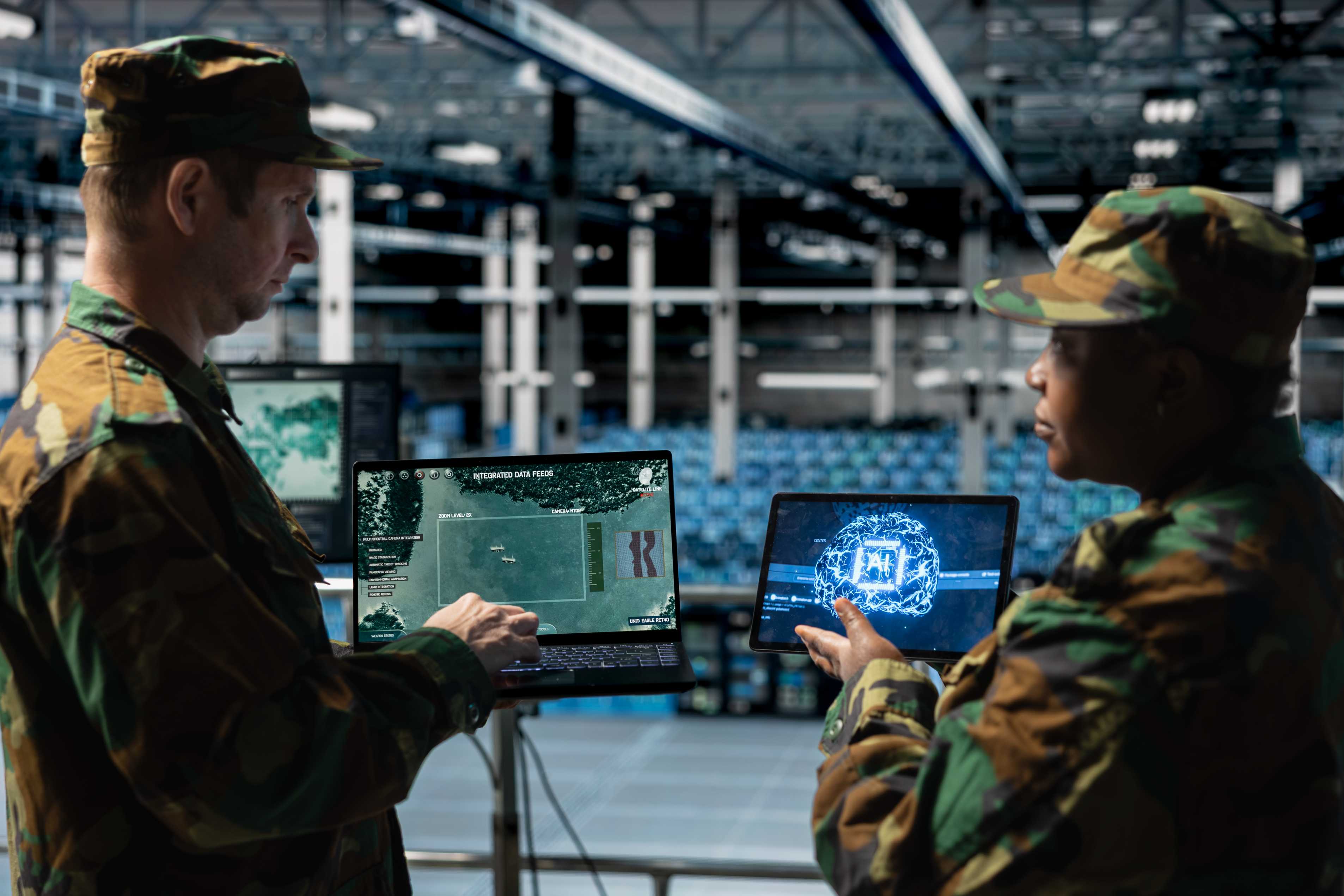
Autonomous aircraft, drones, and UAVs use AI, computer vision, and advanced sensors to operate with little or no human intervention. Computer vision identifies objects, avoids obstacles, and ensures safe landings. AI systems process sensor data, plan routes, and adapt to changing conditions.
These capabilities enable missions beyond the reach of traditional piloted aircraft, such as extended surveillance, hazardous inspections, or coordinated multi-vehicle operations.
Example:
- Self-flying inspection drones: Airbus uses autonomous drones to inspect aircraft exteriors, spotting damage, corrosion, or surface defects. Tasks that once took hours with ladders now finish in about 30 minutes, with better accuracy and documentation.
AI decision systems also improve situational awareness and adaptability. They process more sensor data than humans can handle radar, lidar, cameras, and infrared and combine it into clear operational pictures. Flight plans can adjust in real-time based on weather, traffic, or mission priorities.
As these systems advance, they will take on increasingly complex decision-making tasks that currently require human judgment.
Next-Generation Propulsion & Energy Systems
Hybrid-electric, hydrogen, and high-efficiency engines are transforming aircraft performance and emissions. Electric propulsion eliminates local emissions and cuts noise. Hydrogen combustion produces only water vapor, with zero CO2.
Advanced turbofans improve fuel efficiency by 15–20% compared to older engines. These innovations are key to meeting 2050 net-zero aviation goals.
Example:
- eVTOL aircraft for urban mobility: Joby Aviation and Lilium develop electric vertical takeoff and landing aircraft. Multiple electric motors provide redundancy and precise thrust control. Battery packs power short urban flights (25–100 km). Distributed propulsion and fly-by-wire controls allow unique configurations like tilting rotors and vectored thrust, with ultra-quiet operation.
Engineering challenges remain, especially thermal management and power density. Batteries and motors generate heat that must be managed at high altitudes. Current battery limits restrict most electric aircraft to under 200 km.
Hydrogen storage requires cryogenic or high-pressure tanks, adding weight and complexity. Overcoming these challenges will determine when electric and hydrogen propulsion can support longer missions.
Digital Twins, Simulation & Big Data Analytics
Digital twins create virtual replicas of aircraft systems, enabling testing, optimization, and predictive maintenance throughout their lifecycle.
These models are synchronized with the real aircraft using sensor data, allowing simulations of extreme failures, edge cases, and long-term degradation scenarios too risky or impossible to test physically. Updates to the physical system automatically update the digital twin, keeping both in sync.
Example:
- Full-lifecycle digital twin for engines: Rolls-Royce builds digital twins for every engine, tracking each component over thousands of flight hours. Sensor data feeds back to the virtual model, predicting maintenance needs before failures occur.
This allows condition-based maintenance by replacing parts based on actual wear instead of fixed schedules, cutting costs while improving reliability.
Big data analytics further enhances decision-making. Airlines analyze millions of flights to uncover patterns humans might miss, such as correlations between operating conditions and component wear, fuel consumption variations, or route efficiency.
These insights help optimize operations in ways impossible without processing massive datasets.
Avionics & Digital Systems
Modern avionics manage navigation, communication, and flight control with high reliability and intelligence. Glass cockpits replace mechanical instruments with integrated displays, while fly-by-wire systems remove direct mechanical linkages.
Satellite navigation enables precision approaches to any runway. Each generation adds capabilities and improves reliability through redundancy and self-monitoring.
Example:
- AI-enhanced flight management: Modern systems optimize routes in real-time based on winds, traffic, and weather. They suggest altitude changes for efficiency, reroute around turbulence, and coordinate with air traffic control.
- Some systems monitor component health, alerting crews to potential failures before they occur.
Emerging technologies such as blockchain ensure secure, traceable supply chains. They track component provenance, test results, and maintenance history, preventing counterfeit parts and supporting safety investigations. As aircraft connectivity grows, cybersecurity becomes critical to protect flight systems from hacking risks.
Space Systems & Satellite Innovation
Reusable rockets, small satellites, and constellation networks are transforming space operations from government-only to commercially accessible. Reusable boosters cut launch costs by 30–50%. Small satellites (100 kg or less) deliver valuable capabilities at a fraction of traditional costs.
Constellation networks spread functionality across many satellites, improving resilience and enabling rapid technology refresh.
Example:
- CubeSat constellations: Planet Labs operates over 200 CubeSats to image Earth daily at 3–5 meter resolution. Starlink deploys thousands of small satellites for global internet coverage. Individual failures do not compromise the system, and new satellites can replace older ones quickly.
- Reusable launch vehicles: First stages represent 60–70% of launch costs. Recovering and reflying them enables missions previously too expensive, like frequent Earth observation or global connectivity networks.
This combination of reusability, small satellites, and constellation deployment is lowering costs, expanding access to orbit, and enabling new commercial and scientific applications.
Technology Adoption Challenges in Aerospace
Despite clear benefits, adopting new aerospace technologies faces substantial obstacles that slow deployment and increase risk.
- Legacy system integration slows deployment: New technologies must interface with older aircraft, avionics, and ground systems, limiting adoption speed.
- Certification and regulatory lag: Autonomous systems, AI, and software-heavy avionics often don’t fit existing frameworks, creating compliance uncertainty.
- Supply chain and scalability constraints: Composites, additive manufacturing, and high-temp alloys are expensive, labor-intensive, or slow to produce at scale.
- Cybersecurity and data protection risks: Connected systems increase vulnerability; flight-critical systems require robust security against evolving threats.
- Energy storage and thermal management limits: Battery density improvements are slow; hydrogen storage is heavy and complex; high-power electric systems need advanced cooling solutions.
How BQP Accelerates Aerospace Technology Integration
Traditional aerospace development evaluates technologies sequentially test materials, then propulsion, then integrate and hope it works. This approach misses interactions between technologies and prolongs development. BQP's quantum-inspired optimization platform helps engineers evaluate, integrate, and optimize emerging technologies simultaneously.
Key capabilities:
- Multi-domain optimization: Evaluate materials, propulsion, and autonomy trade-offs together, capturing system-wide interactions for better overall performance.
- Simulation-driven validation: Test technologies virtually with digital twins to catch integration issues early, reducing cost and risk.
- Hybrid optimization: Combine classical and quantum-inspired solvers for faster convergence and exploration of complex technology combinations.
- Scenario analysis: Compare multiple adoption pathways under uncertainty, minimizing risk and informing technology roadmaps.
- System-level performance mapping: Assess how new technologies impact mission outcomes, ensuring investments deliver real operational value.
Ready to accelerate technology adoption?
Connect with BQP to integrate aerospace innovations efficiently, reduce development risk, and achieve superior performance.
Conclusion
Aerospace innovation now depends on integrating advanced materials, autonomy, propulsion, and digital systems together rather than sequentially. Programs that adopt and optimize these technologies simultaneously gain performance, efficiency, and operational advantages that incremental approaches cannot achieve.
With BQP, engineers can evaluate technology trade-offs quickly, validate designs virtually, and reduce development risk. This enables smarter, more resilient mission planning, faster adoption of new technologies, and solutions that meet both current and future aerospace requirements.
FAQs
What counts as an emerging aerospace technology?
Technologies improving performance, efficiency, autonomy, or mission capability are often operational but not yet mainstream.
How do digital twins support aerospace design?
They enable virtual testing across the lifecycle, revealing issues early and supporting certification before physical builds.
Why is propulsion innovation so important?
It affects range, speed, payload, efficiency, emissions, and overall mission capability.
Can advanced materials reduce cost as well as weight?
Yes, lighter, corrosion-resistant designs lower fuel use, maintenance, and assembly costs over the aircraft lifecycle.
How does BQP help integrate these technologies?
BQP optimizes materials, propulsion, and control systems together, validates virtually, and reduces development risk.
.png)
.png)


.svg)
.svg)
.svg)
.svg)