



Quantum computing is a fundamentally different approach to processing information, one that uses the principles of quantum mechanics to solve categories of problems that classical computers handle inefficiently or cannot solve at scale. For engineering leaders in aerospace, defense, semiconductors, and advanced manufacturing, understanding quantum computing basics is no longer optional context. It is the foundation for evaluating which computational investments will compound over the next decade.
This guide covers what quantum computing is, how it works from first principles, where it is being applied today, what the current hardware limitations are, and how quantum optimization and quantum-inspired approaches deliver measurable value on existing infrastructure without waiting for fault-tolerant quantum hardware to mature.
What Is Quantum Computing?
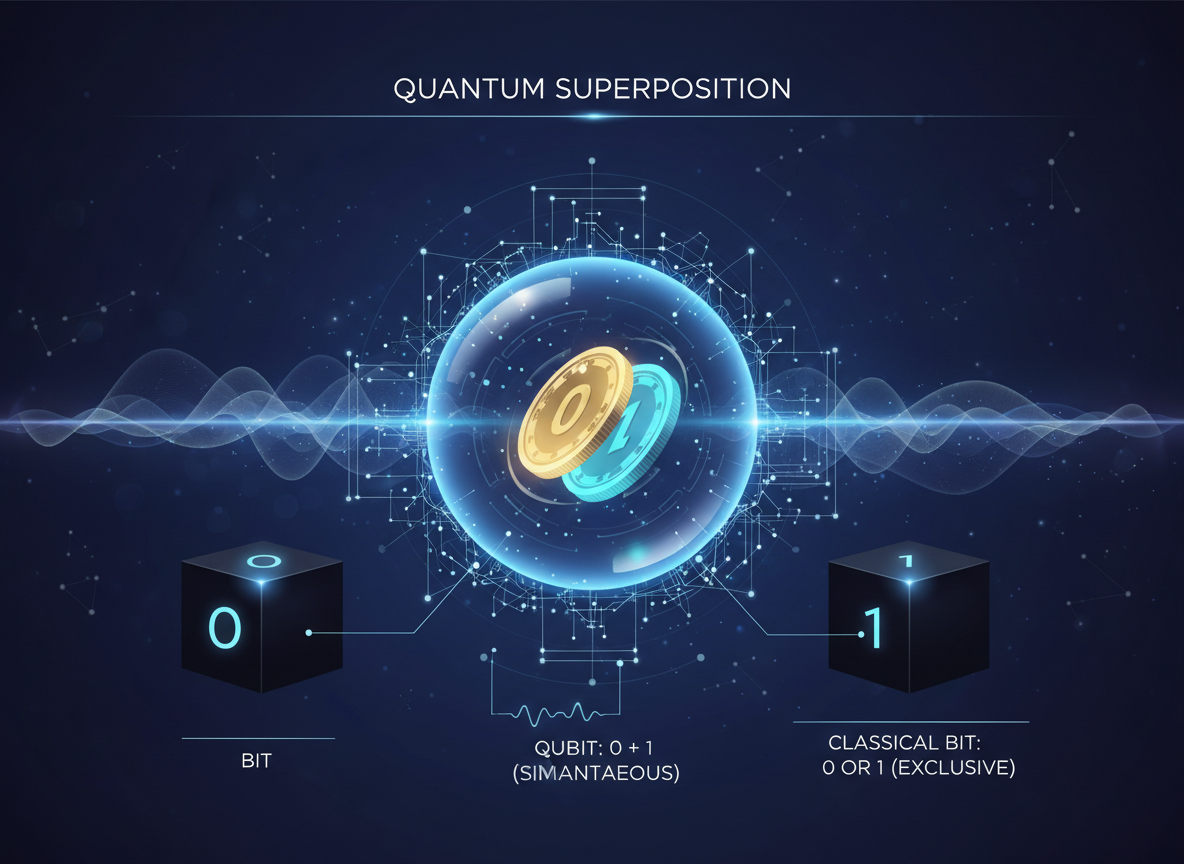
Quantum computing is a method of processing information that uses quantum mechanical phenomena including superposition, entanglement, and interference to perform calculations that classical computers cannot execute efficiently. Where classical computers process information as binary bits that are strictly 0 or 1, quantum computers use quantum bits or qubits that can exist in multiple states simultaneously, allowing quantum algorithms to explore vast solution spaces in ways that have no classical equivalent.
The distinction matters practically. A classical computer with 10 bits can represent one number between 0 and 1,023 at a time. A quantum computer with 10 qubits can represent all 1,024 values simultaneously. For 50 qubits, that number exceeds one quadrillion simultaneous states. This exponential scaling does not make quantum computers universally faster, but for specific problem structures, it creates a computational advantage that compounds dramatically as problem size grows.
Quantum computing is not a replacement for classical infrastructure. It is a specialized tool for a specific category of hard problems where classical methods hit performance walls. Understanding which problems fall into that category is the practical starting point for any engineering organization evaluating quantum investment.
History of Quantum Computing
The theoretical foundation of quantum computing dates to 1981, when physicist Richard Feynman argued that classical computers are fundamentally inefficient at simulating quantum systems, and proposed that a computer built on quantum mechanical principles could do it naturally. The field gained its first major practical milestone in 1994, when mathematician Peter Shor published an algorithm showing that a quantum computer could factor large numbers exponentially faster than any classical method — instantly making quantum computing a national security concern.
Through the 1990s and 2000s, quantum computing remained largely theoretical. The 2010s brought the first small-scale hardware platforms. By the early 2020s, IBM, Google, IonQ, and others crossed the threshold into NISQ-era devices with hundreds of physical qubits. In 2023, IBM demonstrated the first instance of quantum utility — a quantum computation that provided reliable results beyond the reach of brute-force classical simulation. Google's Willow processor in 2024 demonstrated that logical error rates can decrease as the system scales, a key prerequisite for fault-tolerant quantum computing.
The field is now transitioning from a physics research discipline into an engineering one. Fault-tolerant quantum computing at commercial scale remains years away. Quantum-inspired methods running on classical HPC and GPU infrastructure are the practical near-term path.
Classical Computing vs Quantum Computing
Before going deeper into principles, this comparison sets the baseline for understanding where quantum methods add value and where classical systems remain the right choice.
The 4 Principles That Power Quantum Computing
Qubits: The Basic Unit of Quantum Information
A qubit is the quantum equivalent of a classical bit. Unlike a classical bit that is strictly 0 or 1, a qubit can exist in a superposition of both states simultaneously until it is measured. Physical qubits are implemented through electron spins, photon polarizations, superconducting circuits, or trapped ions. The specific implementation affects qubit stability, connectivity, and error rates which is why different quantum computing companies pursue different hardware architectures.
Superposition: Exploring Multiple Solutions Simultaneously
Superposition allows a qubit to hold both 0 and 1 at the same time with associated probabilities. When multiple qubits are in superposition together, they collectively represent all possible combinations of their states simultaneously. This enables quantum algorithms to explore large solution spaces in parallel rather than checking each candidate one at a time. For certain search and optimization problems, this reduces computation from years to hours.
Entanglement: Coordinating Qubits Across the System
Entangled qubits are correlated so that measuring the state of one instantly determines the state of the others, regardless of physical distance. This allows quantum algorithms to coordinate operations across multiple qubits simultaneously, processing relationships between variables that classical systems must handle sequentially. Adding one entangled qubit doubles the system's representational capacity rather than incrementing it linearly — the source of quantum computing's exponential scaling potential.
Interference: Steering Toward Correct Answers
Quantum algorithms use wave-like interference to shape which outcomes are likely when the system is measured. Correct answers are reinforced through constructive interference while incorrect answers cancel through destructive interference. This is what separates a useful quantum algorithm from random probabilistic guessing. Algorithm design in quantum computing is largely the discipline of engineering interference patterns so that measurement reliably returns the right answer.
Why Quantum Computers Are Hard to Build: Decoherence and Error Rates
What Is Decoherence?
Qubits are extremely sensitive to environmental disturbances. Heat, vibration, and electromagnetic noise cause decoherence collapsing quantum states into classical ones before computation completes. Decoherence limits how long a quantum calculation can run and how many sequential operations are possible before errors accumulate. Today's best systems maintain coherence for microseconds to milliseconds, which is why complex algorithms must be executed extremely fast or broken into hybrid classical-quantum loops.
The Error Rate Problem
Quantum gate operations and measurements are imperfect. Current error rates of 0.1% to 1% per gate compound across thousands of operations, making complex algorithms unreliable without active error correction. Error correction itself requires multiple physical qubits to encode a single logical qubit multiplying hardware requirements significantly. This is the primary reason fault-tolerant quantum computing at commercial scale is still years away.
What This Means for Engineering Teams Today
Decoherence and error rates are not reasons to wait. They define the boundary between problems best solved on today's NISQ hardware and problems better addressed with quantum-inspired software on existing GPU and HPC infrastructure which operates without these constraints.
How Quantum Computing Works
The Computation Process
Quantum computation follows a structured sequence regardless of the specific algorithm or hardware platform.
Problem encoding
The real-world problem is translated into quantum states. Classical data is mapped into qubits through encoding schemes. Some problem structures map naturally to quantum representations. Others require significant reformulation.
Quantum gate operations
Quantum gates are applied to qubits, performing rotations and creating entanglement. Each gate shapes how computational paths interfere, amplifying correct answers and suppressing wrong ones.
Measurement
Measuring qubits collapses the quantum state into classical bits. Because quantum computation is probabilistic, circuits are typically run many times and results are analyzed statistically to identify the most reliable answer.
Classical post-processing
Results are further processed using classical computing to check constraints, analyze statistics, or feed outputs back into hybrid optimization loops.
Gate-Based Quantum Computing vs Quantum Annealing
Gate-based quantum computing uses sequences of quantum gates applied to qubits, analogous to classical logic gates. This approach is general-purpose and flexible, applicable to optimization, simulation, machine learning, and cryptographic problems. IBM Quantum, Google Quantum AI, and IonQ all use gate-based architectures.
Quantum annealing is specialized for optimization problems. The system initializes in a high-energy superposition of all possible solutions and gradually cools toward its lowest-energy state, which corresponds to the optimal solution. Quantum tunneling helps the system escape local minima that trap classical simulated annealing. D-Wave is the primary commercial provider of quantum annealing hardware.
Hybrid Quantum-Classical Algorithms
Most practical quantum computation in 2026 is hybrid. Classical systems handle preprocessing, constraint checking, and post-processing. Quantum processors handle the specific computational bottlenecks where quantum properties provide advantage. Variational algorithms like QAOA and VQE, detailed in our quantum optimization algorithms guide, are the most widely used hybrid approaches, designed to run on today's noisy quantum hardware by splitting the optimization loop between quantum and classical processors.
Quantum Computing Architecture and Infrastructure
Core Hardware Components
Quantum Processing Unit (QPU)
The core of the system containing qubits and the electronics that initialize, control, and measure them. Different qubit technologies including superconducting circuits, trapped ions, and photonic systems have different trade-offs in qubit count, coherence time, and gate fidelity.
Classical Controller
A standard computer that manages the QPU. It sequences quantum gate operations, times measurements, and processes results. Quantum computers are inherently hybrid systems that cannot operate without classical control infrastructure.
Cryogenic Systems
Superconducting quantum processors operate at temperatures near absolute zero, requiring dilution refrigerators. This is one of the primary barriers to widespread deployment.
Control Electronics
Specialized electronics generate precise microwave or laser pulses that manipulate qubit states. High precision and noise isolation are critical because qubit states are extremely fragile.
Cloud Access and Deployment
Most organizations access quantum hardware through cloud platforms rather than operating it on-premise. IBM Quantum, AWS Braket, Google Quantum AI, and Microsoft Azure Quantum all offer managed access to real quantum processors and simulators. This lowers the barrier to experimentation without requiring capital investment in quantum hardware. For a broader view of who is building and operating quantum systems today, see the landscape of quantum computing companies currently active across hardware, software, and cloud access.
Programming Frameworks
Quantum algorithms are written as sequences of quantum gate operations. High-level frameworks including Qiskit (IBM), Cirq (Google), and PennyLane simplify programming by abstracting the physical gate layer. Engineers can build and test quantum circuits without deep quantum physics knowledge. For a broader view of how quantum computing technology is evolving across hardware and software stacks, see BQP's technology overview
How Is Quantum Computing Performance Measured?
Unlike classical computing — where performance is primarily measured by clock speed and core count — quantum computing requires a different set of benchmarks. Qubits are noisy, operations are probabilistic, and raw qubit count is a poor proxy for useful computational power.
Qubit Count
The most visible metric but the least informative on its own. More qubits allow for larger problem representations, but a system with 1,000 noisy qubits may be less capable than one with 100 well-controlled qubits. Qubit count matters only in the context of error rates and connectivity.
Quantum Volume
A holistic benchmark introduced by IBM that accounts for qubit count, error rates, qubit connectivity, and circuit complexity together. Quantum volume reflects real-world performance better than qubit count alone. A system with higher quantum volume can reliably run more complex circuits. It is expressed as a power of 2 a quantum volume of 64 means the system can reliably execute circuits of a certain depth and width.
Error Rates and Gate Fidelity
Quantum gate operations are imperfect. Gate fidelity measures how accurately a gate performs its intended operation. Single-qubit gate fidelities above 99.9% are considered high-quality. Two-qubit gates, which are more complex, typically have lower fidelities. Error rates compound across circuits a circuit of 1,000 gates with 0.1% error per gate has a significant probability of producing an incorrect result.
Coherence Time
How long a qubit maintains its quantum state before decoherence destroys it. Longer coherence times allow more gate operations before errors accumulate. Superconducting qubits typically have coherence times in the range of tens to hundreds of microseconds. Trapped ion qubits can maintain coherence for seconds. Coherence time, combined with gate speed, determines the maximum circuit depth a system can execute reliably.
Circuit Depth and CLOPS
Circuit depth is the number of sequential gate layers a computation requires. Greater depth means more complex computations but also more exposure to noise and decoherence. CLOPS (Circuit Layer Operations Per Second), introduced by IBM, measures how quickly a quantum system can execute full circuits end-to-end, incorporating both quantum gate speed and classical control overhead. It is a more practical measure of real-world throughput than gate speed alone.
Where Quantum Computing Stands in 2026
The NISQ Era
Today's quantum computers are classified as Noisy Intermediate-Scale Quantum (NISQ) devices. They operate with hundreds to low thousands of physical qubits, but effective qubit counts are lower due to noise and connectivity constraints. Error rates remain high enough that most algorithms require error mitigation strategies. Fault-tolerant quantum computing, which requires millions of stable logical qubits, is still years away from commercial viability.
What Is Commercially Available Today
Cloud QPU access through IBM, Google, AWS, and Microsoft allows organizations to prototype and run early pilots on real quantum hardware. Quantum-inspired software platforms running on classical HPC and GPU infrastructure deliver production-grade performance gains for optimization and simulation workloads today. The practical reality for most engineering organizations is that quantum-inspired computing on existing infrastructure is the near-term value path, with direct quantum hardware access reserved for research and early capability development.
2026 Hardware Milestones
Google's Willow processor demonstrated that logical error rates can decrease exponentially as the system scales, a key prerequisite for fault-tolerant quantum computing. Microsoft demonstrated a 50-logical-qubit error-corrected system built around logical rather than physical qubits. Neutral atom arrays exceeded 6,000 physical qubits in research settings. These milestones confirm that quantum computing is transitioning from a physics research challenge to an engineering discipline, but production-scale fault-tolerant systems are not yet commercially available.
Applications of Quantum Computing
Engineering Simulation and Materials Science
Quantum computers can directly model molecular and atomic systems because they operate on the same quantum mechanical principles as the systems being simulated. This makes them naturally suited for materials discovery, battery chemistry research, drug candidate screening, and semiconductor process modeling. Classical simulation approximates these systems at increasing computational cost. Quantum simulation models them exactly. For engineering teams running materials characterization or component design workflows, this represents a fundamental shift in what is computationally achievable.
Optimization in Aerospace, Defense, and Logistics
Quantum optimization problems including fleet routing, mission planning, satellite constellation scheduling, and resource allocation grow exponentially in complexity with problem size. Classical solvers find good solutions but leave performance on the table as problems scale. Quantum algorithms like QAOA explore larger solution spaces simultaneously, identifying better configurations within the same compute budget. For a detailed breakdown of quantum computing optimization problems and where quantum methods deliver the clearest advantage, see BQP's optimization analysis. Organizations running large-scale routing and scheduling workflows should also review quantum computing optimization problem structures to assess where their specific workloads fall on the quantum advantage spectrum.
Quantum Machine Learning and Data Analysis
Quantum algorithms can accelerate specific machine learning tasks including feature mapping, classification, and optimization of model parameters. For engineering applications involving sensor fusion, predictive maintenance, anomaly detection, and pattern recognition in large datasets, quantum-enhanced ML approaches reduce training time and improve model accuracy on imbalanced or sparse datasets. For a detailed look at how quantum computing is being applied to data analysis workflows across engineering and defense sectors, see BQP's analysis.
Cryptography and Secure Communications
Quantum computers running Shor's algorithm at scale would break RSA and elliptic-curve encryption, which underpin most internet security today. This threat, known as Q-Day, has driven NIST to finalize post-quantum cryptographic standards in 2024. Organizations with data that must remain confidential for a decade or more need to begin post-quantum migration planning now. On the defensive side, quantum key distribution uses quantum mechanical principles to create physically secure communication channels where eavesdropping is detectable.
Defense and Mission-Critical Decision Support
Quantum and quantum-inspired methods are already being applied in quantum technology in defense contexts for mission planning, trajectory optimization, threat prioritization, and multi-objective resource allocation. Problems that require evaluating large numbers of simultaneous constraints under time pressure are precisely the problem class where quantum approaches offer the most significant advantage over classical solvers.
Current Challenges Limiting Quantum Computing Deployment
Insufficient Qubit Counts
Most commercially useful quantum algorithms require millions of stable error-corrected qubits. Today's best systems operate in the hundreds to low thousands of physical qubits. Scaling qubit counts while maintaining coherence and low error rates remains the central hardware engineering challenge.
Decoherence and Error Rates
As covered earlier, short coherence times and high gate error rates fundamentally limit circuit depth and algorithm complexity on current hardware. These two constraints are the primary reason NISQ devices cannot yet run the algorithms that would deliver commercial quantum advantage at scale.
Specialized Infrastructure and Expertise
Superconducting quantum systems require cooling to near absolute zero. Trapped-ion systems require high-vacuum environments with precise laser control. Both demand deep physics and engineering expertise that limits deployment to organizations with significant specialized resources.
Classical Integration Complexity
Integrating quantum computation into existing engineering workflows requires problem reformulation, data encoding schemes, results interpretation, and classical-quantum orchestration. For most engineering teams, this integration complexity is a practical barrier that quantum-inspired software on classical infrastructure avoids entirely.
How BQP Makes Quantum Computing Practical for Engineering Teams Today
Engineering organizations do not need to wait for fault-tolerant quantum hardware to capture quantum-level performance gains. BQP's BQPhy® platform delivers quantum-inspired optimization and simulation on existing HPC and GPU infrastructure, making the mathematical advantages of quantum computation available without hardware dependencies, infrastructure overhaul, or quantum physics expertise.
Quantum-Inspired Optimization on Classical Infrastructure
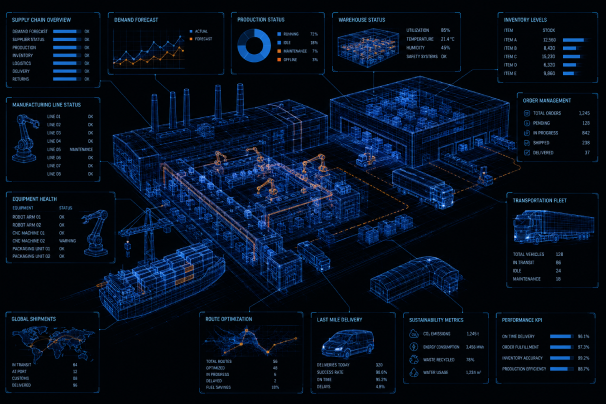
Quantum optimization software like BQP's QIO solvers run on standard GPU and HPC clusters, applying quantum-inspired algorithms to engineering optimization problems that exceed classical solver limits. For complex design and scheduling problems, BQPhy® delivers up to 20x faster solutions than conventional optimization methods. This is production-ready today, not a research roadmap item.
Physics-Informed Simulation
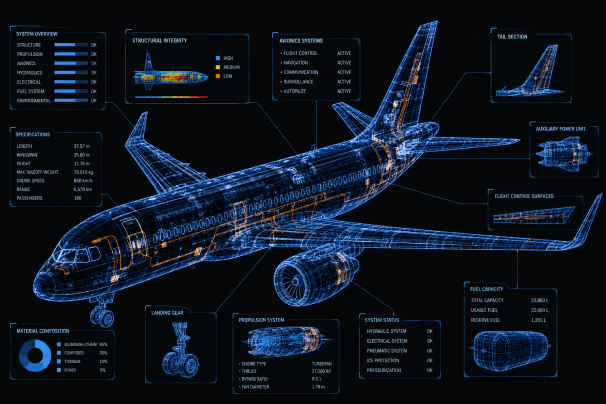
BQPhy® combines quantum-inspired algorithms with Physics-Informed Neural Networks (PINNs) and Quantum-Assisted PINNs (QA-PINNs) to run multi-physics simulations with higher accuracy and lower computational cost than classical simulation workflows. Engineering teams in aerospace, defense, and advanced manufacturing use these capabilities for structural analysis, thermal modeling, fluid dynamics, and digital twin development.
Hybrid Quantum-Classical Workflows
BQP supports hybrid quantum-classical workflows where quantum-inspired methods handle the hardest optimization and simulation bottlenecks while classical computation manages preprocessing, constraint checking, and output validation. This architecture mirrors the hybrid quantum-classical model that dominates practical quantum computing in 2026, positioning engineering teams to integrate real QPU backends as hardware matures without rebuilding their workflows.
Digital Twin Testing Environments
Before deployment, quantum-inspired algorithms are validated in digital twin environments that replicate actual operational conditions. This ensures solutions perform under real mission constraints rather than idealized simulation assumptions, directly reducing deployment risk for defense and aerospace programs.
Quantum Readiness Roadmaps
BQP works with engineering organizations to identify which workloads benefit most from quantum-inspired and quantum methods, develop adoption roadmaps, and build hybrid systems that are ready to integrate real quantum processors as hardware reaches commercial scale. Organizations that build this capability now will be years ahead of those waiting for quantum hardware to arrive before starting.
Conclusion
Quantum computing basics, qubits, superposition, entanglement, and interference — are the foundation for understanding both what quantum computers can do and where they currently fall short. The field is in the NISQ era. Fault-tolerant quantum computing at commercial scale is still years away.
But the mathematical principles behind quantum computation are delivering real engineering value today through quantum-inspired software running on existing HPC and GPU infrastructure. For engineering teams in aerospace, defense, semiconductors, and advanced manufacturing, the practical question is not whether to wait for quantum computers. It is how to apply quantum-inspired approaches to the optimization and simulation challenges that classical methods cannot solve efficiently today, while building the organizational capability to integrate quantum hardware as it matures.
The teams that start building that capability now will be years ahead of those waiting for the hardware to arrive.
Frequently Asked Questions
What is a qubit and how is it different from a classical bit?
A qubit is the basic unit of quantum information. Unlike a classical bit that must be either 0 or 1, a qubit can exist in a superposition of both states simultaneously until it is measured. Physical qubits are implemented through electron spins, photon polarizations, superconducting circuits, or trapped ions. When measured, a qubit collapses to a definite 0 or 1, with probabilities determined by how the qubit was manipulated during computation.
What is the difference between classical computing and quantum computing?
Classical computing processes bits using logic gates in deterministic sequential or parallel operations. Quantum computing uses qubits that exist in superposition and can be entangled, allowing algorithms to explore exponentially large solution spaces simultaneously. The key difference is not raw speed per operation. It is the structure of the computation itself. Quantum advantage appears only for specific problem classes including molecular simulation, large-scale optimization, and cryptographic factoring, not for general-purpose computing tasks.
How does superposition help quantum computing solve hard problems?
Superposition allows multiple qubits to collectively represent all possible combinations of their states at once, rather than one state at a time as classical bits do. Quantum algorithms exploit this to explore many candidate solutions in parallel. Combined with interference, which amplifies correct answers and suppresses incorrect ones, this parallel exploration allows certain problems to be solved exponentially faster than classical sequential search methods.
Can quantum computers replace classical computers?
No. Quantum computers are specialized tools that complement classical systems rather than replacing them. They deliver advantage only for specific problem structures including combinatorial optimization, quantum system simulation, and certain cryptographic operations. Classical computers remain faster, cheaper, and more practical for the vast majority of everyday computing tasks including data storage, software execution, and general-purpose business operations.
What can engineering teams do with quantum computing today without quantum hardware?
Quantum-inspired optimization and simulation platforms deliver measurable performance gains on existing HPC and GPU infrastructure right now. BQP's BQPhy® platform applies quantum-inspired algorithms to engineering design optimization, multi-physics simulation, digital twin development, and mission planning problems, delivering up to 20x faster solutions than classical methods for complex workloads without any quantum hardware, specialized infrastructure, or quantum physics expertise required.
.png)
.png)

.svg)
.svg)
.svg)
.svg)