



Digital twin technology creates virtual versions of real-world assets, systems, or processes to help simulate, monitor, and improve their performance.
These are not just static 3D models. They are dynamic digital versions that update in real time, predict future conditions, and support better decisions than physical testing alone.
About 75% of businesses now use digital twins in some form, and over 90% of them report positive returns, with more than half seeing at least a 20% ROI.
Across industries, digital twins help teams validate designs, plan maintenance, and optimize performance.
This blog explores their key applications, implementation challenges, and how BQP’s quantum-inspired optimization makes them faster, more scalable, and more insightful for next-generation engineering and smart operations.
What are the applications of Digital Twin across industries?
1. Manufacturing & Industrial Operations
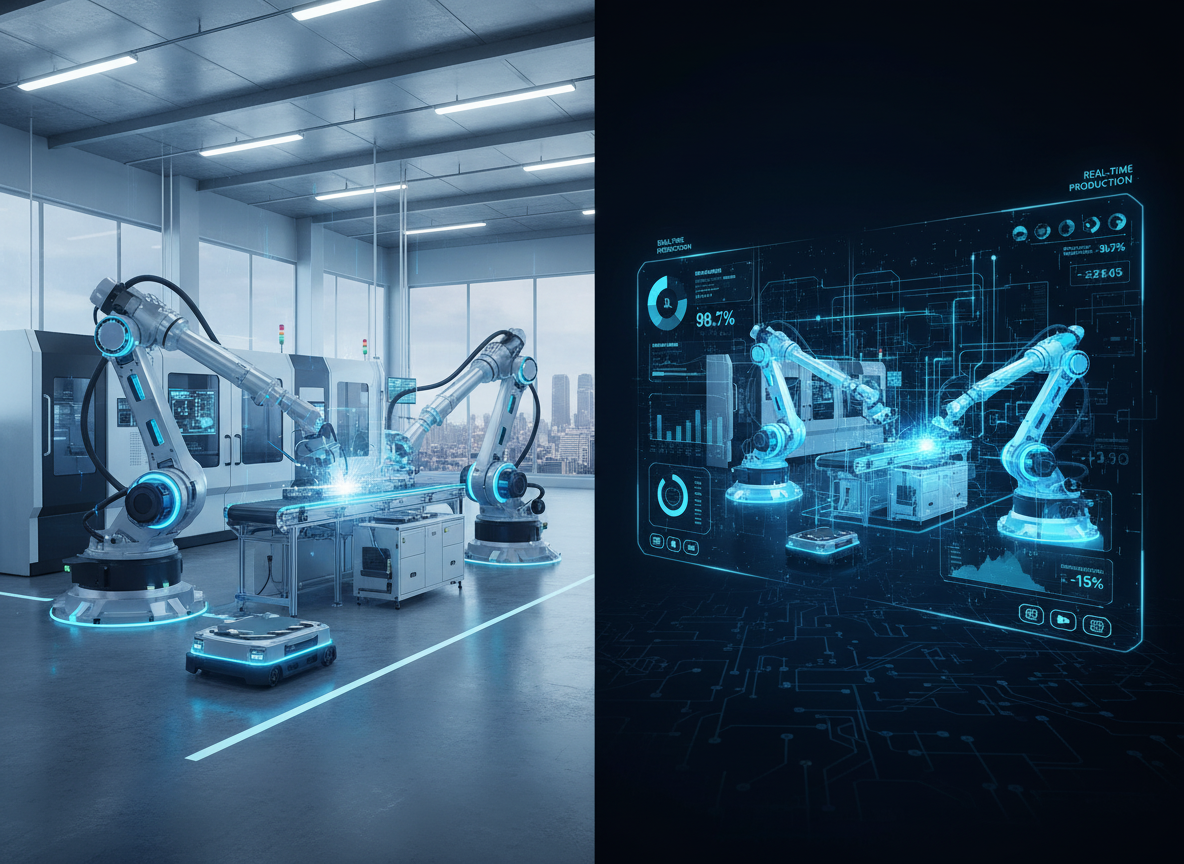
Digital twins help manufacturers save time, cut costs, and prevent unplanned downtime by testing and monitoring systems virtually. They turn complex factory operations into data-driven, manageable workflows.
Key Use Cases:
- Product Design & Prototyping: Virtually test designs before production begins. Engineers can explore thousands of design variations, perform stress tests, and identify weak points such as material fatigue in turbine blades without building physical prototypes.
- Process Optimization: Model entire production lines to find bottlenecks, forecast capacity, and test workflow improvements. For instance, if output must rise by 15%, the twin shows exactly where upgrades or quality adjustments are needed.
- Predictive Maintenance: Monitor turbines, robotic arms, and other equipment in real time. When sensor readings deviate from expected patterns, the twin predicts failures weeks in advance, enabling planned maintenance instead of costly downtime.
2. Healthcare
In healthcare, digital twins improve patient care, reduce risk, and enhance hospital operations through safe, data-driven virtual models.
Key Use Cases:
- Personalized Medicine: Simulate individual patient treatments using medical imaging, history, and genetic data to predict drug responses or surgical outcomes.
- Surgical Planning: Practice complex surgeries virtually to find the safest and most effective approach before operating.
- Hospital Operations: Optimize patient flow, staffing, and emergency resource allocation without disrupting real-world care.
3. Automotive & Aerospace
Digital twins help engineers and operators boost performance, reduce risks, and plan maintenance proactively across vehicles and aircraft.
Key Use Cases:
- Performance Simulation: Compare real-time sensor data with expected performance during operation. Detects issues such as engine wear, fuel system imbalance, or ice formation before they become critical.
- System Development: Virtually test and validate complex missions like satellite launches or flight dynamics cutting testing time from months to days.
- Maintenance Planning: Track part histories, flight hours, and stress cycles to predict wear and plan replacements across fleets, optimizing safety and cost.
4. Smart Cities & Infrastructure
Digital twins enable cities and buildings to operate efficiently, save energy, and plan sustainably.
Key Use Cases:
- Urban Planning: Simulate transportation networks, utilities, and public infrastructure. Test new routes or policies to evaluate their impact on traffic flow and air quality before implementation.
- Energy Management: Optimize renewable energy use and grid stability. Predict demand spikes, plan storage, and test response strategies without real-world risk.
- Building Systems: Manage HVAC, lighting, and energy usage dynamically. Smart building twins can cut energy consumption by 20–30% while maintaining comfort.
5. Retail, Supply Chain & Media
Digital twins help organizations improve customer experience, strengthen logistics, and deliver immersive training.
Key Use Cases:
- Customer Experience: Build interactive virtual showrooms and real-estate previews where users can explore and customize products.
- Supply Chain Simulation: Model logistics networks to prepare for disruptions like port delays or demand surges, optimizing inventory and transport routes.
- Training & Media: Create realistic digital environments where technicians can safely practice procedures, reducing errors and enhancing skill development.
Challenges in Implementing Digital Twins
- Data Integration: Combining data from sensors, ERP systems, and simulations is complex due to varied formats and update rates.
- Scalability: Managing large fleets or networks of twins demands strong computing power and efficient data handling.
- Real-Time Responsiveness: Twins must process live data instantly; even small delays can affect prediction accuracy.
- Model Accuracy: Physics-based models need regular validation and calibration to reflect real-world behavior.
- Change Management: Teams must adapt from reactive fixes to trusting simulation-based insights and workflows.
- Interoperability: Connecting twins with CAD, analytics, and operational systems requires compatible standards and open integration.
How BQP Enhances Digital Twin Applications
BQP’s platform turns quantum-inspired methods into practical tools that deliver immediate value for engineering and industry. It helps companies solve complex problems today while preparing them for the next generation of quantum technologies.
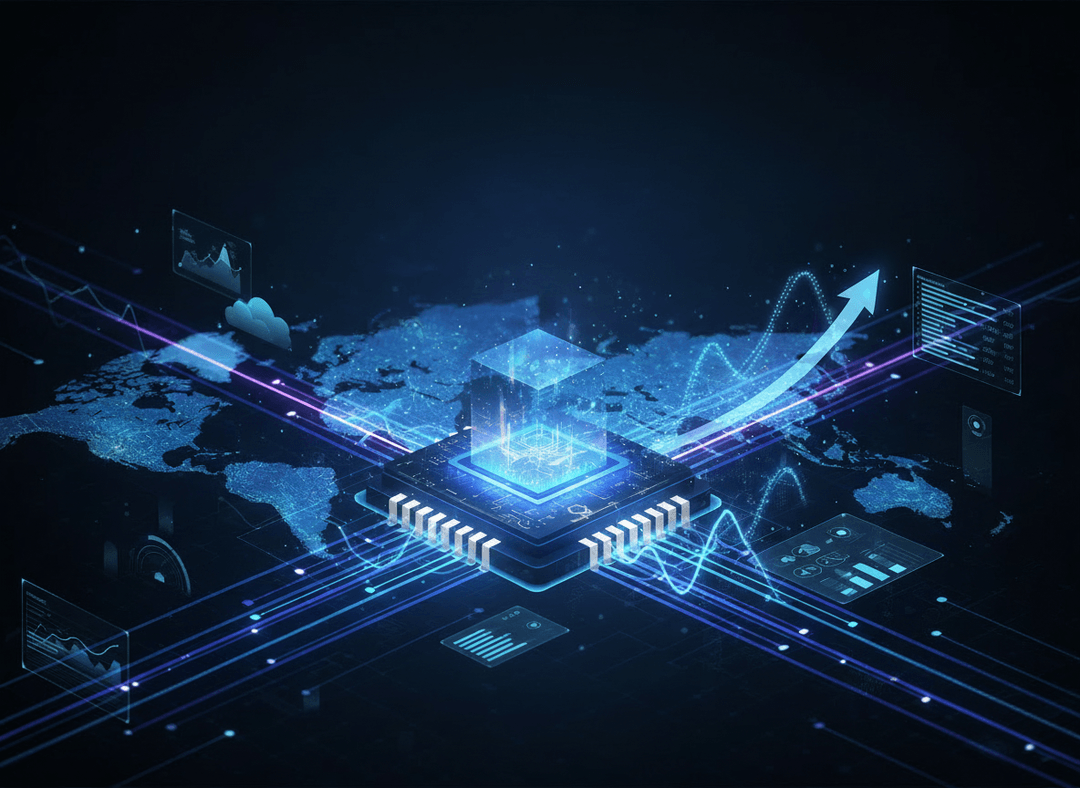
By combining quantum-inspired optimization with physics-informed simulations, BQP enables faster, more accurate, and scalable solutions across aerospace, automotive, defense, and energy.
Key Advantages:
- Quantum-inspired algorithms deliver up to 20× faster optimization on complex engineering problems.
- Simulation-validated intelligence combines physics and data for reliable, real-world predictions.
- Scalable architecture handles large systems, fleets, and industrial networks without slowing performance.
- Multi-objective optimization balances cost, performance, and safety for optimal engineering outcomes.
- Continuous learning loops update models with live data, improving solutions over time.
BQP transforms engineering processes from standard simulations into intelligent, adaptive systems that learn, optimize, and guide decisions across the full project lifecycle.
Explore how BQP enables high-fidelity, quantum-inspired digital twin simulations that improve performance from design to deployment.Book a demo or start your 30-day free trial today.
Conclusion
Digital twins combine data, physics, and analytics to change how systems are designed, operated, and maintained. They move organizations from reacting to problems to predicting and optimizing outcomes, turning operational data into a clear advantage.
With BQP’s quantum-inspired simulation and optimization, digital twins become smarter, scalable, and ready for real-time decision-making. From aerospace to smart cities, this approach enables faster optimization, better performance, and future-ready engineering.
The competitive edge belongs to organizations that can simulate accurately, optimize quickly, and act confidently on digital twin insights.
FAQs
What is a digital twin?
A digital twin is a virtual replica of a physical asset, system, or process that updates in real time using sensor data. It combines 3D models, physics-based simulations, and operational data to mirror the behavior of its physical counterpart, enabling testing, prediction, and optimization without affecting actual operations.
How do digital twins differ from traditional simulations?
Traditional simulations run once with fixed parameters to answer specific questions. Digital twins continuously update with real-time data, adapt to changing conditions, and maintain synchronization with physical systems throughout their lifecycle. The twin evolves as the physical system operates.
What industries benefit most from digital twins?
Manufacturing, aerospace, automotive, healthcare, energy, and smart cities see the greatest benefit. Any industry with complex physical assets, high downtime costs, or critical performance requirements can gain from digital twin implementations.
What data is needed to create a digital twin?
Digital twins require design data (CAD models, specifications), operational data (sensor readings, performance metrics), environmental data (temperature, loads, conditions), and historical data (maintenance records, failure events). The specific data depends on the twin's purpose and fidelity requirements.
What is the ROI timeline for digital twin implementations?
Organizations typically see initial returns within 6-18 months, with 90% of adopters reporting returns above 10% and over half seeing at least 20% ROI. Faster ROI comes from focused deployments targeting high-impact assets or processes rather than attempting enterprise-wide rollouts immediately.
.png)
.png)

.svg)
.svg)
.svg)
.svg)