




Engineering teams no longer win by designing faster. They win by exploring smarter design spaces earlier. Rising system complexity, tighter cost constraints, and compressed development cycles have made manual iteration inadequate.
Today's aerospace structures, propulsion systems, and mission architectures involve hundreds of design variables and competing objectives that defy simple trade-off analysis.
Organizations delivering better-performing, lower-cost products aren't running more simulations. They're using engineering optimization software to systematically navigate massive solution spaces and make informed trade-offs before committing to hardware.
This guide explains:
- How design optimization software works,
- Leading tools available
- How intelligent optimization reduces engineering cost across the product lifecycle.
Understanding the optimization landscape is now a competitive necessity for aerospace, defense, and advanced manufacturing teams.
What Is Design Optimization Software?
Design optimization in engineering automates the process of finding the best design configuration within defined constraints. "Best" means maximizing performance, minimizing weight or cost, or balancing multiple competing objectives simultaneously.
Simulation tools like CFD and FEA analyze a single design to predict its behavior. Optimization software systematically explores many design variants, evaluates their performance, and converges toward optimal solutions using mathematical algorithms.
Here's the distinction:
- Simulation answers: "How will this specific turbine blade perform under thermal and aerodynamic loads?"
- Optimization answers: "What blade geometry, material thickness, and cooling channel layout deliver maximum efficiency at minimum weight?"
Design optimization software orchestrates this exploration by coupling:
- CAD geometry
- simulation engines
- optimization algorithms into an automated workflow
Engineers define design variables (geometry parameters, material properties), objectives (minimize drag, maximize stiffness), and constraints (stress limits, manufacturing tolerances). The software searches the design space intelligently using gradient-based methods, genetic algorithms, Bayesian optimization, or quantum-inspired techniques to identify configurations that meet performance targets while respecting all constraints.
What Are The Limitations of Classical Design Optimization?
Classical optimization methods face growing scalability challenges as engineering systems become more complex.
High-dimensional design spaces overwhelm gradient-based methods
Modern aerospace systems involve hundreds of design variables and equally complex constraint sets. Classical gradient-based optimizers struggle with non-convex design spaces where local optima trap solvers far from global solutions.
Manual intuition breaks down quickly
Human judgment fails when balancing 50+ design parameters and 10+ competing objectives. Engineers fix most variables arbitrarily, exploring only narrow slices of the design space and missing breakthrough configurations outside conventional thinking.
Discrete and combinatorial problems exhaust classical solvers
System-level decisions like component selection, routing topologies, and mission sequencing involve discrete choices that gradient-based methods can't handle effectively. Genetic algorithms engineering optimization approaches and particle swarm methods scale poorly beyond modest problem sizes.
Late-stage optimization drives exponential cost
When optimization happens after preliminary designs are locked, even modest improvements require expensive rework. According to NASA's systems engineering research, decisions made during conceptual design lock in 70 to 80% of lifecycle cost, yet classical workflows defer optimization until detailed design phases.
DOE and brute-force methods hit compute limits
Design-of-experiments and parametric sweeps scale exponentially with variables. A 10-variable problem with 5 levels per variable requires 9.7 million evaluations for full factorial coverage, which is impractical when each simulation takes hours on HPC clusters.
The bottleneck is no longer simulation accuracy. It's optimization intelligence.
What Are the Key Types of Design Optimization Software?
Design optimization tools fall into several categories based on their core methodology and application focus.
Process Automation & Workflow Integration
These platforms orchestrate simulation workflows, connecting CAD tools, meshing engines, and solvers into automated optimization loops.
Core capabilities:
- CAD-CAE-solver orchestration across multiple software environments
- Automated simulation pipelines with parametric geometry updates
- Integration with PLM and data management systems
Primary value: Eliminates manual simulation setup bottlenecks, enabling teams to run hundreds of evaluations overnight.
Multidisciplinary Design Optimization (MDO)
MDO platforms tackle coupled optimization problems where subsystems interact. Structural deformation affects aerodynamic loads. Thermal expansion impacts control system alignment. These tools manage disciplinary coupling and trade-space visualization across physics domains.
Core capabilities:
- Coupling mechanical, thermal, electrical, and controls simulations
- System-level trade-off analysis and Pareto frontier exploration
- Collaborative optimization across distributed engineering teams
Primary value: Prevents suboptimal designs caused by optimizing subsystems in isolation.
Generative & Topology Optimization
These algorithm-driven approaches generate design geometry automatically based on performance objectives and manufacturing constraints. Instead of parametrically tweaking existing shapes, generative tools create novel geometries often invisible to human designers.
Core capabilities:
- Algorithm-driven geometry creation from scratch
- Lightweighting through material removal and topology refinement
- Performance-driven shapes optimized for additive manufacturing
Primary value: Discovers non-intuitive, high-performance geometries. The topology optimization software market is projected to reach $1.2 billion by 2026, growing at 15% CAGR as additive manufacturing adoption accelerates.
Statistical Optimization & Uncertainty Quantification
These tools focus on robust design optimization and design-of-experiments, ensuring designs perform reliably despite manufacturing tolerances, material variability, and uncertain operating conditions.
Core capabilities:
- DOE planning, sensitivity analysis, and response surface modeling
- Robust design optimization under uncertainty
- Reliability-based design and six-sigma engineering
Primary value: Delivers designs that perform consistently in real-world conditions, reducing warranty claims and field failures.
7 Best Design Optimization Software Used by Engineers
The design optimization landscape includes specialized tools, integrated platforms, and emerging next-generation approaches.
1. BQP

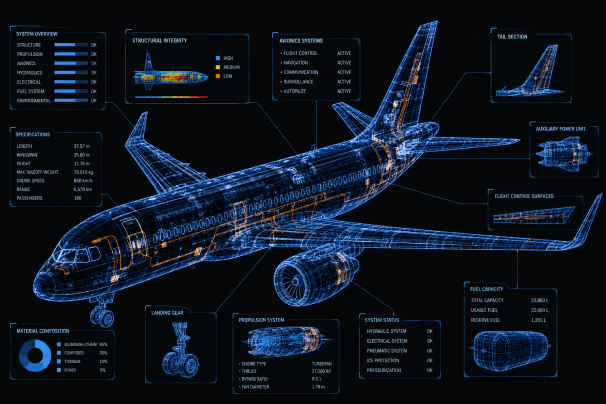
BQP is a next-generation quantum design optimization platform and Quantum Optimization solution built for large-scale, system-level, and combinatorial engineering problems. Rather than replacing existing CFD, FEA, or optimization tools, BQP augments them by delivering optimization intelligence for problems where traditional methods hit diminishing returns.
Key Capabilities
- Quantum-Inspired Optimization Engines: Explore extremely large and discrete design spaces beyond classical solver scalability. BQP's quantum-inspired optimization algorithms handle combinatorial problems like component selection, routing, and mission sequencing.
- Physics-Aware Optimization: Integrates physics constraints from CFD, FEA, and multiphysics simulations directly into the optimization process, ensuring feasible designs without relying solely on penalty functions.
- System-Level & MDO Support: Handles coupled subsystems, mission-level objectives, and cross-domain trade-offs. BQP excels at complex optimization use cases involving multiple interacting disciplines.
- Reduced Simulation Burden: Achieves better solutions with fewer simulation evaluations through intelligent search strategies and surrogate model integration.
- HPC & Future-Ready Architecture: Built for hybrid HPC environments and next-generation compute paradigms.
Best For
- Aerospace optimization techniques and defense-focused engineering programs
- Problems involving combinatorial choices, discrete variables, and system-of-systems design
- Teams experiencing diminishing returns with classical gradient-based or DOE-driven optimization
2. Ansys

Ansys is a process integration and design optimization platform built around Robust Design Optimization (RDO). It automates simulation workflows across CAE tools and connects them to state-of-the-art optimization algorithms for parametric design studies.
Key Capabilities
- Workflow automation across CAD and CAE tools including Ansys Fluent, Mechanical, and Electronics Desktop
- Sensitivity analysis, DOE, and robust design optimization
- Uncertainty Quantification (UQ) for scalar, signal, and 2D/3D outputs
Best For
Teams running parametric robustness and reliability studies within the Ansys ecosystem, particularly in automotive, aerospace, and high-safety engineering programs requiring formal uncertainty quantification.
3. modeFRONTIER

modeFRONTIER is a multidisciplinary design optimization and workflow orchestration platform widely used to couple multiple solvers and physics domains.
Key Capabilities
- MDO with extensive solver integration options
- Workflow automation and design space exploration
- Advanced post-processing and Pareto frontier visualization
Best For
Complex multidisciplinary optimization problems that require multiple simulation tools and vendor-neutral workflow integration.
4. Design-Expert

Design-Expert is a statistical design optimization platform focused on design-of-experiments and response surface methodology.
Key Capabilities
- Classical and advanced DOE methods
- Response surface modeling and optimization
- Mixture design and formulation optimization
Best For
Statistical optimization, experimental planning, and process optimization initiatives.
5. Altair HyperStudy / OptiStruct

Altair HyperStudy and OptiStruct are structural optimization software tools within the Altair ecosystem, with OptiStruct being a pioneer in commercial topology optimization.
Key Capabilities
- Structural topology optimization and lightweighting
- Generative design workflows integrated with Altair solvers
- Multi-objective optimization and trade-off studies
Best For
Structural optimization and weight reduction programs using Altair simulation tools.
6. COMSOL Multiphysics
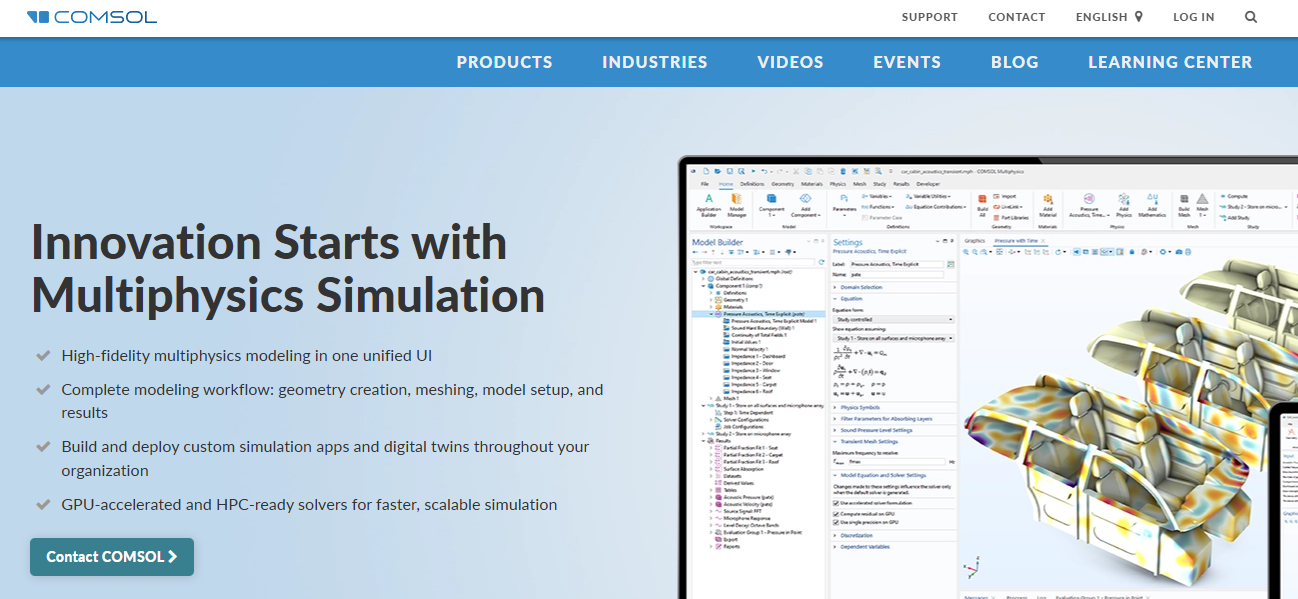
COMSOL Multiphysics is a multiphysics simulation platform with built-in parametric optimization for tightly coupled physics problems.
Key Capabilities
- Coupled physics optimization (thermal-structural, fluid-electromagnetic)
- Parametric sweeps and derivative-based optimization
- Flexible physics coupling and custom PDE solvers
Best For
Physics-coupled design optimization problems and research requiring custom multiphysics models.
7. SolidWorks Simulation

SolidWorks Simulation offers CAD-integrated optimization tools designed for early-stage design exploration.
Key Capabilities
- Basic structural optimization and topology studies
- Generative design for additive manufacturing
- Direct integration with CAD modeling workflows
Best For
Early-stage concept optimization and rapid prototyping by designers without dedicated simulation resources.
How Design Optimization Software Reduces Engineering Costs?
Design optimization delivers measurable cost reduction across multiple dimensions when adopted early in the development cycle.
Reduces physical prototyping and rework
Each physical prototype costs hundreds of thousands to millions of dollars in aerospace programs. Simulation-driven optimization enables virtual validation before committing to hardware, reducing prototype iterations from 5–7 cycles to 2–3. Design flaws caught digitally mean rework happens in CAD, not in manufacturing facilities with frozen tooling.
Enables lightweighting and material efficiency
Topology optimization identifies material removal opportunities invisible to manual design. For a deep-dive into domain-specific applications, see our work on topology optimization of airfoil structures using quantum inspired evolutionary optimization technique. A 15% weight reduction in satellite structures translates directly to launch cost savings or increased payload capacity. The generative design market, valued at $4.91 billion in 2026, is driven largely by aerospace and automotive lightweighting mandates.
Provides DFMA feedback and simplification
Optimization algorithms identify overdesigned components and consolidation opportunities. Part count reduction simplifies assembly, reduces inventory complexity, and lowers supply chain risk.
Drives part consolidation
Generative design often reveals opportunities to combine multiple machined parts into single additively manufactured components, reducing assembly labor, fastener counts, and tolerance stack-up complexity.
Automates design exploration
Manual parametric studies require engineers to set up, execute, and post-process hundreds of simulations. Automated optimization workflows recover 60 to 80% of engineering time previously spent on routine design iteration.
Optimizes lifecycle costs
Advanced platforms integrate manufacturing cost models, maintenance planning, and operational performance into optimization objectives. This enables true lifecycle cost minimization, balancing initial acquisition cost against 20–30 years of operational expenses.
Influences early-stage decisions
Research shows that 70 to 80% of lifecycle cost is determined during conceptual and preliminary design phases. Organizations integrating optimization platforms early gain disproportionate cost leverage by shaping architectures before constraints harden.
Market Insight: Services in generative design grow faster at 14.88% CAGR than software revenue because implementation and workflow integration are the hard parts. Cost reduction comes from using optimization effectively, not just owning licenses.
How Is Design Optimization Evolving Today?
The optimization field is evolving from brute-force simulation sweeps toward intelligent search strategies that deliver better results with fewer evaluations.
AI creates surrogate models for rapid exploration
- Machine learning models trained on simulation data approximate expensive CFD or FEA results in milliseconds instead of hours.
- Optimization algorithms query these surrogates to explore design spaces rapidly, reserving high-fidelity simulations for final validation.
- Bayesian optimization, neural network surrogates, and Gaussian processes enable orders-of-magnitude speedup.
Physics-informed networks embed governing equations
- Physics-informed neural networks (PINNs) embed governing equations directly into machine learning architectures, improving accuracy and generalization with sparse data.
- These physics-aware models reduce training data requirements while maintaining fidelity.
Adaptive sampling replaces exhaustive searches
- Modern optimization platforms use adaptive sampling, active learning, and information-theoretic acquisition functions to focus computational budget on high-value design regions.
- This intelligence gap explains why AI-driven multi-objective optimization grows at 15.92% CAGR, faster than the broader optimization market.
Quantum-inspired methods transition to practice
- Quantum-inspired optimization for engineers and hybrid quantum-classical methods are moving from research to engineering applications.
- While fault-tolerant quantum computers remain years away, quantum-inspired algorithms running on classical hardware already deliver value for discrete optimization and constraint satisfaction problems that exhaust conventional solvers.
Organizations building optimization capabilities today should architect for hybrid compute environments that integrate HPC, cloud-scale classical resources, and quantum-inspired methods in unified workflows. For implementation guidance using common frameworks, see our resource on Python optimization with BQP, SciPy, and OpenMDAO.
How BQP Advances Design Optimization Beyond Classical Tools?
BQP addresses the optimization intelligence gap by handling large-scale, discrete, and system-level problems where classical methods deliver diminishing returns.
Explores combinatorial spaces efficiently → BQP's solvers navigate combinatorial and discrete design spaces that exhaust classical methods. Mission planning problems involving satellite constellation design, UAV routing, and resource allocation contain billions of possible configurations. Quantum-inspired algorithms find near-optimal solutions 10 to 20 times faster than conventional heuristics.
Handles mixed-integer optimization naturally: Many real-world decisions are discrete (select component A or B, route through path 1 or 2) rather than continuous (adjust thickness from 2.0mm to 2.1mm). Classical gradient-based optimizers fail on discrete problems. BQP's architecture handles mixed-integer, combinatorial, and hierarchical optimization, optimizing system architecture and detailed parameters simultaneously.
Reduces simulation budgets significantly: By combining intelligent search with physics-aware constraints and surrogate model integration, BQP achieves better solutions with 40 to 60% fewer high-fidelity simulation evaluations. This simulation budget reduction translates directly to reduced HPC costs and faster design cycles.
Complements existing workflows: BQP doesn't replace CAD-integrated topology optimization or MDO workflow automation. Teams continue using Ansys, Altair, or COMSOL for physics simulation while BQP handles system-level optimization and simulation driven optimization for digital mission engineering.
Supports future compute environments: As quantum hardware matures and hybrid quantum-classical algorithms advance, organizations with BQP-based workflows transition smoothly. The platform architecture supports classical HPC, cloud-scale execution, and quantum co-processor integration.
Choosing the Right Design Optimization Software for Your Engineering Team
Design optimization software is no longer optional for competitive engineering programs. Rising system complexity, tighter cost constraints, and compressed development timelines have made manual iteration insufficient across aerospace, defense, and advanced manufacturing.
The tools in this guide address different layers of the problem. CAD-integrated platforms handle early-stage concept work. Topology tools manage structural lightweighting. MDO platforms orchestrate multi-solver workflows. Statistical tools address robustness and uncertainty. The right choice depends on your problem type, program phase, and compute environment.
For programs involving combinatorial decisions, discrete variables, and system-level trade-offs at scale, classical methods consistently hit diminishing returns. BQPhy® finds near-optimal solutions 10 to 20 times faster than conventional heuristics, with 40 to 60% fewer high-fidelity simulation evaluations, on your existing HPC and GPU infrastructure.
The right optimization strategy is the one your team can deploy today and scale as compute capabilities evolve.
FAQs
What is design optimization software used for?
Design optimization software helps engineering teams automatically explore large design spaces and identify configurations that best balance performance, weight, cost, and reliability, without manually running hundreds of simulations. Rather than analyzing one design at a time, optimization tools systematically search across thousands of design variants using algorithms, converging on solutions that meet objectives and constraints simultaneously.
In aerospace and defense, this means finding the optimal geometry for a structural component, the best material selection for a thermal system, or the most efficient mission architecture, all before committing to hardware.
What is the difference between simulation software and design optimization software?
Simulation software answers "how will this design perform?", it analyzes a single configuration under defined conditions. Design optimization software answers "what is the best design?", it drives the simulation engine repeatedly across many variants, guided by algorithms that search for optimal solutions.
In practice, optimization software sits above the simulation layer. It controls what gets simulated, evaluates the results against objectives and constraints, and decides what to simulate next. Tools like Ansys, COMSOL, and MATLAB handle the physics. Optimization platforms including BQPhy® handle the intelligent search.
How does design optimization software reduce engineering costs?
Design optimization reduces costs across several dimensions simultaneously. Catching design flaws virtually rather than in physical prototypes saves hundreds of thousands per iteration in aerospace programs. Topology optimization identifies material removal opportunities that reduce weight and raw material cost. Automated workflows recover 60 to 80% of engineering time spent on manual parametric studies.
The most significant leverage comes from early adoption. Research consistently shows that 70 to 80% of lifecycle cost is locked in during conceptual and preliminary design phases. Organizations that deploy optimization at the concept stage shape architectures before constraints harden, where the cost impact of every decision is highest.
Which design optimization software is best for aerospace and defense programs?
The right tool depends on the problem type. For structural topology and lightweighting, Altair OptiStruct and Ansys are widely used. For multidisciplinary workflow orchestration across coupled physics domains, modeFRONTIER provides vendor-neutral integration. For statistical robustness and DOE-driven studies, Design-Expert is the standard.
For combinatorial, discrete, and system-level optimization, problems involving component selection, mission sequencing, UAV routing, or satellite constellation design, classical tools hit scalability limits. BQPhy®'s quantum-inspired solvers are purpose-built for these problem types, finding near-optimal solutions across billions of possible configurations at speeds classical heuristics cannot match.
What is quantum-inspired design optimization and how is it different?
Quantum-inspired optimization applies algorithms derived from quantum computing principles running on classical and HPC hardware today, to solve combinatorial and discrete optimization problems that exhaust gradient-based or heuristic methods. Unlike classical solvers that get trapped in local optima or scale poorly with problem size, quantum-inspired algorithms explore broader solution spaces to find higher-quality outcomes.
BQPhy® uses these methods for engineering problems involving discrete decisions, mixed-integer variables, and system-level trade-offs, delivering 10 to 20× faster convergence on complex problems compared to conventional heuristics, with 40 to 60% fewer high-fidelity simulation evaluations required.
How does AI improve design optimization in 2026?
AI improves design optimization primarily through surrogate modeling and adaptive sampling. Machine learning models trained on simulation data approximate expensive CFD or FEA evaluations in milliseconds, allowing optimization algorithms to explore design spaces far more efficiently than running full simulations at every step. Bayesian optimization, Gaussian processes, and neural network surrogates are now standard in advanced optimization platforms.
Physics-informed neural networks (PINNs) take this further by embedding governing equations directly into the model, improving accuracy with less training data. The result is optimization workflows that are faster, smarter, and require significantly fewer compute hours to reach high-quality solutions.
Can design optimization software replace engineering judgment?
No, and it shouldn't be expected to. Optimization software executes search strategies defined by engineers. The objectives, constraints, design variables, and trade-off priorities all require human judgment to set correctly. A poorly defined optimization problem produces mathematically optimal solutions to the wrong question.
Where optimization software genuinely reduces reliance on intuition is in high-dimensional problems where human judgment breaks down, balancing 50 or more design parameters and 10 or more competing objectives simultaneously. In those cases, algorithms outperform manual iteration, but the engineering intelligence that frames the problem remains essential throughout.
.png)
.png)



.svg)
.svg)
.svg)
.svg)