

Latest EventsNew
BQP Wins Multiple Awards at SAE AeroCON®
SAE AeroCON 2026, Bengaluru
At AeroCON 2026, hosted at MIT Bengaluru, BQP was recognized with three distinctions: Best Paper Presentation in the Flight Dynamics category, Overall Best Paper for contributions supporting the aerospace innovation ecosystem.
.png)
.jpg)
.jpg)
The award-winning paper, "Quantum-Inspired Optimization for Trajectory Planning of Reusable Launch Vehicles across Diverse Missions", demonstrated how advanced optimization techniques can address critical challenges in reusable spaceflight mission planning.
The research focused on optimizing trajectories for reusable launch vehicles executing an ascent–hover–descent mission profile. Such missions involve complex constraints including nonlinear flight dynamics, atmospheric drag, gravitational effects, thrust limitations, and fuel consumption requirements. These factors make trajectory optimization highly challenging for conventional optimization methods.
Using BQPhy® and its Quantum-Inspired Evolutionary Optimization (QIEO) framework, the study explored more efficient approaches to identifying fuel-optimal flight paths while satisfying operational and physical constraints. Comparative analysis against traditional Genetic Algorithms showed significant improvements in computational efficiency, with optimization results achieved substantially faster while maintaining high-quality solutions.
The paper highlighted the growing applicability of quantum-inspired optimization in aerospace engineering, particularly for trajectory design, mission planning, reusable launch systems, and other computationally intensive aerospace applications.
These recognitions at AeroCON 2026 reflect BQP's continued focus on advancing simulation and optimization technologies for aerospace and defense industries while contributing to the development of next-generation engineering solutions.
Keynote Presentation on Transforming Space Missions
spaceNEXT 2026, Virginia (VA)
Presentation on next-generation algorithms for autonomous space computing and on-orbit data processing
At spaceNEXT 2026, Abhishek Chopra, Founder and CEO of BQP , presented a session titled “Transforming Space Missions with Next-Generation Algorithms.” The discussion focused on how improvements in computational methods can support more efficient processing, analysis, and decision-making in space missions.
Data challenge in space
Space missions today generate significantly more data than earlier generations of spacecraft. Modern satellite constellations used for Earth observation, communications, and scientific research produce large volumes of information that must be processed and transmitted.
However, communication bandwidth between spacecraft and ground stations remains limited. Transmitting large datasets directly to Earth can therefore be inefficient.
One approach being explored across the industry is on-orbit computing, where spacecraft process and analyze data in space before transmitting results to ground systems.
Processing data directly in orbit
Experiments conducted on the International Space Station have demonstrated how onboard processing can reduce transmission requirements.
In one example referenced during the session, a dataset that previously required several hours to transmit to Earth was processed and compressed in orbit, allowing the results to be transmitted more quickly.
This approach can support a range of mission applications, including:
- Autonomous spacecraft operations
- Space traffic monitoring
- Scientific data analysis
- Deep-space missions with limited communication windows
By processing information closer to where it is generated, spacecraft can reduce communication delays and improve operational efficiency.
Limitations of increasing hardware in space
Expanding onboard computing capability by simply adding more hardware presents challenges. Satellites must operate within strict constraints related to power consumption, thermal management, mass, and system complexity.
As a result, improving the efficiency of the software and algorithms running on spacecraft systems can be an effective way to increase computational performance without significantly increasing hardware requirements.
Chopra noted that many existing computing systems operate below their theoretical capacity, partly because algorithms were originally developed for earlier computing environments.
Approaches to improving computational efficiency
During the presentation, Chopra outlined several strategies that can improve computational efficiency in space environments:
Model compression Reducing the size of artificial intelligence and machine-learning models so they can operate on smaller computing systems.
Optimized computational architectures Designing algorithms specifically for spacecraft systems, including radiation-hardened processors and limited power environments.
Quantum-inspired algorithms Applying mathematical concepts from quantum computing to develop more efficient optimization and decision-making methods on conventional hardware.
These approaches can allow spacecraft systems to perform complex analysis while operating within the constraints of onboard computing resources.
Applications of quantum-inspired computation
Although large-scale quantum computers are still under development, certain mathematical techniques derived from quantum computing can already be applied to classical computing systems.
Chopra discussed examples where these techniques have been applied to space-related challenges. In satellite collision-avoidance modelling, quantum-inspired algorithms have demonstrated improved prediction accuracy while operating efficiently on existing computing infrastructure.
In collaborative work with the United States Space Force, similar computational approaches were used to reduce the time required for orbital calculations while maintaining accuracy.
These types of improvements may support the management of increasingly complex satellite environments as the number of objects in orbit continues to grow.
By applying quantum-inspired algorithms and advanced optimization techniques, BQP aims to support applications where computing resources are limited but analytical requirements are high, including space systems and other complex operational environments.
Developing these capabilities also supports the long-term objective of creating computational platforms that can integrate with future hardware developments as they become available.
Computing and the future of space missions
As satellite networks expand and missions generate increasing volumes of data, computational efficiency will remain an important factor in mission design and operations.
The session at spaceNEXT 2026 highlighted how improvements in algorithms and computational methods can support more efficient use of existing hardware while enabling new operational capabilities in space systems.
Read more: https://www.spacenextglobal.com/news/transforming-space-missions
BQP Joins NY State and Defense Leaders to Advance Quantum Computing Infrastructure
Innovare Advancement Center, New York (NY)
Strengthening the New York Quantum Ecosystem
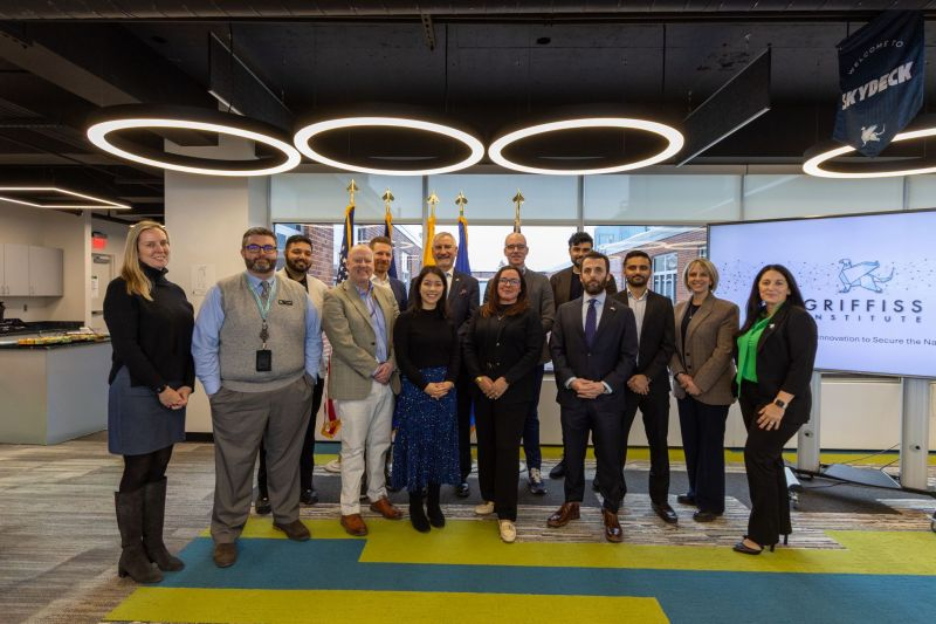
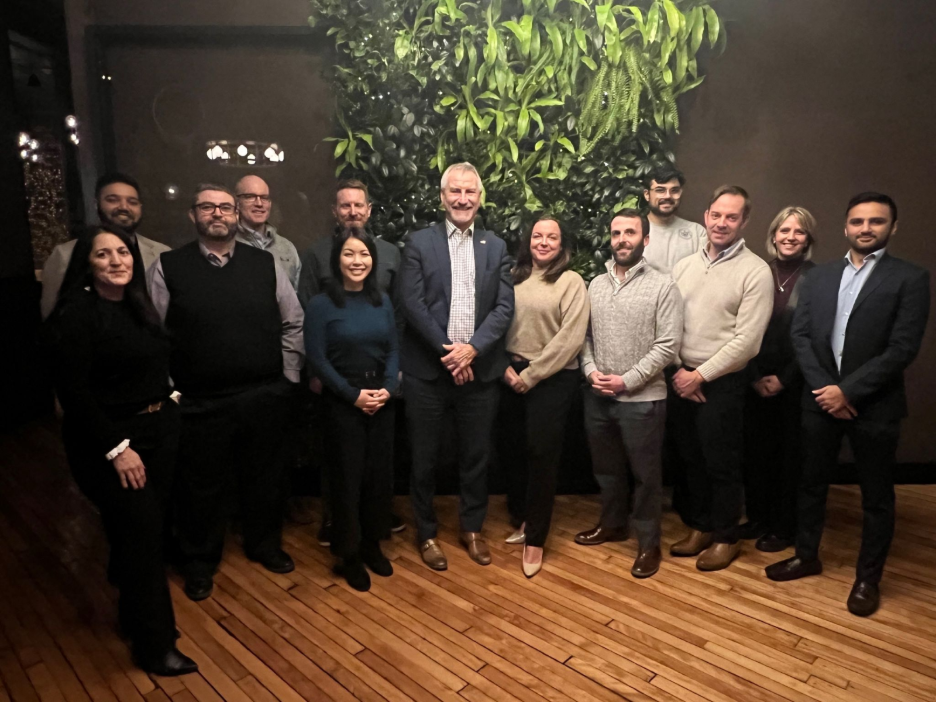
BQP participated in a strategic engagement alongside leaders from the Griffiss Institute and the Air Force Research Laboratory, with representatives from Empire State Development and the administration of Kathy Hochul.
Discussions focused on the development of New York’s quantum technology ecosystem and the infrastructure required to support future computational workloads across aerospace, defense, and advanced manufacturing.
As a New York Ventures portfolio company and HUSTLE Accelerator winner, BQP presented the progress of its QuantumNOW optimization solver and discussed how quantum-inspired computational methods can improve efficiency in large-scale simulation and optimization environments.
The session also explored workforce development initiatives, quantum-ready datacenter infrastructure, and the role of applied optimization systems in supporting next-generation computing architectures.
BQP Joins Leaders and Policymakers at UK–India Future Forum Parliamentary Dialogue
House of Lords, London
Applying Quantum Technologies Across Global Innovation Ecosystems
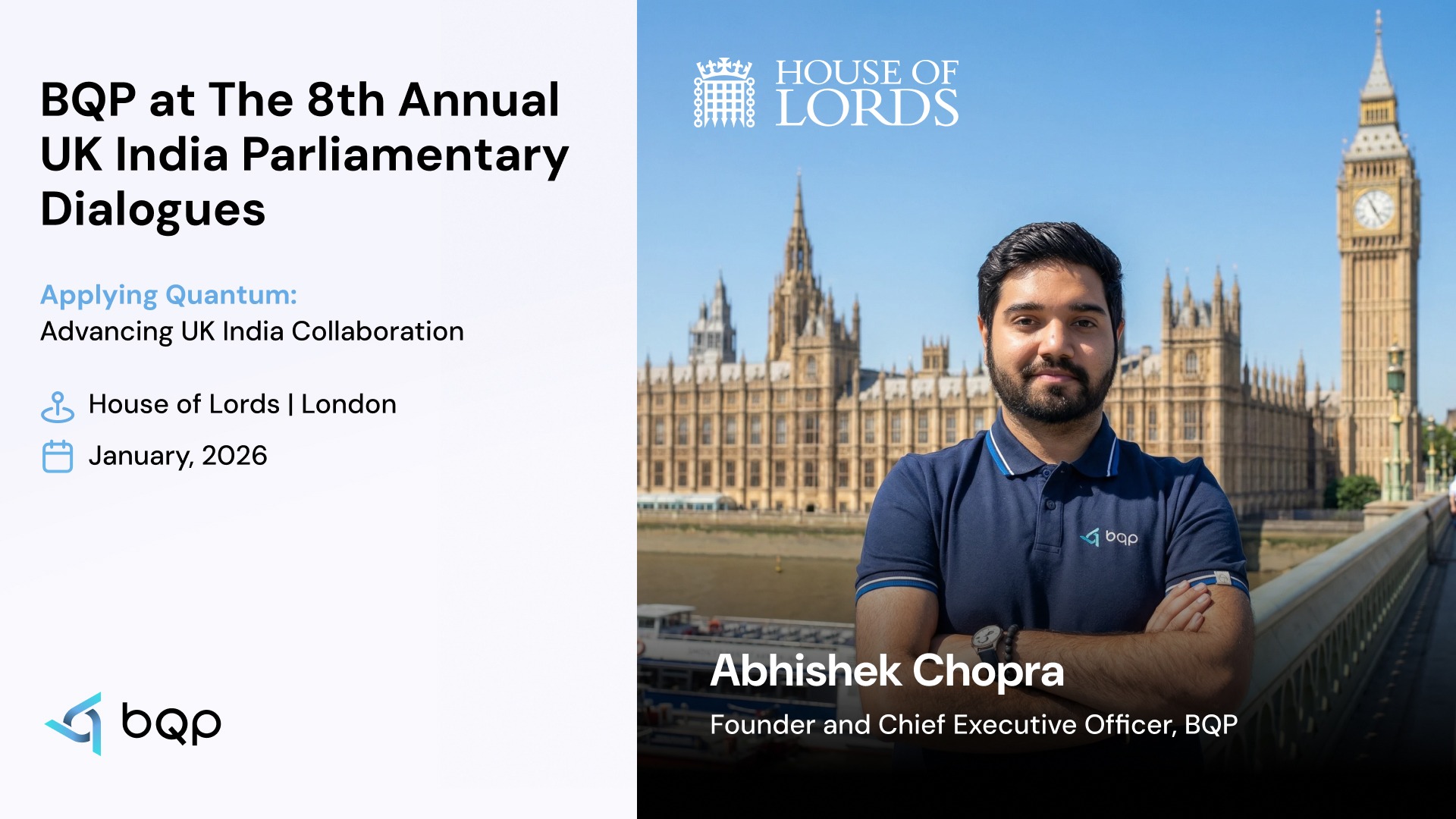
Abhishek Chopra represented BQP at the 8th Annual Parliamentary Dialogue hosted by the UK-India Future Forum.
The discussion brought together policymakers, researchers, and industry leaders to examine how emerging quantum technologies can transition from research environments into industrial applications.
Conversations focused on commercialization pathways, infrastructure readiness, and the role of international collaboration in advancing deep-tech ecosystems across the United Kingdom and India.
Within this context, the dialogue explored how quantum-inspired optimization methods and advanced computational systems can support applications across aerospace, manufacturing, energy, and defense sectors.
BQP’s participation reflected its ongoing engagement with global policy, research, and industrial ecosystems shaping the future of applied quantum technologies.
BQP Conducts Faculty Development Program on Quantum Machine Learning
NMIMS, Mumbai
Advancing Academic Engagement in Quantum Machine Learning
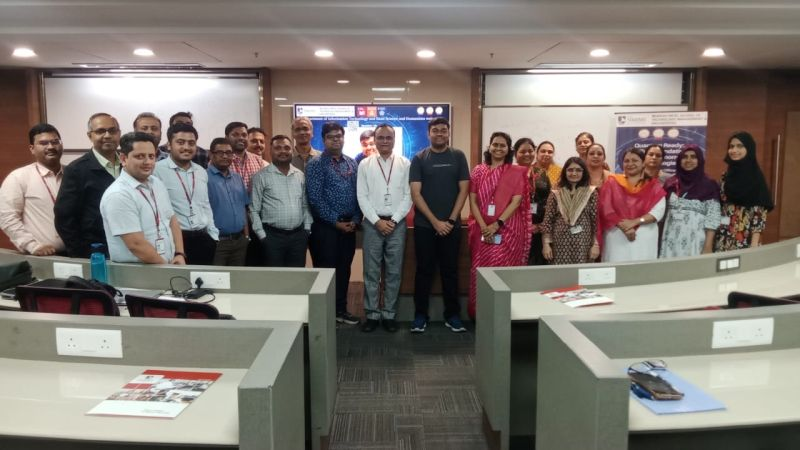
The Quantum Machine Learning Faculty Development Program focused on the practical and theoretical foundations of quantum computing and its intersection with artificial intelligence and scientific modeling at SVKM's NMIMS Mukesh Patel School of Technology Management & Engineering.
Led by Jay Shah, the session introduced faculty members and researchers to emerging computational approaches including Quantum Neural Networks, Quantum Support Vector Machines, Quantum NLP, Quantum GANs, and Quantum-Assisted Physics-Informed Neural Networks.
The program also examined how hybrid classical and quantum-inspired methods can support large-scale optimization and simulation workflows while improving computational efficiency in research environments.
Discussions throughout the workshop emphasized the growing relevance of quantum-ready computational models in engineering, AI, and advanced scientific computing disciplines.
BQP Showcases Quantum-Enhanced Simulation for Aerospace & Defense Innovations
AERODEFCON 2025, Chennai
Advancing Aerospace and Defense Technologies
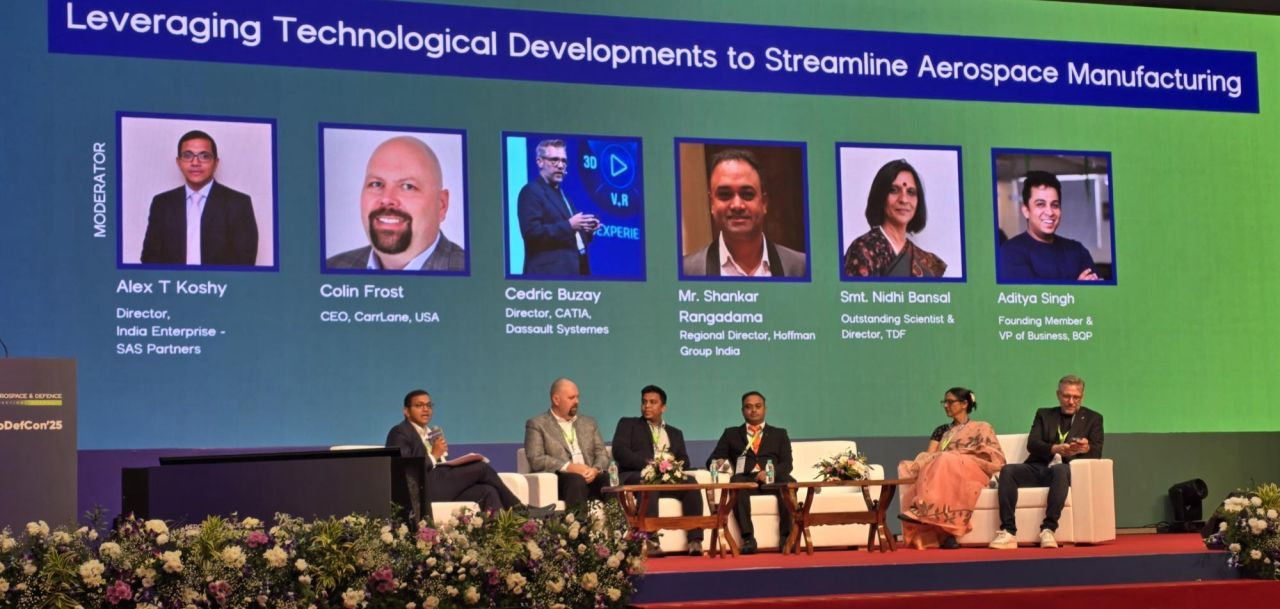
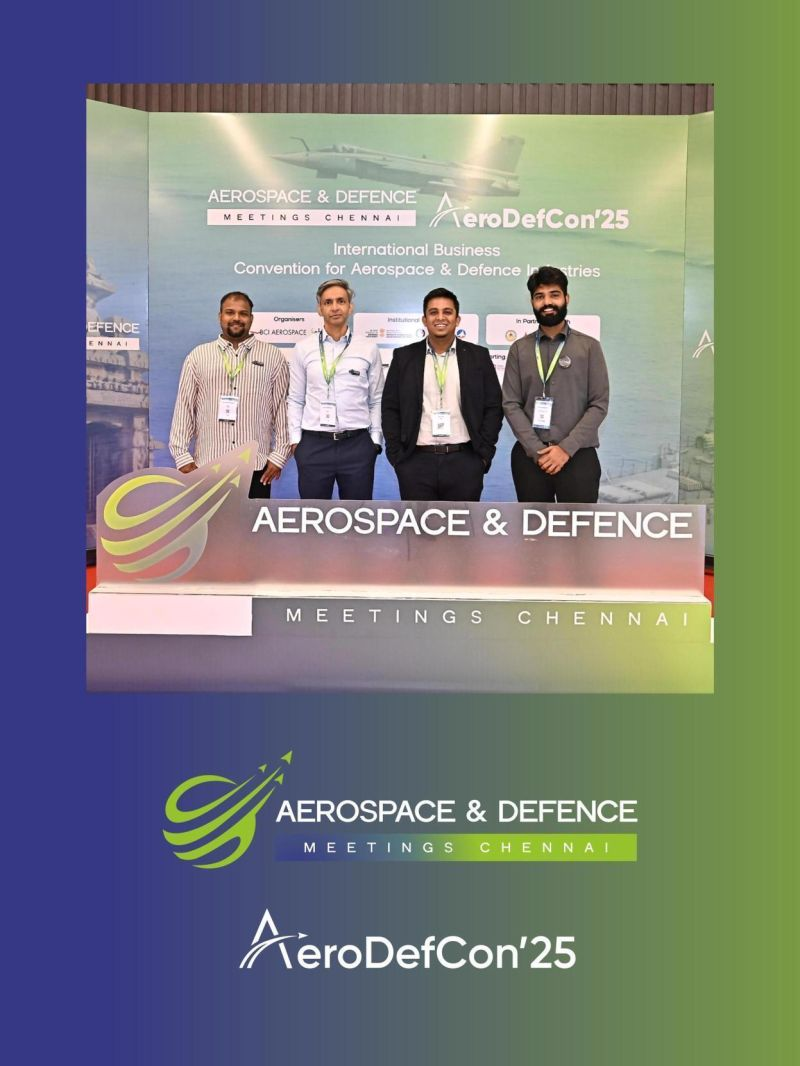
BQP participated in AERODEFCON 2025 alongside organizations and professionals working across aerospace manufacturing, defense systems, and advanced engineering technologies.
Represented by Aditya Singh, Vijay Vishwanathan, Arunabh Chopra, and Ferdin Sagai Don Bosco, the team engaged in discussions around emerging aerospace manufacturing trends and the growing computational demands of mission-critical simulation environments.
The event also included conversations on how quantum-inspired optimization methods can support aerospace engineering workflows through improved simulation efficiency, faster computational analysis, and scalable optimization frameworks.
The engagement created opportunities for collaboration across aerospace, defense, and advanced computing ecosystems.
BQP Wins the NASSCOM Emerge 50 Award for Development of Innovative Technology
NASSCOM, Bengaluru
Recognition for Deep-Tech Innovation
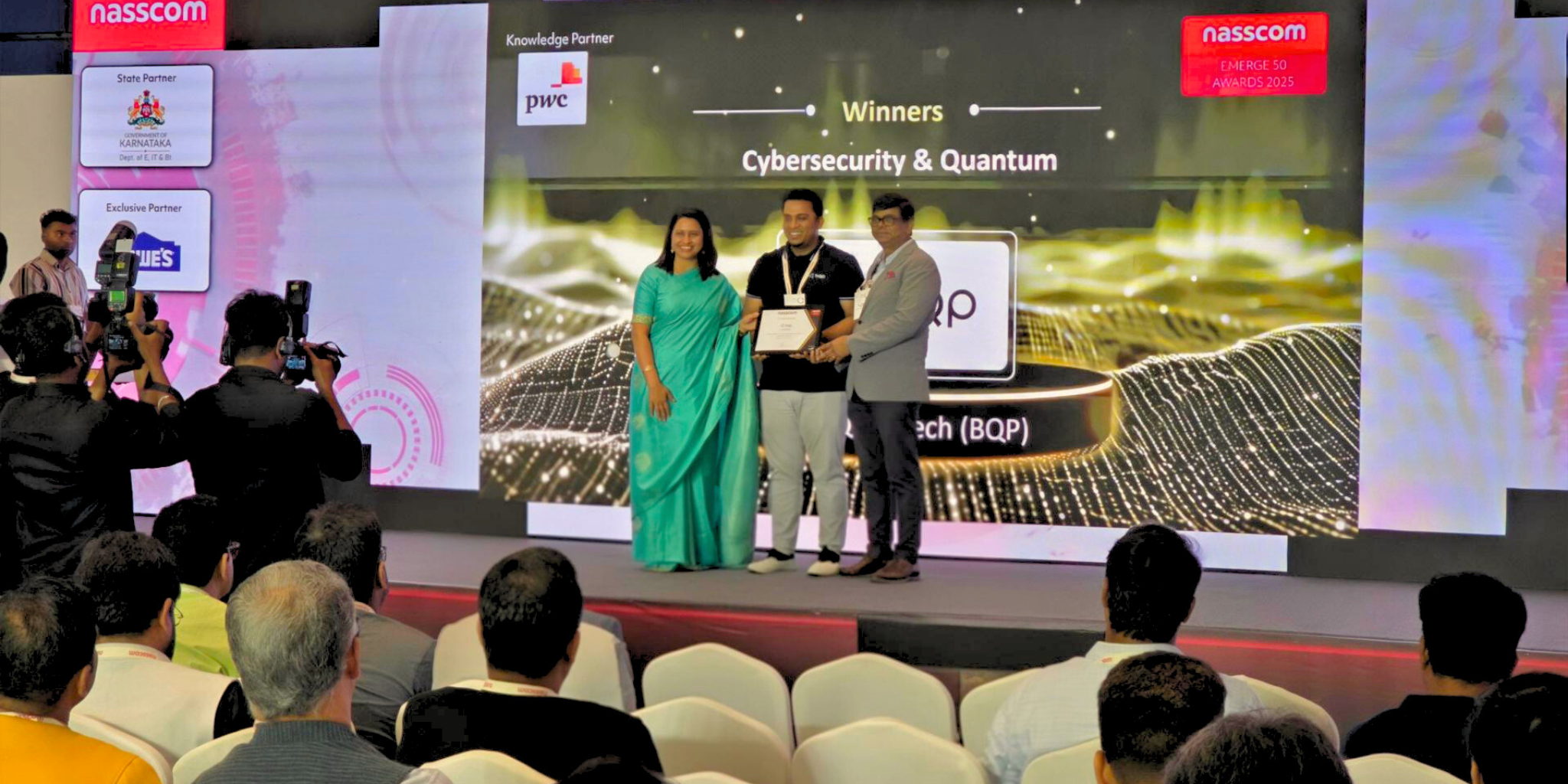
BQP was recognized at the NASSCOM Emerge 50 Awards 2025, which highlights emerging companies developing advanced technology solutions across India’s innovation ecosystem.
The recognition reflected BQP’s ongoing work in simulation optimization, quantum-inspired computational methods, and scalable engineering workflows designed for compute-intensive environments.
Industry discussions during the event focused on the future of deep-tech commercialization, applied AI systems, high-performance computing infrastructure, and the role of advanced simulation technologies across industrial sectors.
The engagement also provided opportunities to connect with technology leaders, researchers, and startup ecosystems working across India’s evolving deep-tech landscape.
BQP is the Gold Sponsor for Quantum India Bengaluru Summit
QIB, Bengaluru
Supporting India’s Quantum Technology Ecosystem
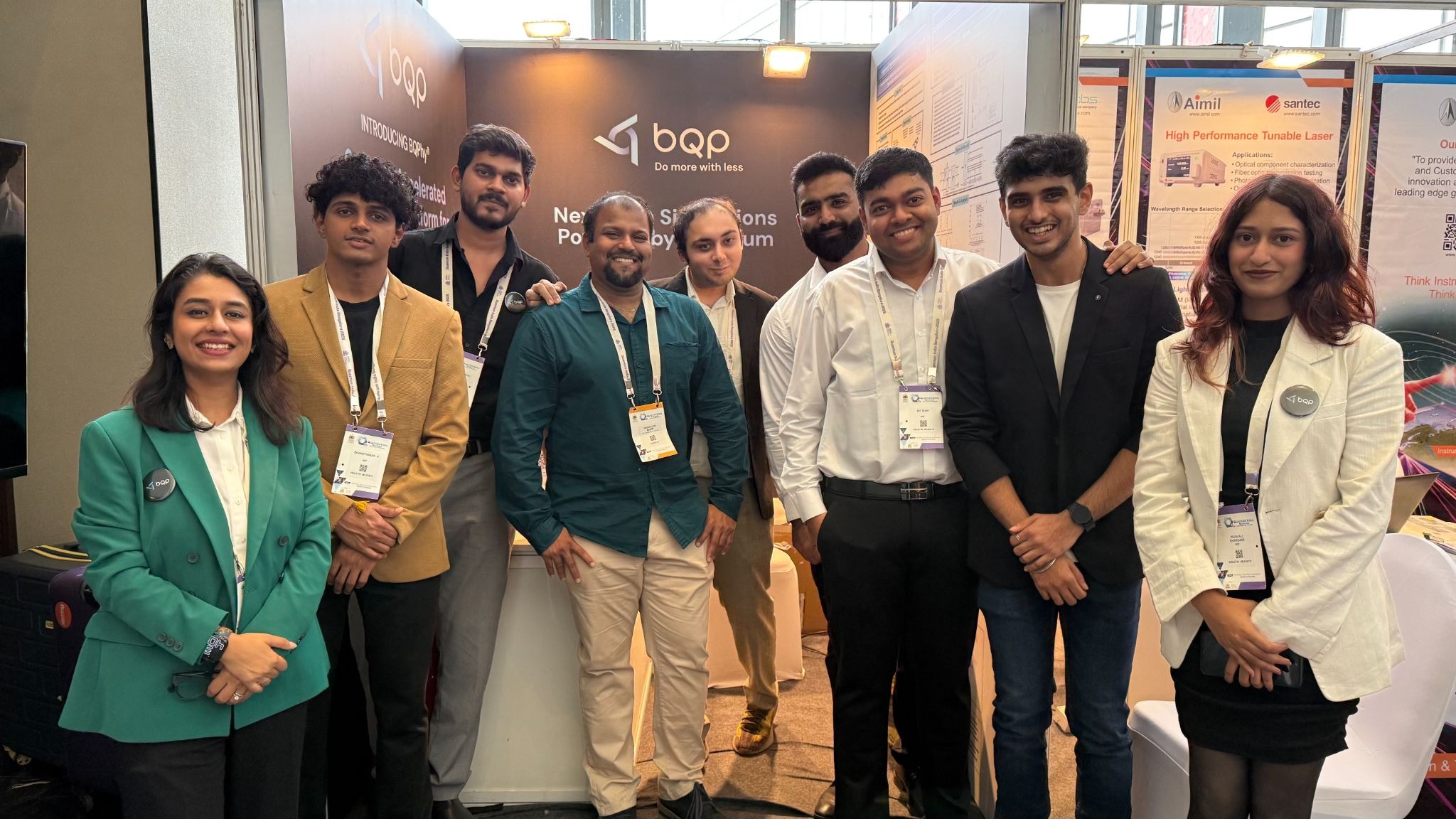
As a Gold Sponsor at the Quantum India Bengaluru Summit 2025, BQP participated in discussions focused on the future of quantum technologies, advanced computing infrastructure, and applied research collaboration.
The summit brought together researchers, startups, industry leaders, and academic institutions working across quantum computing, optimization systems, AI, and scientific computing domains.
Conversations throughout the event explored how quantum-inspired computational methods can support large-scale optimization workloads while integrating into existing enterprise and research environments.
BQP’s participation reflected its ongoing engagement in developing scalable simulation and optimization infrastructure designed for emerging quantum-ready computing ecosystems.
BQP Joins NY State and Defense Leaders to Advance Quantum Computing Infrastructure
Innovare Advancement Center, New York (NY)
Strengthening the New York Quantum Ecosystem
BQP participated in a strategic engagement alongside leaders from the Griffiss Institute and the Air Force Research Laboratory, with representatives from Empire State Development and the administration of Kathy Hochul.
Discussions focused on the development of New York’s quantum technology ecosystem and the infrastructure required to support future computational workloads across aerospace, defense, and advanced manufacturing.
As a New York Ventures portfolio company and HUSTLE Accelerator winner, BQP presented the progress of its QuantumNOW optimization solver and discussed how quantum-inspired computational methods can improve efficiency in large-scale simulation and optimization environments.
The session also explored workforce development initiatives, quantum-ready datacenter infrastructure, and the role of applied optimization systems in supporting next-generation computing architectures.
BQP Conducts Faculty Development Program on Quantum Machine Learning
NMIMS, Mumbai
Advancing Academic Engagement in Quantum Machine Learning
The Quantum Machine Learning Faculty Development Program focused on the practical and theoretical foundations of quantum computing and its intersection with artificial intelligence and scientific modeling at SVKM's NMIMS Mukesh Patel School of Technology Management & Engineering.
Led by Jay Shah, the session introduced faculty members and researchers to emerging computational approaches including Quantum Neural Networks, Quantum Support Vector Machines, Quantum NLP, Quantum GANs, and Quantum-Assisted Physics-Informed Neural Networks.
The program also examined how hybrid classical and quantum-inspired methods can support large-scale optimization and simulation workflows while improving computational efficiency in research environments.
Discussions throughout the workshop emphasized the growing relevance of quantum-ready computational models in engineering, AI, and advanced scientific computing disciplines.
BQP Joins Leaders and Policymakers at UK–India Future Forum Parliamentary Dialogue
House of Lords, London
Applying Quantum Technologies Across Global Innovation Ecosystems
Abhishek Chopra represented BQP at the 8th Annual Parliamentary Dialogue hosted by the UK-India Future Forum.
The discussion brought together policymakers, researchers, and industry leaders to examine how emerging quantum technologies can transition from research environments into industrial applications.
Conversations focused on commercialization pathways, infrastructure readiness, and the role of international collaboration in advancing deep-tech ecosystems across the United Kingdom and India.
Within this context, the dialogue explored how quantum-inspired optimization methods and advanced computational systems can support applications across aerospace, manufacturing, energy, and defense sectors.
BQP’s participation reflected its ongoing engagement with global policy, research, and industrial ecosystems shaping the future of applied quantum technologies.
Keynote Presentation on Transforming Space Missions
spaceNEXT 2026, Virginia (VA)
Presentation on next-generation algorithms for autonomous space computing and on-orbit data processing
At spaceNEXT 2026, Abhishek Chopra, Founder and CEO of BQP , presented a session titled “Transforming Space Missions with Next-Generation Algorithms.” The discussion focused on how improvements in computational methods can support more efficient processing, analysis, and decision-making in space missions.
Data challenge in space
Space missions today generate significantly more data than earlier generations of spacecraft. Modern satellite constellations used for Earth observation, communications, and scientific research produce large volumes of information that must be processed and transmitted.
However, communication bandwidth between spacecraft and ground stations remains limited. Transmitting large datasets directly to Earth can therefore be inefficient.
One approach being explored across the industry is on-orbit computing, where spacecraft process and analyze data in space before transmitting results to ground systems.
Processing data directly in orbit
Experiments conducted on the International Space Station have demonstrated how onboard processing can reduce transmission requirements.
In one example referenced during the session, a dataset that previously required several hours to transmit to Earth was processed and compressed in orbit, allowing the results to be transmitted more quickly.
This approach can support a range of mission applications, including:
- Autonomous spacecraft operations
- Space traffic monitoring
- Scientific data analysis
- Deep-space missions with limited communication windows
By processing information closer to where it is generated, spacecraft can reduce communication delays and improve operational efficiency.
Limitations of increasing hardware in space
Expanding onboard computing capability by simply adding more hardware presents challenges. Satellites must operate within strict constraints related to power consumption, thermal management, mass, and system complexity.
As a result, improving the efficiency of the software and algorithms running on spacecraft systems can be an effective way to increase computational performance without significantly increasing hardware requirements.
Chopra noted that many existing computing systems operate below their theoretical capacity, partly because algorithms were originally developed for earlier computing environments.
Approaches to improving computational efficiency
During the presentation, Chopra outlined several strategies that can improve computational efficiency in space environments:
Model compression Reducing the size of artificial intelligence and machine-learning models so they can operate on smaller computing systems.
Optimized computational architectures Designing algorithms specifically for spacecraft systems, including radiation-hardened processors and limited power environments.
Quantum-inspired algorithms Applying mathematical concepts from quantum computing to develop more efficient optimization and decision-making methods on conventional hardware.
These approaches can allow spacecraft systems to perform complex analysis while operating within the constraints of onboard computing resources.
Applications of quantum-inspired computation
Although large-scale quantum computers are still under development, certain mathematical techniques derived from quantum computing can already be applied to classical computing systems.
Chopra discussed examples where these techniques have been applied to space-related challenges. In satellite collision-avoidance modelling, quantum-inspired algorithms have demonstrated improved prediction accuracy while operating efficiently on existing computing infrastructure.
In collaborative work with the United States Space Force, similar computational approaches were used to reduce the time required for orbital calculations while maintaining accuracy.
These types of improvements may support the management of increasingly complex satellite environments as the number of objects in orbit continues to grow.
By applying quantum-inspired algorithms and advanced optimization techniques, BQP aims to support applications where computing resources are limited but analytical requirements are high, including space systems and other complex operational environments.
Developing these capabilities also supports the long-term objective of creating computational platforms that can integrate with future hardware developments as they become available.
Computing and the future of space missions
As satellite networks expand and missions generate increasing volumes of data, computational efficiency will remain an important factor in mission design and operations.
The session at spaceNEXT 2026 highlighted how improvements in algorithms and computational methods can support more efficient use of existing hardware while enabling new operational capabilities in space systems.
Read more: https://www.spacenextglobal.com/news/transforming-space-missions
BQP Showcases Quantum-Enhanced Simulation for Aerospace & Defense Innovations
AERODEFCON 2025, Chennai
Advancing Aerospace and Defense Technologies
BQP participated in AERODEFCON 2025 alongside organizations and professionals working across aerospace manufacturing, defense systems, and advanced engineering technologies.
Represented by Aditya Singh, Vijay Vishwanathan, Arunabh Chopra, and Ferdin Sagai Don Bosco, the team engaged in discussions around emerging aerospace manufacturing trends and the growing computational demands of mission-critical simulation environments.
The event also included conversations on how quantum-inspired optimization methods can support aerospace engineering workflows through improved simulation efficiency, faster computational analysis, and scalable optimization frameworks.
The engagement created opportunities for collaboration across aerospace, defense, and advanced computing ecosystems.
BQP Wins the NASSCOM Emerge 50 Award for Development of Innovative Technology
NASSCOM, Bengaluru
Recognition for Deep-Tech Innovation
BQP was recognized at the NASSCOM Emerge 50 Awards 2025, which highlights emerging companies developing advanced technology solutions across India’s innovation ecosystem.
The recognition reflected BQP’s ongoing work in simulation optimization, quantum-inspired computational methods, and scalable engineering workflows designed for compute-intensive environments.
Industry discussions during the event focused on the future of deep-tech commercialization, applied AI systems, high-performance computing infrastructure, and the role of advanced simulation technologies across industrial sectors.
The engagement also provided opportunities to connect with technology leaders, researchers, and startup ecosystems working across India’s evolving deep-tech landscape.
BQP is the Gold Sponsor for Quantum India Bengaluru Summit
QIB, Bengaluru
Supporting India’s Quantum Technology Ecosystem
As a Gold Sponsor at the Quantum India Bengaluru Summit 2025, BQP participated in discussions focused on the future of quantum technologies, advanced computing infrastructure, and applied research collaboration.
The summit brought together researchers, startups, industry leaders, and academic institutions working across quantum computing, optimization systems, AI, and scientific computing domains.
Conversations throughout the event explored how quantum-inspired computational methods can support large-scale optimization workloads while integrating into existing enterprise and research environments.
BQP’s participation reflected its ongoing engagement in developing scalable simulation and optimization infrastructure designed for emerging quantum-ready computing ecosystems.
BQP Wins Multiple Awards at SAE AeroCON®
SAE AeroCON 2026, Bengaluru
At AeroCON 2026, hosted at MIT Bengaluru, BQP was recognized with three distinctions: Best Paper Presentation in the Flight Dynamics category, Overall Best Paper for contributions supporting the aerospace innovation ecosystem.
The award-winning paper, "Quantum-Inspired Optimization for Trajectory Planning of Reusable Launch Vehicles across Diverse Missions", demonstrated how advanced optimization techniques can address critical challenges in reusable spaceflight mission planning.
The research focused on optimizing trajectories for reusable launch vehicles executing an ascent–hover–descent mission profile. Such missions involve complex constraints including nonlinear flight dynamics, atmospheric drag, gravitational effects, thrust limitations, and fuel consumption requirements. These factors make trajectory optimization highly challenging for conventional optimization methods.
Using BQPhy® and its Quantum-Inspired Evolutionary Optimization (QIEO) framework, the study explored more efficient approaches to identifying fuel-optimal flight paths while satisfying operational and physical constraints. Comparative analysis against traditional Genetic Algorithms showed significant improvements in computational efficiency, with optimization results achieved substantially faster while maintaining high-quality solutions.
The paper highlighted the growing applicability of quantum-inspired optimization in aerospace engineering, particularly for trajectory design, mission planning, reusable launch systems, and other computationally intensive aerospace applications.
These recognitions at AeroCON 2026 reflect BQP's continued focus on advancing simulation and optimization technologies for aerospace and defense industries while contributing to the development of next-generation engineering solutions.

.svg)
.svg)
.svg)
.svg)