Get Quantum Ready With BQPhy® QuantumNOW™
preparing for tomorrow’s quantum
advantage – a Practical Guide to
quantum‑inspired engineering workflows
Why Choose our Quantum Optimization Solution?
Enhanced Computational Efficiency
Versatile Applications
Scalable & Adaptive



Solutions to complex optimization across product lifecycle
System Level Design Optimization

DME Optimization

Mission Scheduling

Placement Optimization

Load Optimization

Industry Applications in Action
Multiple Ways to Connect






Unlock efficiency, cut costs, and reveal new possiblities.



.jpeg)

Pricing Structure
Quantum Optimization FAQs
What Are the Real Benefits of Quantum Optimization Software Today?
Quantum optimization software formulates and solves complex optimization problems using quantum algorithms, hybrid quantum–classical methods, or quantum-inspired techniques.
These platforms target combinatorial problems where traditional solvers struggle to explore large solution spaces efficiently. Typical problem classes include scheduling, portfolio optimization, routing, and other NP-hard optimization tasks.
Many current quantum algorithms including the Quantum Approximate Optimization Algorithm (QAOA) and Quadratic Unconstrained Binary Optimization (QUBO) formulations remain largely in the research and experimental stage. While promising, they have not yet consistently delivered industrial-scale return on investment in production environments.
Platforms such as BQPhy, developed by BQP, take a different approach. Instead of waiting for fault-tolerant quantum hardware, BQPhy deploys Quantum-Inspired Optimization (QIO) methods designed to run efficiently on classical and GPU infrastructure today while remaining architecturally compatible with future quantum systems.
What Are the Key Benefits of Quantum Optimization Software?
Enterprises increasingly face optimization problems where classical solvers struggle with scale, speed, or solution quality. In these scenarios, advanced optimization frameworks can deliver measurable advantages.
Faster solving of complex problems
Many quantum algorithms, such as the Quantum Approximate Optimization Algorithm, attempt to explore large combinatorial solution spaces more efficiently than classical heuristics.
Quantum-inspired platforms like BQPhy apply similar mathematical strategies using high-performance classical computing to accelerate search across complex optimization landscapes.
Better solutions at scale
Optimization problems such as routing, scheduling, and portfolio allocation grow exponentially as variables increase. Improved global search strategies allow solvers to evaluate more feasible combinations and move closer to globally optimal solutions.
Improved decision accuracy
Hybrid workflows combining classical optimization with quantum or quantum-inspired methods can reduce search space and improve solution quality for specific high-dimensional problems.
Cost and resource efficiency
Testing experimental quantum algorithms often requires specialized hardware access. By contrast, quantum-inspired platforms can operate on existing HPC and GPU infrastructure, allowing enterprises to test and deploy optimization workflows without waiting for hardware maturity.
Competitive advantage
Organizations that solve large-scale optimization problems more effectively can improve operational efficiency, reduce costs, and make better strategic decisions in areas such as logistics, finance, and infrastructure planning.
Handles combinatorial problems effectively
Quantum optimization approaches are particularly suited to problems like:
• MaxCut
• vehicle routing
• scheduling
• resource allocation
These problems are NP-hard in classical computing, meaning computational complexity increases exponentially as problem size grows.
What Key Features Should You Consider in Quantum Optimization Software?
When evaluating quantum optimization platforms, it is important to distinguish between research experimentation tools and systems capable of delivering measurable enterprise value.
Hybrid Quantum–Classical Support
Many quantum frameworks combine classical optimizers with quantum circuits to tune algorithm parameters.
This hybrid model is foundational in modern quantum research and allows classical systems to guide optimization while quantum processes explore solution spaces.
Pre-Built Optimization Algorithms
Most quantum software platforms provide implementations of widely studied algorithms such as:
• Quantum Approximate Optimization Algorithm (QAOA)
• Variational Quantum Eigensolver (VQE)
• quantum annealing methods
While these algorithms continue to evolve, many remain primarily research-oriented and may not yet consistently deliver large-scale enterprise ROI.
Platforms like BQPhy instead focus on quantum-inspired optimization, enabling measurable improvements today without relying on experimental quantum hardware.
Scalability and Performance
Real-world optimization problems often involve thousands or millions of decision variables.
True scalability requires the following:
• solving NP-hard and non-convex optimization problems
• maintaining performance as constraints increase
• running efficiently on existing HPC and GPU systems
Solutions designed for enterprise environments must deliver reliable time-to-solution improvements and better optimization outcomes.
Integration with Existing Systems
Many quantum platforms bundle proprietary hardware and software ecosystems, which may require new workflows or specialized expertise.
Enterprise-focused platforms emphasize easier integration through tools such as:
• MATLAB toolboxes
• high-performance APIs
• cloud-based deployment
These integration pathways allow organizations to embed optimization capabilities into existing engineering, simulation, and enterprise software environments.
Simulation Capabilities
Because large-scale quantum hardware is still evolving, simulation environments play a critical role.
CPU- and GPU-based simulators enable teams to test, validate, and refine optimization algorithms before executing them on future quantum hardware.
Platforms like BQPhy are designed to operate efficiently on classical infrastructure while remaining compatible with future quantum architectures.
User-Friendly APIs
Modern optimization software increasingly provides high-level development interfaces that allow engineers and developers to formulate complex optimization problems without deep expertise in quantum hardware.
Accessible APIs and SDKs enable broader adoption across engineering teams rather than limiting usage to quantum researchers.
What Are the Most Popular Quantum Optimization Software Tools?
Several platforms are currently used for quantum or quantum-inspired optimization research and development.
1. BQP
BQP develops BQPhy, a quantum-inspired optimization platform designed for engineering simulation and large-scale industrial optimization. The platform runs on classical HPC and GPU infrastructure while maintaining architectural compatibility with future quantum systems.
2. QC Ware Forge
Forge (QC Ware) is a commercial quantum optimization platform offering algorithms for logistics, finance, and materials science across multiple quantum hardware backends.
3. PennyLane
PennyLane, developed by Xanadu, is an open-source Python framework for differentiable quantum programming and hybrid quantum-classical machine learning workflows.
4. Quantinuum
Quantinuum provides a vertically integrated quantum computing stack combining hardware systems and the TKET quantum software toolkit.
5. D-Wave Leap
Leap (D-Wave) provides cloud access to quantum annealing hardware designed for solving Ising and QUBO optimization problems.
6. AWS Braket
Amazon Braket, offered by Amazon Web Services, is a managed cloud service that provides access to multiple quantum computing hardware providers and simulation environments.
Which Industries Are Using Quantum Optimization Software?
Quantum optimization becomes particularly valuable in industries where decision-making involves the following:
• thousands or millions of variables
• multiple competing objectives
• strict operational or regulatory constraints
• complex, dynamic systems
As objectives and constraints increase, the size of the solution space grows exponentially. Classical solvers often simplify the model or accept near-optimal results to remain computationally feasible.
Below are industries where advanced optimization approaches are increasingly explored
Defense
Mission planning for autonomous systems, surveillance networks, and operational logistics involves large variable sets, dynamic constraints, and real-time decision requirements.
Optimization helps balance objectives such as minimizing fuel usage, maximizing mission success probability, and reducing operational risk.
Aerospace
Flight scheduling, air traffic management, and aircraft routing require solving complex routing and resource allocation problems across large networks with strict safety constraints.
Space Launch
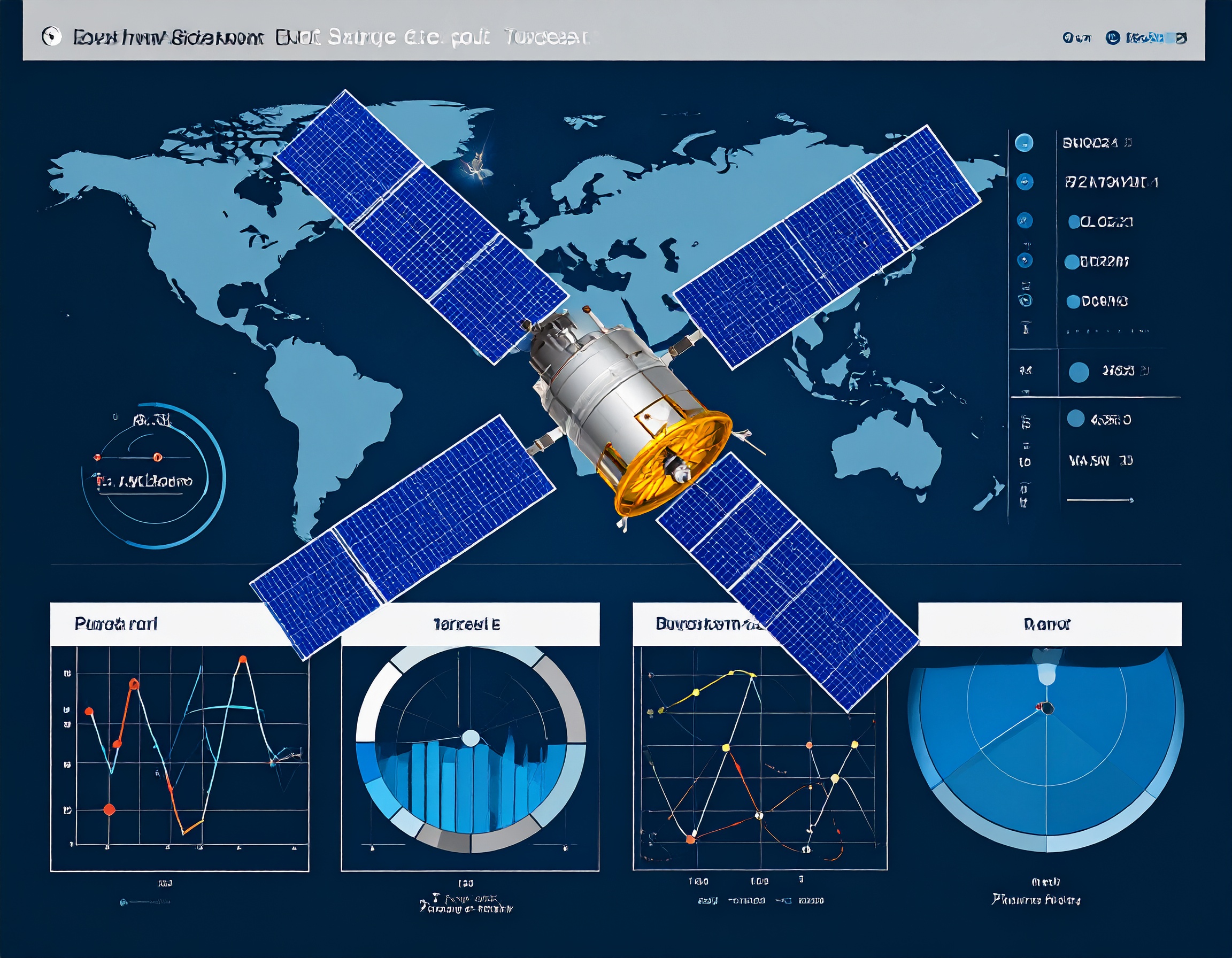
Satellite constellation planning and launch scheduling require optimizing orbital parameters, launch windows, and collision avoidance while minimizing cost and latency.
Logistics
Vehicle routing and fleet planning are classic combinatorial optimization problems. As the number of delivery points increases, the number of possible route combinations grows factorially.
Quantum-inspired optimization can help evaluate larger search spaces more efficiently.
Finance
Portfolio optimization involves balancing return, risk, liquidity, and regulatory constraints across high-dimensional asset portfolios with non-convex characteristics.
Manufacturing
Large production networks require optimizing production schedules, resource allocation, equipment usage, and supply chain coordination across multiple facilities.
Energy
Energy grid management involves balancing supply, demand, cost, and reliability across large infrastructure networks while integrating intermittent renewable energy sources.
Healthcare
Drug discovery and molecular candidate selection involve exploring extremely large combinatorial spaces of possible molecular structures and interactions.
Retail
Retail demand forecasting and inventory planning involve optimizing stock levels, replenishment schedules, and supply chains across hundreds or thousands of locations.




















.jpeg)
%2520697020.png)
.jpeg)






.jpeg)



.jpeg)









.jpeg)
.jpeg)



.jpeg)







.jpeg)



.jpeg)











.jpeg)









.png)


.png)




.svg)
.svg)
.svg)
.svg)