



Managing a fleet means balancing costs, performance, and safety across dozens or hundreds of vehicles operating simultaneously each day.
The global fleet management market is projected to reach USD 32.2 billion by 2026, growing at a 16.9% CAGR and ultimately reaching USD 153.7 billion by 2036. This growth trajectory is largely driven by the integration of AI-enhanced telematics and the regulatory requirement for electronic logging devices (ELD) in the commercial transport sector.
Fleet management optimization replaces reactive decision-making with proactive, data-driven planning, using real-time telematics and AI to systematically reduce costs, improve uptime, and enhance safety at scale.
- Fleet optimization spans route planning, fuel management, maintenance, driver behavior, and asset utilization.
- Predictive models transform raw operational data into forward-looking maintenance and performance decisions.
- BQP integrates simulation-driven predictive tools that let managers test strategies and forecast outcomes before deployment.
- Small inefficiencies multiply quickly across large fleets; data-driven optimization prevents compounding losses.
You will learn how to improve fleet efficiency, cut fuel and maintenance costs, and implement data-driven strategies that deliver measurable ROI across your operations.
What Is Fleet Management Optimization?
Fleet management optimization uses data analytics, telematics, and predictive modeling to improve how vehicles are deployed, maintained, and operated.
It reduces costs, increases uptime, and enhances safety across industries, including logistics, utilities, construction, passenger transport, and military fleet optimization where asset readiness is mission-critical. Unlike reactive fleet management, optimization enables proactive, data-backed decision-making at scale before breakdowns, delays, or cost overruns occur.
The goal is measurable improvement in three areas:
Effective fleet optimization combines technology with process discipline. Tools provide visibility and recommendations, but implementation requires aligning operations, training drivers, and continuously monitoring results.
What are the Core Areas of Fleet Optimization?
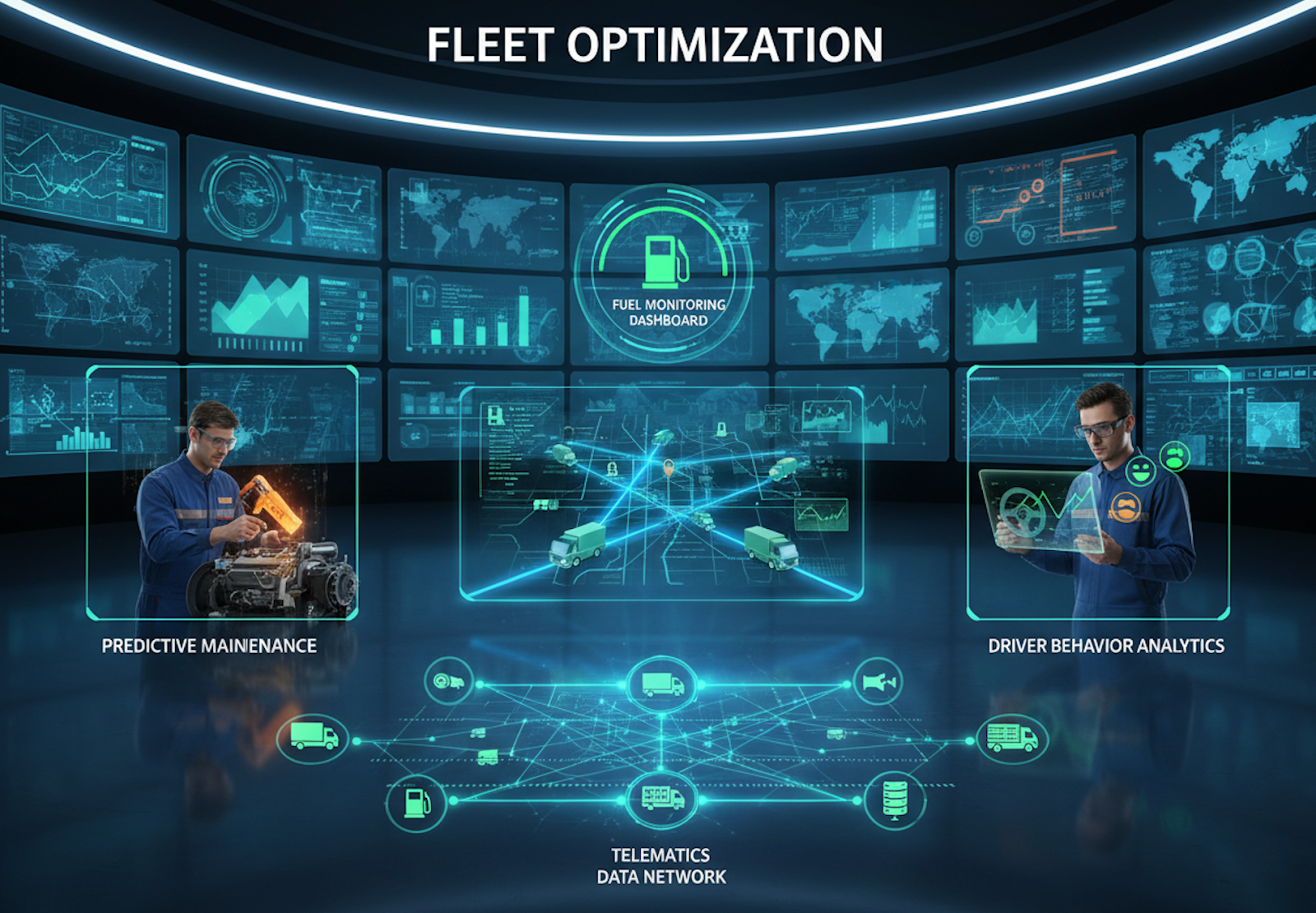
Fleet optimization delivers ROI through focused improvements in specific operational areas. Each contributes to lower costs, better performance, or improved safety.
1. Route Planning and Optimization
Route optimization uses GPS data, traffic patterns, delivery windows, and vehicle capacity to calculate the most efficient paths for each vehicle.
Benefits include:
- Reduced total mileage driven across the fleet.
- Lower fuel consumption through shorter or less congested routes.
- Improved on-time delivery rates by accounting for real-world traffic conditions.
- Better customer satisfaction through predictable arrival times.
Modern route optimization handles dynamic changes. If traffic conditions shift or a new delivery request arrives, the system recalculates routes in real time rather than forcing drivers to follow outdated plans.
2. Fuel Management
Fuel costs account for 25 to 35% of total fleet expenses, making fuel management one of the highest-impact optimization areas—a principle that extends across ground and air operations, as explored in flight and fuel optimization.
Telematics systems monitor:
- Idling time (often 5-10% of total fuel waste).
- Acceleration and braking patterns that increase consumption.
- Speed consistency and adherence to efficient driving practices.
- Refueling locations and pricing to optimize purchasing decisions.
Fleets using telematics typically reduce fuel consumption by 10-20% within the first year by addressing inefficient driving habits and unnecessary idling.
3. Preventive and Predictive Maintenance
Reactive maintenance fixing vehicles after breakdowns costs more in downtime, emergency repairs, and disrupted schedules than planned maintenance—a challenge well documented in airline maintenance cost optimization workflows that apply equally to ground fleets.
Predictive maintenance uses data from onboard diagnostics, mileage tracking, and usage patterns to forecast when components will fail. Sensors monitor engine performance, brake wear, tire pressure, and fluid levels, flagging issues before they cause breakdowns.
This approach:
- Extends vehicle lifespan by addressing problems early.
- Reduces emergency repair costs and towing expenses.
- Minimizes downtime by scheduling maintenance during low-demand periods.
- Improves safety by preventing failures that could cause accidents.
Fleet managers shift from calendar-based maintenance schedules (replace parts every X months) to condition-based schedules (replace parts when data indicates wear thresholds are approaching).
4. Driver Behavior and Safety
Driver behavior directly impacts fuel efficiency, vehicle wear, and accident rates. Telematics systems track:
- Hard braking and rapid acceleration.
- Speeding and aggressive cornering.
- Seatbelt usage and distracted driving indicators.
- Hours of service compliance and fatigue patterns.
Analytics identify high-risk behaviors across the fleet and at the individual driver level. Managers use this data for targeted training, coaching, and feedback rather than blanket policies that don't address specific issues.
Improved driver behavior reduces accident rates, lowers insurance premiums, and extends vehicle life by reducing mechanical stress from harsh driving.
5. Asset Utilization and Right-Sizing
Many fleets operate with mismatched capacity, too many vehicles sitting idle or too few to meet peak demand. Asset utilization analytics reveal:
- Which vehicles are underused and could be redeployed or retired.
- Which routes consistently exceed vehicle capacity, requiring upgrades.
- Whether seasonal demand patterns justify temporary rentals versus permanent fleet expansion.
Right-sizing prevents capital waste from owning more vehicles than needed while ensuring sufficient capacity during high-demand periods. Data-driven utilization analysis replaces guesswork with evidence.
6. Data and Telematics Integration
None of the above improvements happen without centralized data. Telematics systems collect information from vehicles in real time location, speed, fuel levels, diagnostic codes, driver inputs and transmit it to central platforms.
Integration combines this vehicle data with:
- Maintenance records and service histories.
- Fuel card transactions and pricing data.
- Driver schedules and compliance logs.
- Customer delivery requirements and service windows.
Centralized data enables cross-functional analysis—an approach that scales from commercial fleets to the demands of defense logistics optimization. Maintenance teams see which routes cause the most wear. Operations teams see which drivers consistently achieve better fuel economy. Centralized data enables cross-functional analysis. Maintenance teams see which routes cause the most wear. Operations teams see which drivers consistently achieve better fuel economy. Finance teams see total cost of ownership trends across vehicle types.
For more on how simulation drives optimization workflows, visit our article on simulation-driven optimization in digital mission engineering.
What are the Technologies Powering Fleet Optimization?
Fleet optimization relies on a technology stack that collects, processes, and analyzes operational data.
Telematics Systems
Hardware installed in vehicles combines GPS receivers with onboard diagnostic interfaces. These systems continuously transmit location, speed, engine status, and diagnostic trouble codes to cloud platforms.
Telematics provides the raw data layer for all other optimization functions.
Fleet Management Software
Centralized platforms aggregate telematics data, maintenance records, fuel transactions, and driver logs into unified dashboards. They provide scheduling tools, compliance tracking, and reporting capabilities.
Modern platforms integrate with existing enterprise systems ERP, accounting, customer management to ensure data flows across the organization without manual duplication.
AI and Predictive Models
Machine learning models analyze historical patterns to predict future events. They forecast when vehicles will require maintenance, identify routes likely to encounter delays, and recommend optimal scheduling configurations based on demand forecasts.
Predictive models improve over time as they process more data, becoming more accurate at identifying patterns human operators would miss.
Cloud and IoT Integration
Cloud infrastructure enables real-time data processing and access from any location. Fleet managers monitor operations from mobile devices, dispatchers adjust routes remotely, and maintenance teams receive alerts instantly when diagnostic issues arise.
IoT sensors expand beyond basic telematics to monitor cargo temperature, trailer door status, tire pressure, and environmental conditions. This granular visibility prevents losses and ensures compliance with regulations.
What are the Key Benefits of Fleet Optimization?
Organizations that implement fleet optimization achieve measurable improvements across multiple dimensions.
1. Lower Operating Costs
Fuel savings of 10 to 20%, reduced maintenance expenses through predictive scheduling, and better asset utilization directly impact profitability. AI automation has shown the potential to cut total fleet costs by up to 40% in high-utilization environments. Eliminating unnecessary mileage, idle time, and reactive repairs compounds savings over time.
2. Improved Uptime and Vehicle Health
Predictive maintenance prevents breakdowns that sideline vehicles for days. Scheduled repairs during off-peak hours minimize disruption. Fleets adopting predictive maintenance have reported maintenance cost reductions of approximately 11%, alongside extended vehicle lifespans that reduce capital expenditure on replacements.
3. Safer Operations
Driver behavior monitoring and coaching reduce accident rates. Fewer accidents mean lower insurance premiums, reduced liability exposure, and better employee safety outcomes. Real-time visibility into driver behavior allows managers to intervene early rather than after an incident.
4. Sustainability and Compliance
Reduced fuel consumption lowers emissions. Optimized routes decrease total miles driven. Telematics provides documentation for regulatory compliance reporting on hours of service, emissions standards, and safety inspections, helping fleets meet sustainability targets alongside operational ones.
5. Greater Reliability and Customer Satisfaction
Fleet optimization can drive profitability improvements of approximately 12% through higher vehicle utilization and faster service delivery. Accurate ETAs, consistent on-time performance, and proactive communication about delays build customer trust and support long-term retention.
Understanding the full ROI of optimization is essential before selecting tools or deciding on a deployment approach.
Fleet Optimization Strategies to Maximize Efficiency
Implementing the right strategies determines how much value fleet optimization delivers. These six approaches address the highest-impact areas across fleet operations.
1. Data-Driven Decision Making
Use telematics to continuously track KPIs, including cost-per-mile, idle time, fuel consumption, and vehicle utilization. Centralized dashboards surface inefficiencies that would otherwise remain invisible across large fleets, enabling managers to act on evidence rather than intuition.
2. Route Optimization
AI-based route planning analyzes traffic patterns, weather conditions, delivery windows, and vehicle capacity to determine the most efficient paths in real time. Optimized routing reduces total fuel usage, improves on-time delivery rates, and lowers total miles driven across the fleet.
3. Proactive and Predictive Maintenance
Schedule maintenance based on real-time vehicle usage data, sensor readings, and usage pattern analysis rather than fixed calendar intervals. Predictive models flag components approaching failure thresholds, enabling repairs before breakdowns occur, reducing downtime, and extending vehicle lifespan—an approach that mirrors predictive aviation optimization methods now being applied across commercial and industrial fleets.
4. Right-Sizing the Fleet
Analyze demand patterns to determine the optimal number of vehicles for each route, region, or service type. Vehicle pooling and asset sharing eliminate underutilized capacity, while demand forecasting prevents over-provisioning during low-demand periods—similar to how airport gate optimization balances dynamic asset allocation against fluctuating demand. Right-sizing reduces capital expenditure while preserving service capacity when needed.
5. Driver Behavior Management
Monitor driver behavior patterns, including speeding, harsh braking, rapid acceleration, and excessive idling. Use data to deliver targeted coaching and feedback at the individual driver level. Improved driver behavior reduces fuel consumption, lowers accident rates, decreases vehicle wear, and reduces insurance premiums.
6. Sustainability and Electrification
Optimize EV charging schedules and infrastructure placement to reduce emissions and energy costs. For mixed fleets, telematics supports informed decisions about which routes and vehicle types are best suited for electrification, reducing total cost of ownership over the long term—alongside load and optimizing passenger weight reduction strategies that further improve energy efficiency across the fleet.
Solving complex quantum optimization problems within fleet operations—including multi objective optimization across multi-depot routing and large-scale scheduling—can unlock performance gains beyond what traditional software achieves with a Quantum Optimization solution.
Fleet Optimization Software and Platforms
Choosing the right platform is critical to achieving fleet optimization goals. Below is an overview of leading tools and how they compare.
1. BQP
BQP is a simulation-driven predictive modeling platform purpose-built for complex operational environments, including fleet management. It goes beyond traditional telematics by integrating physics-informed AI models with real-time data, enabling fleet managers to simulate scenarios, forecast outcomes, and make confident decisions before committing resources.
The platform connects telematics inputs with predictive algorithms to model how different operational strategies, maintenance schedules, and routing configurations will perform under varying conditions. This simulation-first approach dramatically reduces the risk of operational changes by validating decisions in a controlled digital environment before real-world deployment.
BQP is particularly suited for organizations managing large, complex fleets where the cost of suboptimal decisions is high and where standard fleet software does not capture the full range of operational variables affecting performance and cost.
Key Features:
- What-if simulation engine for route, schedule, and asset configuration testing before deployment.
- Predictive maintenance modeling based on usage patterns, environmental conditions, and historical failure data.
- Physics-informed AI models that embed mechanical and operational constraints for more accurate forecasting.
- Real-time performance tracking against simulated benchmarks to detect deviations and adjust strategies dynamically.
Pros:
- Enables risk-free strategy testing before committing operational resources.
- Physics-informed models deliver higher forecast accuracy than purely data-driven tools.
- Supports cost-versus-performance trade-off analysis across fleet composition scenarios.
Cons:
- Optimized for complex, data-rich fleet environments rather than basic tracking needs.
- Full value realization requires integration with existing telematics and maintenance data sources.
- Best suited for organizations with an analytics-oriented operations team in place.
2. Samsara
Samsara is an end-to-end fleet management platform offering real-time GPS tracking, driver safety analytics, and compliance tools. It serves mid-to-large fleets across logistics, construction, and field services, combining hardware and software into a unified, cloud-connected operations platform.
Key Features:
- Real-time GPS tracking with live map views across all vehicles.
- AI-powered dashcam safety monitoring with automated driver coaching alerts.
- ELD compliance and hours-of-service reporting built into the platform.
Pros:
- Easy to deploy with plug-and-play hardware and intuitive dashboards.
- Strong driver safety tools that reduce accident rates and insurance costs.
- Extensive reporting capabilities for compliance and performance management.
Cons:
- Higher hardware and subscription costs compared to software-only platforms.
- Some advanced features require higher-tier plans not available at base pricing.
- Customer support responsiveness can vary for enterprise-level accounts.
3. Verizon Connect
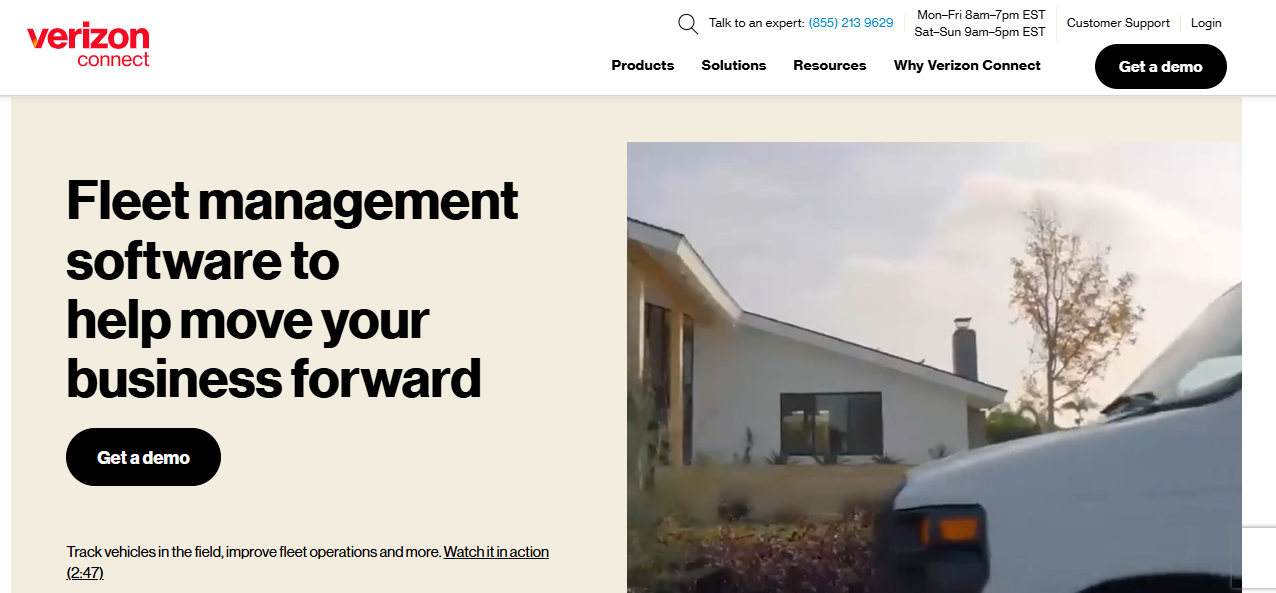
Verizon Connect is a fleet tracking and compliance management platform built for regulated commercial fleets. It combines GPS tracking, ELD compliance, and route optimization tools, making it a strong fit for fleets operating under strict hours-of-service and safety regulations.
Key Features:
- ELD compliance with automated hours-of-service logging and alerts.
- Integrated route optimization to reduce mileage and improve delivery scheduling.
- Driver scorecard reporting for monitoring behavior across the fleet.
Pros:
- Robust compliance tools well-suited for regulated industries like trucking.
- Reliable network infrastructure backed by Verizon's connectivity coverage.
- Scalable platform that supports both small and large commercial fleets.
Cons:
- Interface can feel dated compared to newer fleet management platforms.
- Contract terms are often rigid, with limited flexibility for short-term needs.
- Customization options are more limited than open-API competitors.
4. Geotab

Geotab is an open telematics and data analytics platform known for its extensive third-party integration ecosystem and highly customizable reporting. It is widely used by data-driven fleet managers who require granular visibility and flexible software integrations across their operations.
Key Features:
- Open API architecture supporting hundreds of third-party integrations.
- Detailed vehicle diagnostics, fuel tracking, and custom KPI dashboards.
- A scalable data analytics engine that handles fleets from small to enterprise scale.
Pros:
- Highly customizable to fit complex fleet management and reporting workflows.
- Large partner marketplace with add-on solutions for specialized needs.
- Strong data granularity that supports advanced analysis and benchmarking.
Cons:
- Complexity of the platform requires technical expertise to configure effectively.
- Reporting depth can overwhelm smaller teams without dedicated analytics resources.
- Some integrations require additional licensing fees from third-party providers.
5. Fleet Complete (now Powerfleet)
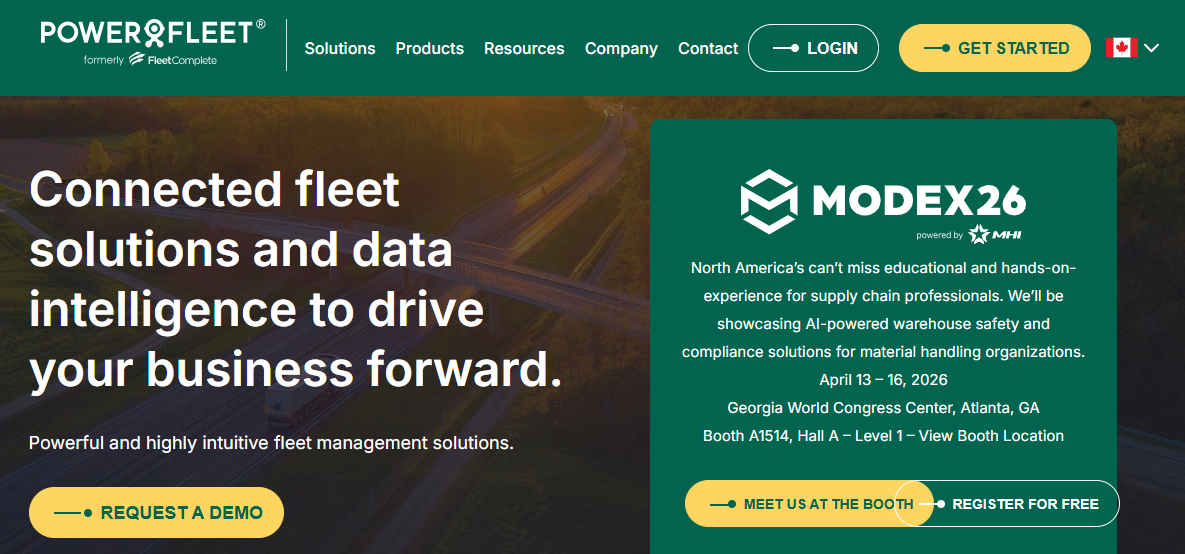
Fleet Complete is a mixed-asset IoT management platform combining driver monitoring, GPS tracking, and equipment management in a single solution. It is designed for organizations managing diverse asset types alongside traditional vehicles, including trailers, heavy equipment, and powered industrial tools.
Key Features:
- IoT device management for tracking vehicles, trailers, and non-powered equipment.
- Driver behavior monitoring with automated alerts for safety events.
- Work order management and job dispatch tools integrated into the platform.
Pros:
- Supports mixed fleets including non-vehicle assets beyond standard telematics.
- Combines fleet tracking with field service management in one platform.
- Flexible deployment options for fleets of varying sizes and complexity.
Cons:
- Mobile app performance has received mixed reviews from field users.
- Customer service quality can be inconsistent across different regions.
- Reporting capabilities are less advanced than dedicated analytics-focused competitors.
How to Achieve Fleet Optimization?
Successful fleet optimization follows a structured, iterative process. Each phase builds on the last, creating a continuous improvement cycle rather than a one-time implementation.
Step 1: Collect and Centralise Your Data
Install telematics hardware and integrate all data sources, including GPS, onboard diagnostics, fuel cards, and maintenance records, into a central platform. Centralized data is the foundation; without it, analysis remains fragmented, and decisions stay reactive.
Step 2: Analyse Baseline Performance
Establish performance benchmarks across key metrics: average fuel consumption per mile, vehicle utilization rates, maintenance costs per vehicle, accident frequency, and on-time delivery percentages. Identify outliers, high-cost routes, and underperforming assets using analytics tools before attempting any changes.
Step 3: Implement Targeted Changes
Adjust operations based on findings. Reroute inefficient paths, schedule predictive maintenance for at-risk vehicles, provide targeted driver coaching, retire underutilized assets, and redeploy vehicles to higher-demand routes. Coordinate across operations, maintenance, safety, and finance teams to align on priorities before rollout.
Step 4: Monitor KPIs Continuously
Track KPIs after changes to confirm improvement. Measure fuel consumption before and after route optimization. Monitor downtime reduction following predictive maintenance rollout. Review accident rates after driver training programs. Optimization is iterative; new inefficiencies emerge as fleets evolve and external conditions shift.
Step 5: Scale What Works
Apply successful strategies across the broader fleet. If predictive maintenance proves effective for one vehicle class, expand it to others. If route optimization works in one region, roll it out system-wide. Build organizational capability around data-driven decision-making rather than treating optimization as a technology project with a fixed endpoint.
How BQP Enhances Fleet Optimization?
BQP brings simulation-driven predictive modeling to fleet management, enabling managers to move beyond reactive operations and test strategies in a digital environment before committing real resources. The platform integrates telematics data with advanced optimization algorithms to model how routing changes, maintenance schedules, and asset configurations perform under varying real-world conditions.
Where traditional fleet tools provide visibility after the fact, BQP shifts decision-making forward. Managers evaluate trade-offs, forecast outcomes, and identify cost-versus-performance implications before a single vehicle moves.
Physics-informed AI models sit at the core of BQP's forecasting engine, embedding mechanical and operational constraints that purely data-driven tools overlook. This translates into higher forecast accuracy across maintenance, routing, and fleet composition decisions, particularly in complex, high-variability environments.
- What-if simulations for routing, scheduling, and service territory changes before deployment.
- Predictive maintenance modeling using usage patterns, environmental data, and historical failure rates.
- Real-time performance tracking against simulated benchmarks to detect and respond to deviations.
- Physics-informed models that account for load, terrain, and environmental variables in forecasting.
- Cost-versus-performance trade-off visibility to prioritize decisions with the highest operational ROI.
BQP transforms fleet optimization from a reactive process into a continuous, intelligence-driven capability. Managers gain the confidence to act decisively, backed by simulation and predictive data at every step. Start your Free Trial and see BQP in action.
Conclusion
Fleet management optimization combines technology, data analytics, and process discipline to reduce costs, improve uptime, and enhance safety. It replaces reactive firefighting with proactive planning based on real-time information and predictive modeling.
Success requires more than software installation. It demands integration of data sources, alignment of operational processes, continuous monitoring, and iterative improvement. Organizations that treat optimization as an ongoing capability rather than a one-time project achieve sustained competitive advantages.
BQP enhances fleet optimization by adding simulation-driven predictive capabilities that let managers test strategies, forecast outcomes, and make data-backed decisions with confidence.
Maximize uptime and cut costs with BQP's fleet optimization tools. Book a Demo.
FAQs
1. What is fleet management optimization?
Fleet management optimization uses telematics, AI, and predictive analytics to improve how vehicles are deployed, maintained, and operated. It reduces fuel costs, increases uptime, and enhances safety by replacing reactive decision-making with proactive, data-driven planning across the full asset lifecycle.
2. How is fleet optimization different from fleet management?
Fleet management covers day-to-day tracking and administration of vehicles and drivers. Fleet optimization goes further by analyzing operational data to actively reduce costs, improve efficiency, and prevent issues before they occur. Optimization is the strategic, continuous improvement layer built on top of standard fleet management.
3. What technologies are used in fleet optimization?
Core technologies include telematics systems (GPS and onboard diagnostics), fleet management software for centralized analytics, AI-driven predictive models, cloud platforms for real-time data access, and IoT sensors that monitor cargo conditions, tire pressure, and environmental variables across vehicles.
4. How long does it take to see ROI from fleet optimization?
Most organizations see measurable improvements within 3 to 6 months, including fuel savings, reduced maintenance costs, and fewer accidents. Full ROI typically occurs within 12 to 18 months as optimization practices mature and expand across the fleet.
5. Can small fleets benefit from optimization?
Yes. Optimization scales to fleets of any size. Even small fleets benefit from route efficiency, fuel management, and predictive maintenance. Cloud-based platforms offer flexible pricing that makes optimization accessible regardless of fleet size or operational complexity.
6. What are the biggest cost drivers in fleet operations?
Fuel accounts for 25 to 35% of total fleet expenses, making it the single largest cost driver. Unplanned maintenance and downtime, vehicle depreciation, insurance premiums, and driver labor costs follow closely. Optimization addresses each of these through data-driven monitoring and proactive operational decisions.
.png)
.png)

%2520697020.png)
.svg)
.svg)
.svg)
.svg)