





Aerospace missions, smart factories, and energy grids must respond to dynamic variables in real time, as engineering systems now operate in environments where conditions change continuously.
The demand for faster decision-making is reshaping analytics infrastructure. The global real-time analytics market is valued at $43.8 billion in 2026 and projected to reach $223.3 billion by 2033, reflecting how critical real-time decision systems have become for modern operations.
Modern real-time optimization software combines live data streams, advanced algorithms, and simulation models to evaluate decision spaces continuously instead of relying on static optimization cycles.
Industries already relying on real-time optimization include:
- Aerospace teams adjusting flight parameters and propulsion performance under changing mission conditions
- Energy grid operators balancing renewable generation, storage, and demand fluctuations in real time
- Advanced manufacturing teams optimize production schedules and machine utilization dynamically
- Supply chain operators adapting routing and logistics decisions as disruptions occur
This guide explains how real-time optimization platforms work, how they integrate with engineering systems, and how to evaluate the leading tools used by enterprise and engineering teams today.
Comparing Real-Time Optimization Software Platforms
Engineering teams evaluating real-time optimization software typically compare platforms based on solver architecture, deployment flexibility, and the type of optimization problems they support.
Some tools focus on engineering simulations, while others specialize in enterprise operations research or experimentation.
Best for engineering simulations: BQP (BQPhy®) — physics-informed optimization with quantum-inspired solvers designed for aerospace and defense workflows.
Best for enterprise operations: Gurobi and IBM Decision Optimization — mature mathematical programming solvers used widely in logistics and planning.
Best for experimentation: Open-source libraries — useful for testing optimization models before deploying production infrastructure.
Why Real-Time Optimization Is Critical for Modern Engineering Systems?
Engineering systems today operate in environments where conditions change constantly. Satellite constellations adjust orbital parameters mid-missionorbital parameters mid-mission, smart factories adapt production lines based on machine status and demand signals, and power grids balance fluctuating renewable generation against real-time consumption.
They analyze a fixed dataset, produce an optimal solution, and assume the system conditions will remain stable long enough for that solution to be implemented.
In dynamic engineering environments, however, those assumptions rarely hold for long. As inputs change, constraints shift and previously optimal solutions can quickly become outdated.
Industries already experiencing this shift include:
- Satellite operations managing large constellations with changing orbital conditions and mission constraints
- Smart manufacturing optimizing production schedules as machine status, supply availability, and demand signals change
- Autonomous systems processing sensor data and route decisions simultaneously
- Energy grids balancing distributed renewable generation against real-time demand
Real-time optimization software addresses this challenge by treating optimization as a continuous process rather than a one-time calculation.
How Real-Time Optimization Software Works?
Real-time optimization software connects live system data with algorithms that continuously evaluate and update operational decisions.Instead of running a single optimization cycle, the system monitors conditions, evaluates options, and produces updated recommendations as new data arrives.
Most real-time optimization platforms follow a layered architecture.
Data Ingestion Layer
The process begins with continuous data collection from multiple sources such as simulation outputs, sensor telemetry, IoT devices, digital twins, and enterprise systems like ERP or MES platforms.
The ingestion layer must handle different data formats, update frequencies, and data noise. Low latency is critical because delays in incoming data directly affect optimization accuracy.
Optimization Engine
The optimization engine evaluates possible solutions based on current conditions and constraints. Common algorithms used in real-time decision optimization software include:
- Genetic algorithms for combinatorial search problems
- Gradient-based methods for continuous optimization
- Reinforcement learning for sequential decision environments
- Quantum-inspired optimization for exploring large solution spaces efficiently
These algorithms continuously search the decision space to identify solutions that improve system performance.
Simulation Layer
Engineering systems often require physics-based models to evaluate candidate solutions. “Simulation environments or digital twins help replicate real-world system behavior, allowing optimization models to test decisions before they are applied.
Technologies such as Physics-Informed Neural Networks (PINNs) embed physical laws directly into AI models, helping maintain accuracy in complex engineering simulations.
Decision Output
The final stage converts optimization results into actionable recommendations that integrate with operational dashboards, control systems, or mission planning tools.
Many real-time optimization platforms also create a feedback loop where executed decisions generate new data, similar to Mission Assurance workflows used in aerospace operations.
Real-Time Optimization Software: Top Platforms Reviewed
1. BQP
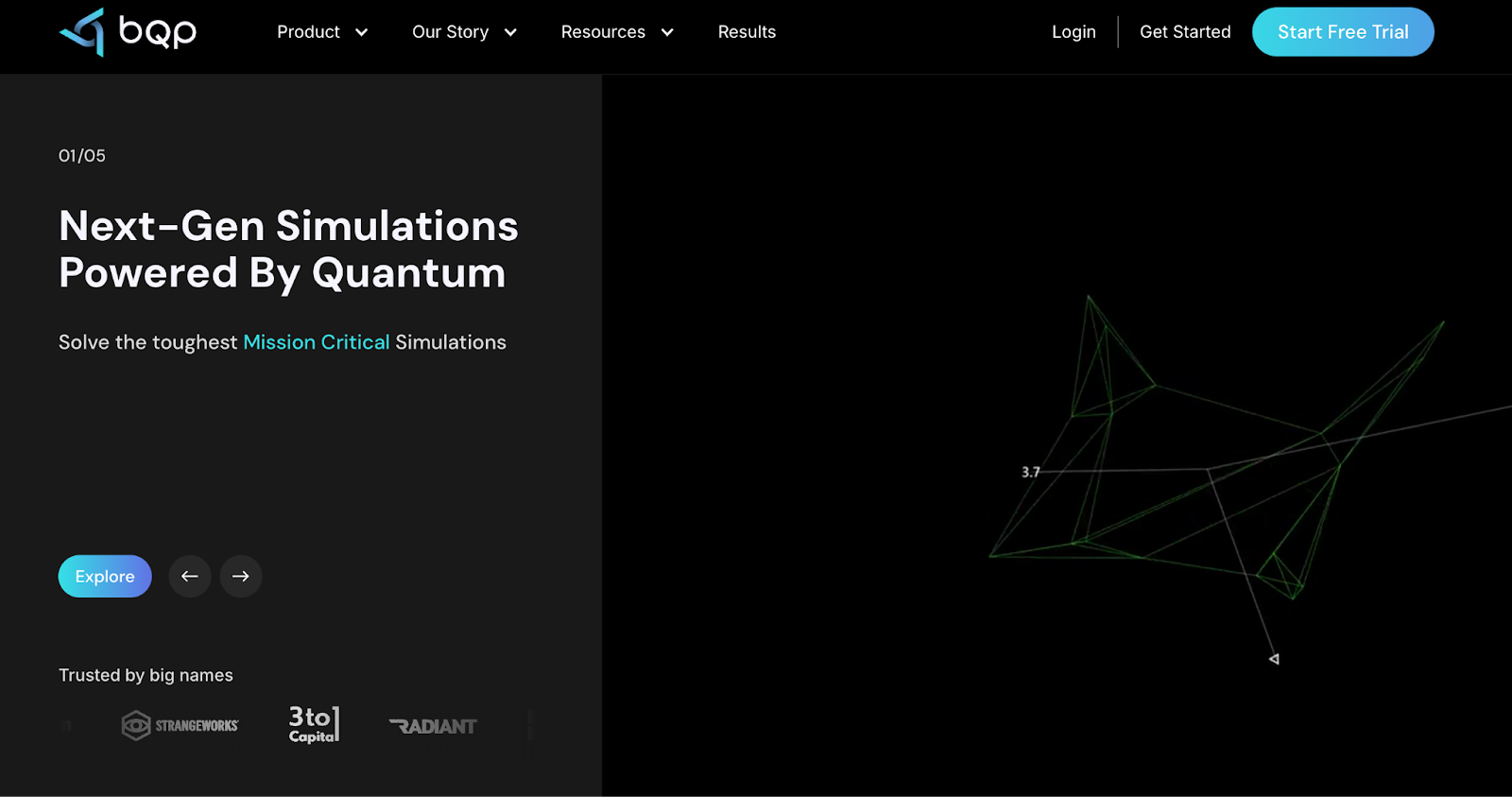
BQPhy® is a quantum-inspired optimization and simulation platform developed by BQP for solving complex engineering and mission-critical problems. The platform uses Quantum-Inspired Optimization (QIO) algorithms running on classical HPC, CPU, and GPU infrastructure to explore large solution spaces more efficiently than traditional optimization methods.
BQP is designed primarily for aerospace, defense, advanced manufacturing, and engineering simulation environments where optimization problems involve nonlinear physics, large design spaces, and tightly coupled constraints.
BQPhy combines quantum-inspired algorithms, physics-informed machine learning models, and hybrid quantum-classical workflows to accelerate engineering optimization without requiring access to physical quantum hardware.
Key Features
- Quantum-Inspired Optimization (QIO) Solvers
GPU-optimized algorithms designed to explore large design spaces and reduce iteration cycles in complex optimization problems.
- Hybrid Quantum–Classical Architecture
Runs quantum-inspired algorithms on existing HPC, CPU, and GPU systems without requiring specialized quantum hardware.
- Physics-Informed AI Models (PINNs / QA-PINNs)
Embed governing physical laws directly into machine learning models for applications such as fluid dynamics, orbital mechanics, and structural analysis.
- Integration with Existing Engineering Workflows
Designed to plug into current simulation environments and engineering pipelines without requiring major infrastructure changes.
- Real-Time Solver Monitoring
Live dashboards allow engineers to track convergence, compare runs, and adjust optimization parameters during execution.
Pros
- Built specifically for complex engineering optimization and simulation workflows
- Quantum-inspired algorithms accelerate exploration of large design spaces
- Runs on existing HPC/GPU infrastructure — no quantum hardware required
- Supports physics-informed modeling for aerospace and mission-critical systems
Cons
- Focused primarily on engineering simulation and mission-planning optimization
Pilot Program
BQP offers proof-of-concept pilots where engineering teams can test BQPhy® on their specific optimization problems before committing to full deployment.
Explore how BQPhy® accelerates complex engineering optimization workflows.
Start your 30-day free trial today.
2. Gurobi Optimizer

Gurobi Optimizer is one of the most widely used mathematical optimization solvers in operations research. It specializes in solving linear programming (LP), mixed-integer programming (MIP), and quadratic optimization problems with high performance and reliability.
The platform is commonly used by organizations working on logistics planning, financial optimization, energy systems, and supply chain operations. While it is extremely powerful for mathematical optimization problems, it is typically used within custom workflows rather than as a standalone real-time engineering optimization platform.
Key Features
- High-performance LP, MIP, QP, and SOCP solvers
- APIs for Python, Java, C++, and .NET
- Cloud, on-premise, and Compute Server deployment options
- Warm-start capabilities for faster sequential solves
Pros
- Industry-leading mixed-integer programming performance
- Mature ecosystem with strong documentation and academic adoption
- Reliable enterprise-grade solver stability
Cons
- No built-in physics simulation capability
- Real-time optimization depends on problem formulation and solve cycles
- Requires integration with external tools for engineering simulation workflows
3. IBM Decision Optimization (CPLEX)
IBM Decision Optimization brings together CPLEX and CP Optimizer inside the IBM data and AI ecosystem. The platform is widely used for enterprise planning, scheduling, and supply chain optimization across industries.
It integrates with IBM Watson Studio and Cloud Pak for Data, allowing organizations to combine optimization models with data pipelines, analytics workflows, and machine learning environments.
Key Features
- CPLEX solver for linear and mixed-integer optimization
- CP Optimizer for scheduling and constraint programming
- Integration with IBM Watson Studio and Cloud Pak for Data
- Decision Optimization notebooks for model experimentation
Pros
- Strong integration with the IBM enterprise ecosystem
- Powerful scheduling and planning optimization
- Enterprise-grade support and scalability
Cons
- Requires external tools for physics-based engineering simulation
- Real-time workflows often rely on batch optimization pipelines
- Higher complexity for teams outside the IBM technology stack
4. Siemens Simcenter
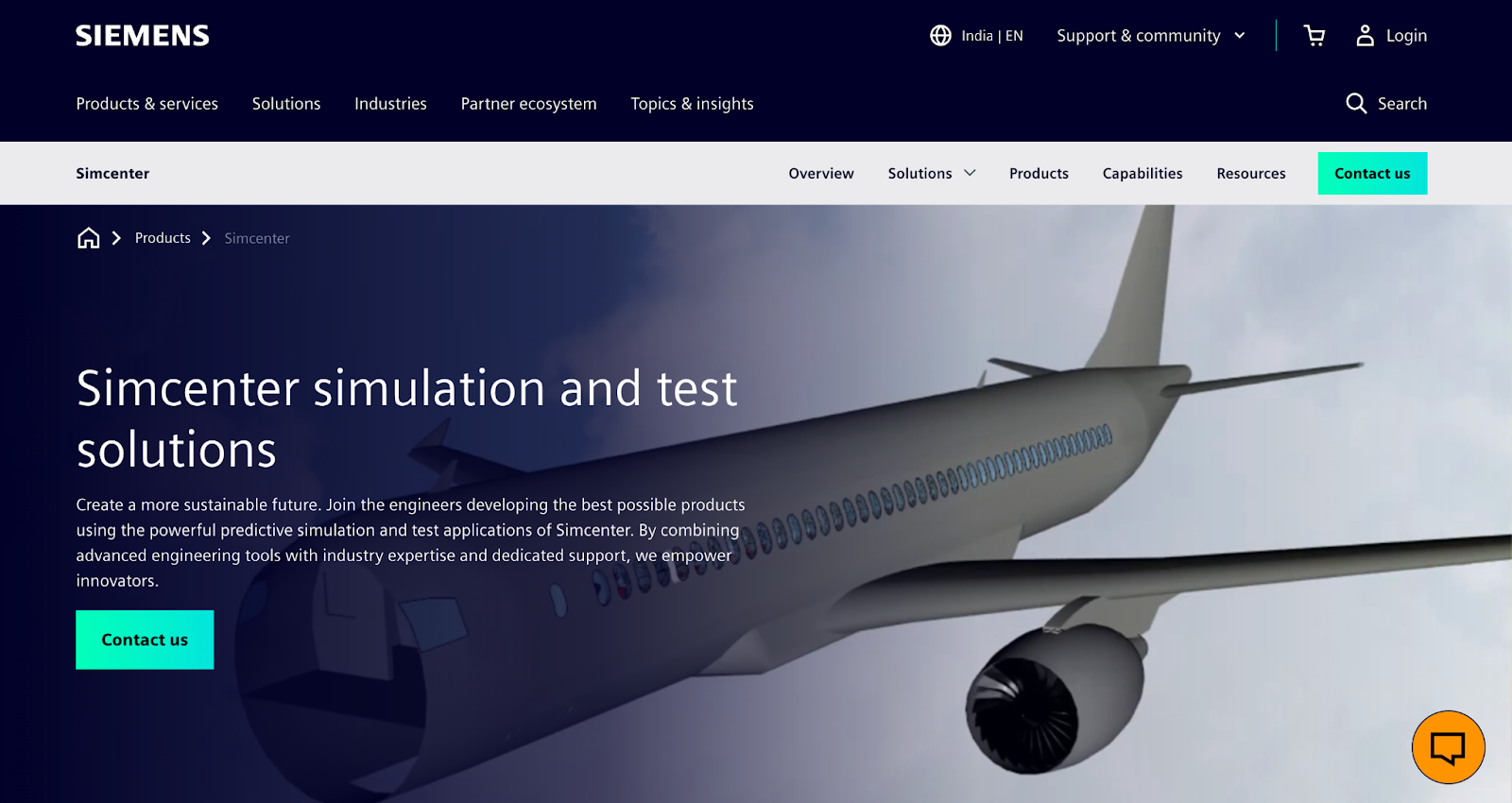
Siemens Simcenter is a comprehensive multi-physics simulation and engineering analysis platform used in aerospace, automotive, and advanced manufacturing.
The platform focuses primarily on design-phase optimization, allowing engineers to evaluate different configurations through simulation and testing. While extremely powerful for engineering analysis, its optimization workflows are typically used during product design rather than real-time operational decision-making.
Key Features
- Multi-physics simulation including CFD, FEA, thermal, and acoustics
- Design exploration and optimization tools
- Integration with the Siemens PLM ecosystem
- Simcenter Amesim for system-level simulation
Pros
- Industry-leading multi-physics simulation accuracy
- Deep integration with CAD and PLM environments
- Strong adoption in aerospace and automotive engineering
Cons
- Optimization is primarily design-phase rather than operational
- Licensing and deployment can be complex
- Not designed for continuous real-time optimization workflows
5. Ansys Twin Builder

Ansys Twin Builder enables engineers to build digital twins of complex systems, combining physics-based simulation with reduced-order models and machine learning.
These digital twins can ingest live operational data to monitor system performance, predict failures, and analyze system behavior in near real-time. While powerful for predictive modeling, optimization capabilities often rely on additional external tools.
Key Features
- Hybrid digital twin models combining physics and AI
- Integration with Ansys Fluent, Mechanical, and SCADE
- IIoT connectivity for live operational data
- Predictive analytics for maintenance and anomaly detection
Pros
- Strong physics-based digital twin modeling
- Integrates with the broader Ansys simulation ecosystem
- Useful for operational monitoring and predictive analysis
Cons
- Optimization typically requires external solver integration
- Primarily predictive rather than prescriptive
- Advanced deployments may require significant modeling expertise
6. MATLAB Optimization Toolbox (MathWorks)
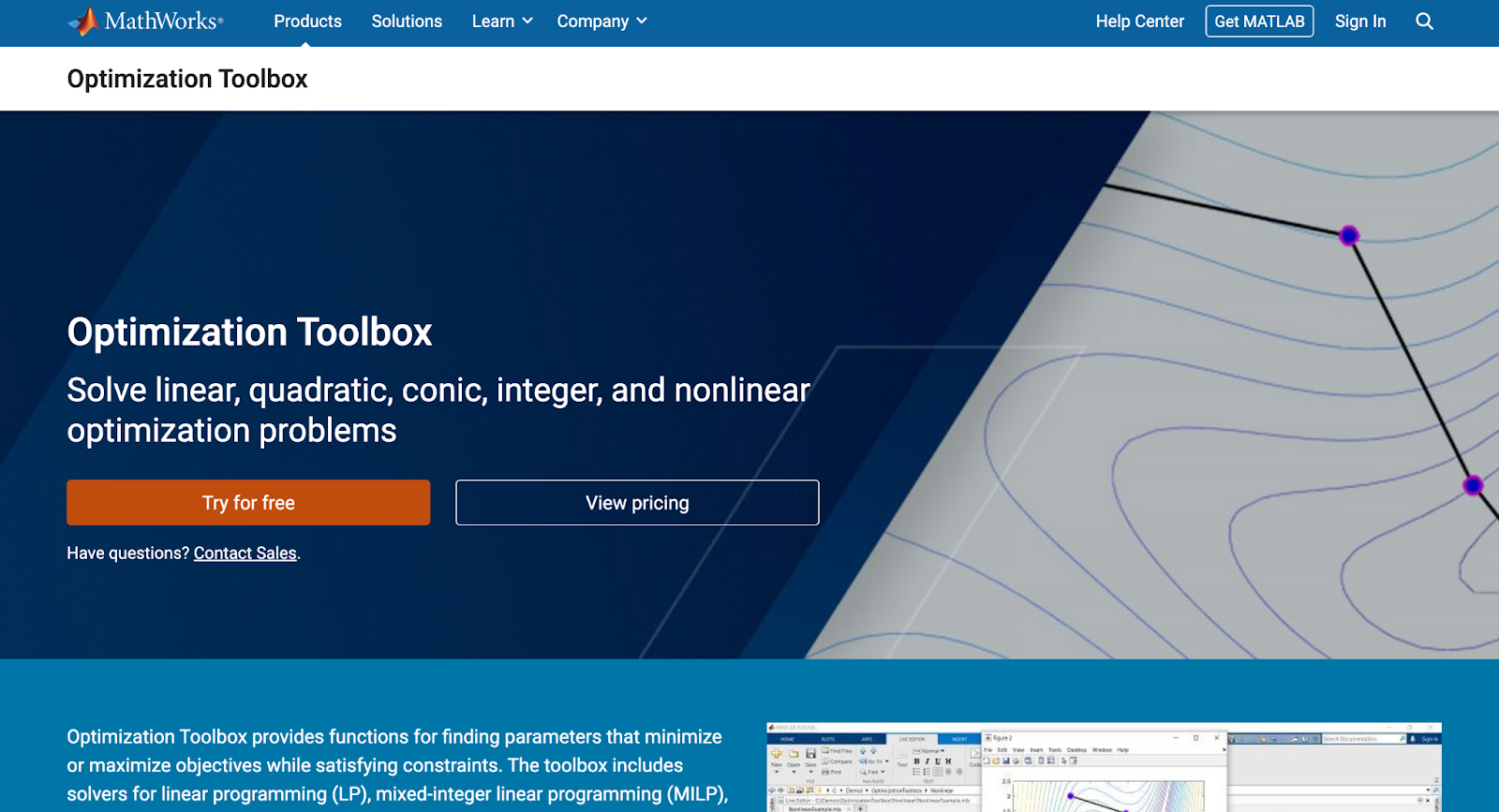
The MATLAB Optimization Toolbox provides a broad set of algorithms for linear, nonlinear, and multi-objective optimization problems. It is widely used in engineering research, control systems development, and algorithm prototyping.
Because MATLAB is deeply embedded in many engineering workflows, the toolbox is often used to develop and test optimization models before deploying them into larger systems or production environments.
Key Features
- Algorithms for linear, nonlinear, and constrained optimization
- Global optimization methods including genetic algorithms
- Integration with Simulink for model-based design
- Parallel computing support for faster computations
Pros
- Widely adopted across engineering and academic research
- Strong integration with Simulink and MATLAB ecosystem
- Extensive documentation and community resources
Cons
- Real-time deployment often requires additional tooling
- Not designed as a production-scale optimization platform
- Large simulations may require significant computing resources
7. Google OR-Tools
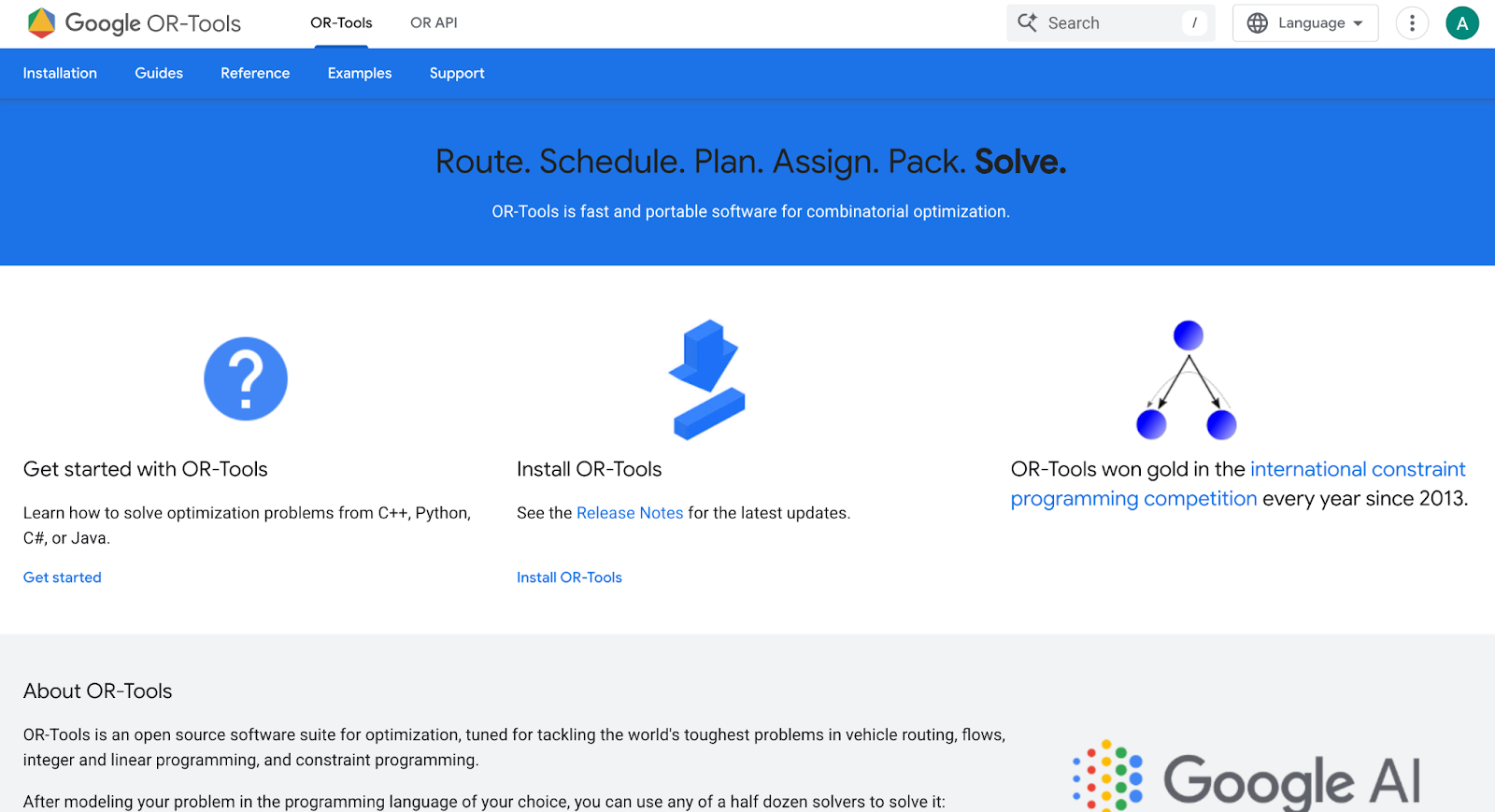
Google OR-Tools is a widely used open-source optimization library focused on routing, scheduling, and constraint programming problems.
Developed by Google, the toolkit includes high-performance solvers such as CP-SAT, which performs well for combinatorial optimization problems like vehicle routing and workforce scheduling.
Key Features
- CP-SAT solver for constraint programming and combinatorial optimization
- Built-in solvers for vehicle routing and scheduling
- APIs for Python, C++, Java, and C#
- Active open-source community and updates
Pros
- Completely free and open source
- Strong performance for routing and scheduling problems
- Flexible for custom optimization pipelines
Cons
- No native physics simulation integration
- Production deployment requires significant engineering effort
- No official enterprise support or SLA
8. Hexagon (MSC Software) — Adams & Nastran

MSC Adams and MSC Nastran, part of Hexagon’s simulation portfolio, are widely used tools for multibody dynamics simulation and structural finite element analysis.
They are commonly used in aerospace and defense engineering for structural validation, aeroelastic analysis, and mechanism simulation. Optimization capabilities are typically used during the design phase rather than continuous real-time operations.
Key Features
- MSC Adams for multibody dynamics simulation
- MSC Nastran for structural FEA and aeroelastic analysis
- Integration with CAD systems and engineering workflows
- Design optimization using sensitivity and response surface methods
Pros
- Long history of aerospace and defense validation
- High-fidelity structural and dynamics simulation
- Strong integration with engineering design workflows
Cons
- Optimization mainly supports design-phase engineering
- Not intended for real-time operational optimization
- Requires significant compute resources and licensing
What are the Challenges of Implementing Real-Time Optimization?
Implementing real-time optimization in complex engineering systems can present several practical challenges. Teams must address infrastructure, integration, and modeling considerations to ensure reliable performance.
1. High Computational Requirements
Continuous optimization across large decision spaces requires significant computing power, especially as system complexity grows.
2. Integration Complexity
Optimization platforms must connect with sensors, digital twins, ERP systems, and operational data pipelines, which can increase implementation complexity.
3. Data Latency
Decisions rely on fresh data. Delays in telemetry or system signals can reduce optimization accuracy.
4. Algorithm Selection
Different problems require different optimization methods, making solver selection an important architectural decision.
5. Model Accuracy
Optimization results depend on the quality of the underlying system model, particularly in physics-heavy engineering environments.
The Future of Real-Time Optimization Software
Real-time optimization is moving toward systems that operate continuously and autonomously, improving decisions as conditions change. Several trends are shaping the next generation of optimization platforms.
- AI-Driven Autonomous Optimization
Reinforcement learning systems can learn from operational feedback and continuously improve optimization strategies over time.
- Digital Twin Integration
Optimization engines are increasingly embedded within digital twins, allowing engineers to test decisions in simulation before applying them to real systems.
- Quantum-Inspired Acceleration
Hybrid architectures that combine classical and quantum-inspired algorithms are enabling faster exploration of large engineering solution spaces.
- Edge Optimization
Running optimization closer to the system such as on factory edge nodes or onboard processors reduces latency and enables faster decisions.
- Self-Optimizing Systems
Future engineering systems will continuously sense, simulate, optimize, and act with minimal human intervention.
Conclusion
Systems like satellite constellations, smart factories, autonomous platforms, and energy grids operate in environments where conditions change constantly. Decisions must adapt in real time, not rely on static models built for yesterday’s conditions.
The platforms discussed in this guide reflect the current landscape from physics-driven engineering platforms like BQPhy® to enterprise optimization solvers and open-source experimentation frameworks. The right choice depends on your problem complexity, infrastructure maturity, and deployment requirements.
Organizations that adopt real-time optimization gain faster decision cycles, better resource efficiency, and the ability to respond to disruptions as they occur, echoing Optimizing Multi-Satellite Constellations best practices in aerospace mission planning.
Explore BQPhy® or start a free pilot to evaluate real-time optimization for your engineering workflows.
Frequently Asked Questions
What is real-time optimization software?
Real-time optimization software continuously analyzes operational data and system constraints to update decisions as conditions change, rather than solving a problem only once using static data.
How is real-time optimization different from traditional optimization?
Traditional optimization solves a fixed problem and stops once a solution is found. Real-time optimization continuously ingests new data and updates decisions to reflect the current system state.
What industries use real-time optimization software?
Common industries include aerospace and defense, advanced manufacturing, energy systems, logistics, and other sectors where operational conditions change rapidly.
Does real-time optimization require high-performance computing?
Yes, many real-time optimization systems rely on high-performance computing to process large datasets and complex decision spaces quickly.
Can real-time optimization integrate with digital twins?
Yes. Digital twins provide a virtual representation of physical systems, allowing optimization platforms to test and refine decisions using real-time system data.
.png)
.png)



.svg)
.svg)
.svg)
.svg)