


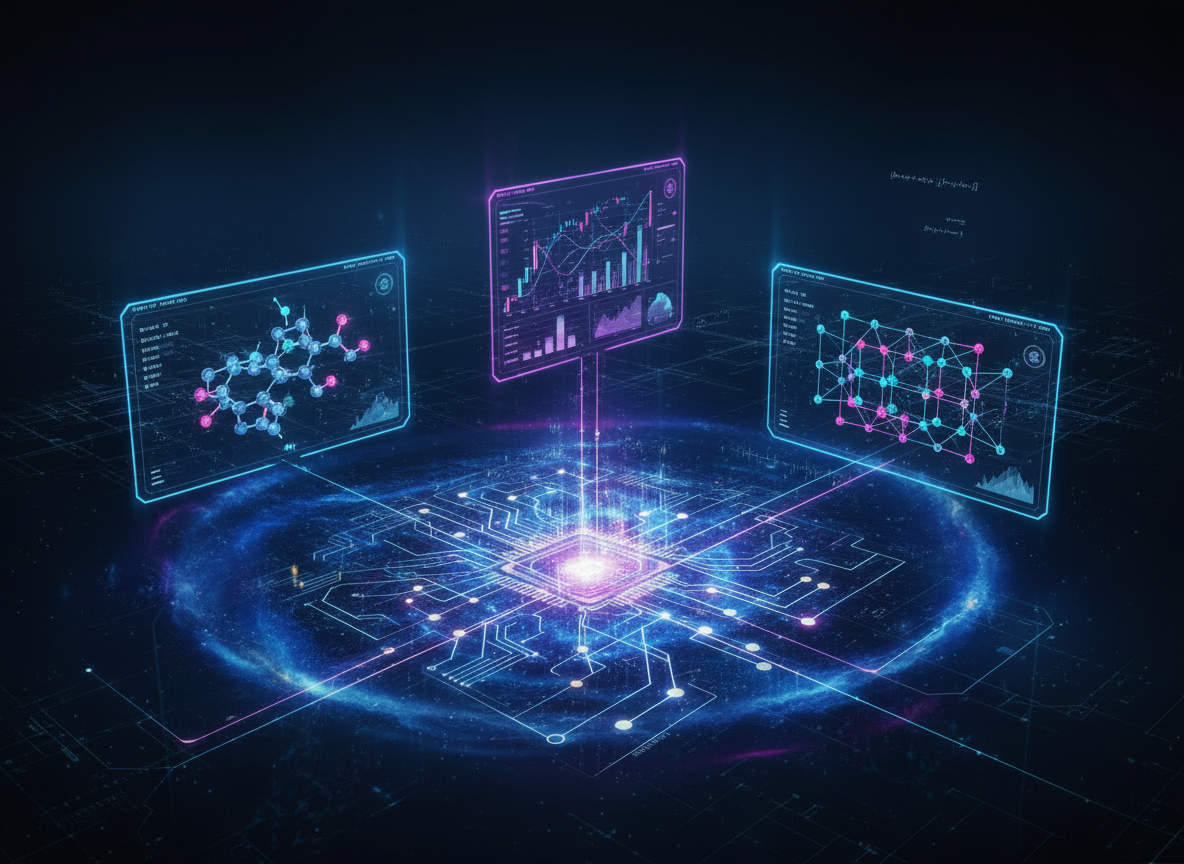

Quantum computing is beginning to change how industries handle complex optimization and simulation problems that classical systems struggle with.
While fully scalable quantum hardware is still in development, hybrid quantum-classical approaches are already being used in real-world scenarios across pharmaceuticals, finance, logistics, aerospace, and defense.
Adoption is gradual but picking up pace. Nearly two-thirds of large organizations now see quantum computing as a critical technology for their future, especially in automotive, aerospace, life sciences, and financial services.
The key question is no longer whether quantum computing will matter, but whether organizations are preparing early or waiting to catch up once competitors move ahead.
This blog explores quantum computing's most promising applications across industries, the hybrid approaches delivering value today, and how platforms like BQP enable organizations to experiment, validate, and build quantum-ready capabilities now.
10 Future Applications of Quantum Computing Across Industries
1. Pharmaceuticals & Healthcare

Drug discovery is slow, expensive, and filled with uncertainty. Most failures happen early, when researchers don’t yet understand how molecules and proteins will behave.
Quantum computing helps teams explore these molecular interactions more efficiently, reducing trial-and-error in early research. Instead of relying only on approximations, hybrid quantum-classical methods offer clearer insight into how compounds might perform.
Beyond drug discovery, healthcare teams are exploring quantum approaches to:
- Improve clinical trial design
- Support personalized medicine
- Model biological processes more accurately
Why this matters: Faster research and fewer failed trials mean lower costs and quicker access to new treatments.
Key applications:
- Mission planning under multiple constraints
- Threat modeling and scenario analysis
- Quantum radar and sensor systems for advanced detection
- Secure communication networks using quantum-safe encryption
Why it matters:Better planning and secure systems enhance operational effectiveness, reduce risk, and give defense teams a strategic advantage in critical missions.
2. Finance and Banking

Financial institutions deal with complex decisions involving risk, returns, and uncertainty. As portfolios grow larger and markets move faster, traditional models struggle to account for all variables at once.
Quantum and quantum-inspired methods help by improving optimization and simulation tasks, such as evaluating portfolios or running large risk scenarios. These approaches are especially useful when many factors interact and trade-offs need to be balanced.
Common areas of exploration include:
- Portfolio optimization
- Risk and stress testing
- Fraud detection and pattern analysis
Why this matters:Better models help financial teams make faster, more confident decisions in volatile markets
3. Logistics and Supply Chain

Modern supply chains are built on thousands of moving parts—routes, warehouses, vehicles, fuel costs, delivery windows, and constant disruptions. Small changes can create ripple effects across the entire network.
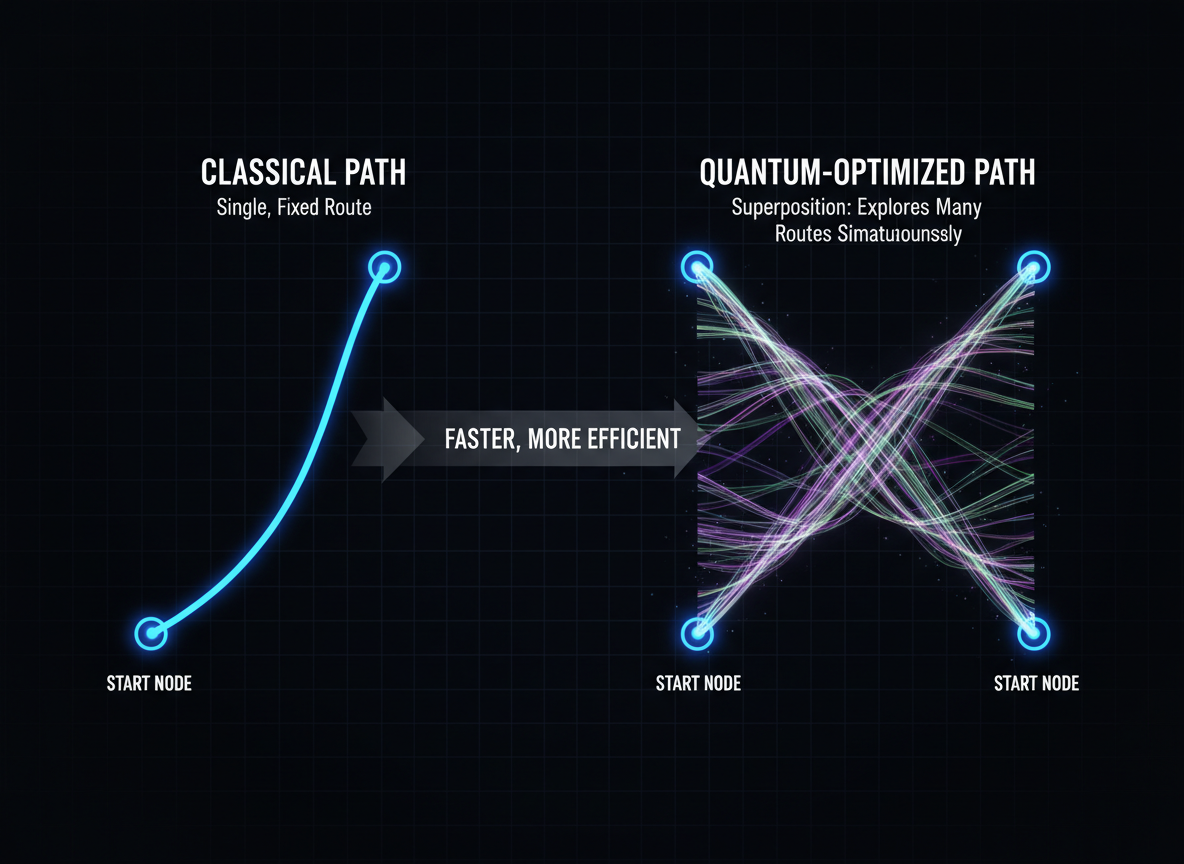
Where quantum helps:Quantum-inspired optimization is well suited for route planning and network decisions where the number of possible options explodes quickly. These methods can find strong solutions faster, even as conditions change in real time.
Common use cases include:
- Fleet and last-mile route optimization
- Inventory placement across multiple locations
- Warehouse and network planning
The business impact:Lower transportation costs, faster deliveries, and supply chains that adapt instead of breaking when disruptions occur.
4. Materials Science and Energy

Designing new materials and energy systems requires understanding behavior at the atomic level, where classical simulations become slow or inaccurate.
How quantum fits:Quantum and quantum-inspired simulations make it easier to explore how atoms and electrons interact, helping researchers test more ideas digitally before moving to physical experiments.
Where it’s used:
- Battery and energy storage research
- Semiconductor and alloy design
- Catalyst development for clean energy
Why it matters:Better materials mean longer-lasting batteries, more efficient energy systems, and faster innovation with lower R&D costs.
5. Artificial Intelligence and Machine Learning
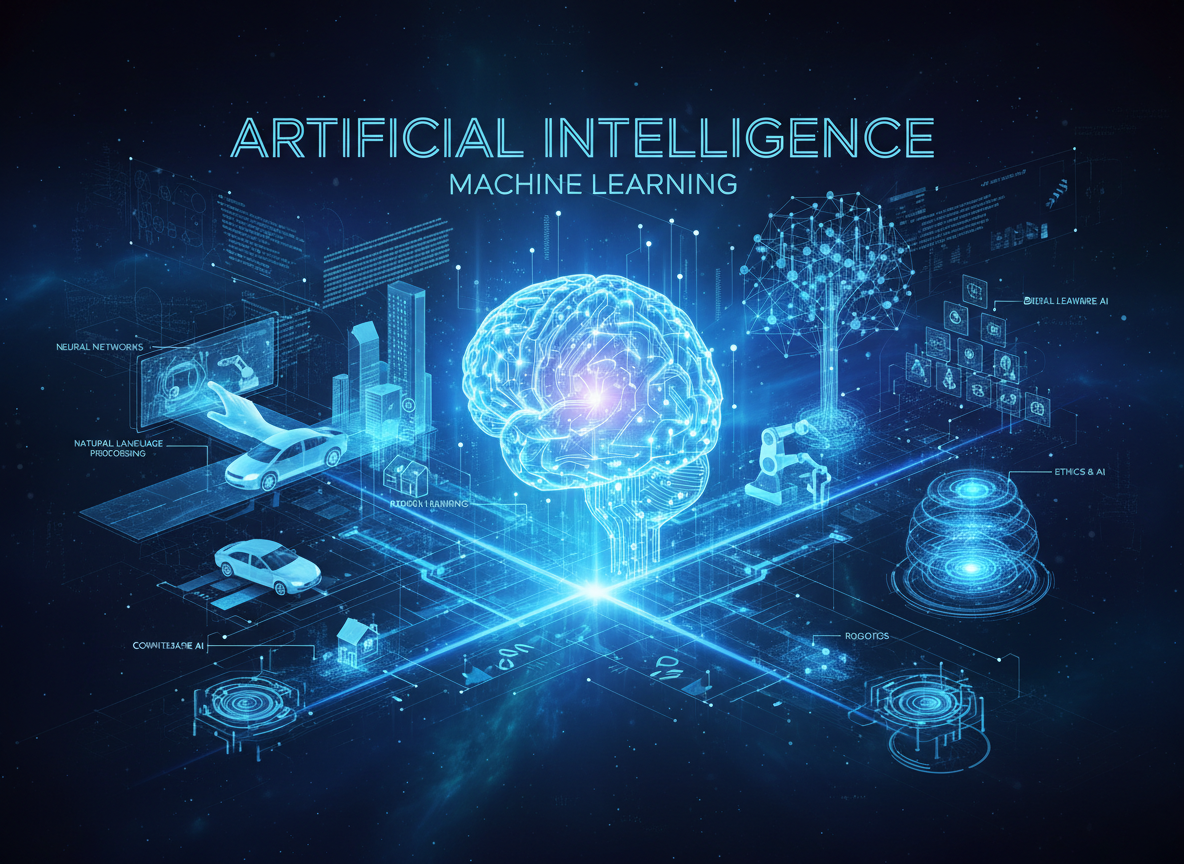
Quantum meets AI where classical models slow down.
Training and tuning machine learning models often takes countless iterations, especially when data is limited or goals conflict with each other. Classical systems work, but they can be slow and resource-heavy.
Quantum-inspired methods are being explored to speed up optimization steps inside AI workflows, helping models reach useful results with fewer training cycles. This is especially relevant for complex decision problems rather than everyday prediction tasks.
What teams are testing today:
- Faster optimization during model training
- Better handling of multi-objective trade-offs
- Improved learning when data is sparse
Quantum methods don’t replace AI. They help AI get to good answers faster when the problem space becomes too complex.
6. Cybersecurity and Quantum-Safe Networks

Quantum computing changes the assumptions behind modern cybersecurity. Many of today’s encryption methods rely on problems that are hard for classical computers to solve but could become easier for future quantum systems.
Because sensitive data often needs to stay secure for years, organizations are already preparing for this shift. Instead of waiting, they are exploring quantum-safe encryption and new approaches to secure communication that are designed to withstand future attacks.
Quantum methods are also being used to strengthen security, not just challenge it. Secure key exchange, tamper-resistant communication channels, and advanced authentication systems are early areas of focus.
Why this matters:Security transitions take time. Preparing early reduces risk and avoids rushed, high-cost changes when quantum threats become real.
7. Automotive and Aerospace Engineering

Automotive and aerospace industries face highly complex engineering challenges, from flight paths to propulsion systems. Quantum-inspired methods are helping teams explore many design options faster and make better decisions without running endless simulations.
Key areas of impact:
- Route and trajectory planning under changing conditions
- Fuel efficiency and energy use optimization
- Lightweight structure and material design
- Simulation of complex physical systems
Why it matters:Faster, smarter optimization improves safety, reduces costs, and shortens development cycles in high-stakes industries.
8. Climate and Sustainability

Industries need better tools to manage energy, emissions, and environmental impact. Quantum-inspired methods allow teams to simulate complex systems, optimize energy use, and make smarter decisions faster.
Key applications:
- Modeling carbon capture and renewable energy materials
- Optimizing energy grids with multiple renewable sources
- Efficient resource allocation in smart manufacturing
- Predicting long-term climate patterns more accurately
Why it matters:Better simulations and optimization help reduce waste, lower energy costs, and support sustainability goals without slowing production.
9. Telecommunications and Data Infrastructure

Telecom networks are becoming more complex with growing data traffic, 5G/6G rollout, and IoT expansion. Quantum-inspired methods help optimize network performance, routing, and security for these large-scale systems.
Key areas:
- Signal optimization and bandwidth management
- Network topology planning for edge and cloud systems
- Quantum-safe communication protocols
Impact:
- Handles growing data efficiently
- Improves security and reliability
- Supports next-generation networks like 6G and beyond
10. National Security and Defense

Defense organizations face complex planning and operational challenges, from mission logistics to threat assessment. Quantum-inspired methods help tackle problems that involve many variables and high uncertainty, improving speed and decision quality.
Key applications:
- Mission planning under multiple constraints
- Threat modeling and scenario analysis
- Quantum radar and sensor systems for advanced detection
- Secure communication networks using quantum-safe encryption
Why it matters:Better planning and secure systems enhance operational effectiveness, reduce risk, and give defense teams a strategic advantage in critical missions.
How Quantum Computing Works & Future Outlook
Quantum computing is already helping organizations solve complex problems by combining quantum techniques with classical computing, setting the stage for gradual industry-wide change.
Hybrid Workflows Are Delivering Now
By 2026, hybrid quantum-classical workflows are expected to be widely used across industries like logistics, finance, and manufacturing. These setups combine quantum processors for specific optimization or simulation tasks with classical computers handling the surrounding workload.
You don’t need fully fault-tolerant quantum computers to see results. Hybrid approaches including quantum-inspired algorithms on classical hardware and limited-qubit systems are already delivering measurable performance improvements.
Maturation Through Experimentation
Organizations that start experimenting now gain three key advantages:
- Quantum-literate talent – teams familiar with quantum methods
- Proprietary workflows – optimized for hybrid systems
- Intellectual property – unique solutions built in-house
These advantages accumulate over time. By the time quantum becomes mainstream, early movers will have a head start that’s difficult to replicate.
Early adopters learn which problems benefit most, establish vendor relationships, and set internal standards that pay off as technology matures.
The Real Risk Is Inaction
Waiting for certainty is risky. By the time quantum’s value is obvious:
- Talent pools may be limited
- Competitors may own key IP
- Ecosystems may already favor early adopters
Quantum computing is not a single “disruption event.” It’s a gradual shift, where advantage grows through continuous learning, experimentation, and incremental deployment.
How BQP Accelerates Quantum-Inspired Industrial Transformation
BQP helps organizations solve complex engineering challenges faster by combining quantum-inspired optimization with physics-informed algorithms.
This hybrid approach delivers significant performance gains without waiting for fully fault-tolerant quantum computers.
Key Benefits of BQP:
- Quantum-Inspired Optimization: Uses quantum principles on classical HPC systems to solve design and scheduling problems up to 20× faster than traditional methods.
- Physics-Informed Algorithms: Embeds real-world physical laws into simulations, ensuring accuracy while achieving quantum-like speed.
- Cross-Industry Adoption: Deployed in aerospace, automotive, defense, and energy, proving value in mission-critical applications.
- Scalable Platform: Provides immediate quantum-inspired capabilities while preparing infrastructure for future quantum hardware.
- Bridge to Quantum Maturity: Enables experimentation, validation, and skill-building so teams can identify high-value problems and become quantum-literate before committing to pure quantum systems.
BQP empowers enterprises to harness quantum-inspired simulation and optimization today, setting the stage for a smooth transition to a fully quantum-ready future.
Explore how BQP helps enterprises harness quantum-inspired simulation and optimization paving the path toward a quantum-ready future.Book a demo or start your 30-day free trial today.
Conclusion
Quantum computing will impact industries at different speeds, but the trend is clear. Sectors like finance, pharmaceuticals, logistics, aerospace, and defense are already using hybrid approaches that combine quantum methods with classical infrastructure.
Organizations that start experimenting now, building talent, refining workflows, and validating use cases, will set the standards, own the IP, and gain a lasting advantage. Waiting for certainty risks falling behind competitors who move early.
Platforms like BQP make quantum-inspired optimization accessible today, letting teams solve complex problems faster while preparing for a quantum-ready future. The real question is not whether quantum will transform your industry, it is whether you will lead that transformation or play catch-up.
FAQs
1.What industries will benefit most from quantum computing?
Finance, pharmaceuticals, logistics, aerospace, materials science, and defense.
2.When will quantum computing be ready for production use?
Hybrid systems are delivering value today in 2026.
3.Do I need to understand quantum physics to use quantum computing?
No. Strategic understanding is enough; platforms like BQP handle the complexity.
4.What is the difference between quantum and quantum-inspired computing?
Quantum uses real qubits. Quantum-inspired runs quantum principles on classical hardware.
5.How should organizations prepare for quantum computing?
Run pilot projects, focus on high-value problems, build talent, and set up adaptable workflows.
.png)
.png)



.svg)
.svg)
.svg)
.svg)