





Predictive maintenance software leverages AI, sensors, and machine learning to anticipate equipment failures before they happen. It moves organizations beyond reactive repairs and rigid schedules toward precise, data-driven interventions knowing what will fail, when, and how to address it.
The benefits are tangible. Companies using predictive maintenance report up to a 50% reduction in unplanned downtime and 18–25% lower maintenance costs compared to traditional approaches. These improvements aren’t incremental ,they can define whether an operation stays competitive or falls behind.
In aerospace, manufacturing, and energy systems, predictive platforms provide continuous monitoring, adaptive scheduling, and long-term tracking of asset health — see how predictive maintenance for A&D assets applies these principles across defense-critical equipment.
This blog covers how predictive maintenance works, its benefits, key features, and how BQP’s quantum-inspired platform drives smarter, data-driven maintenance decisions.
5 Best Predictive Maintenance Software to Consider in 2026
1.BQP
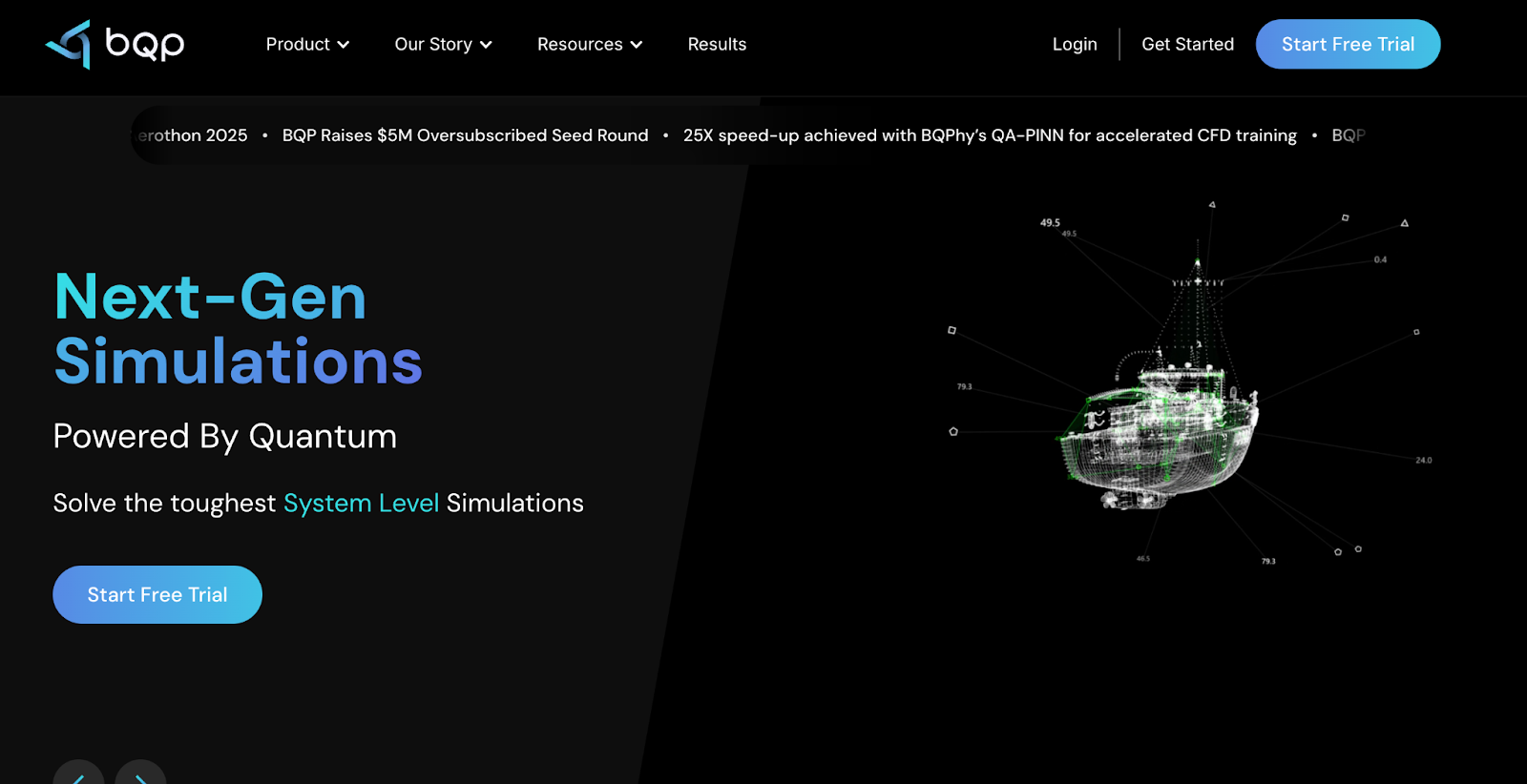
BQP delivers quantum-inspired optimization for predictive maintenance tailored for aerospace, defense, and complex industrial systems especially where traditional methods struggle with sparse failure data or multi-physics complexity.
The platform combines Physics-Informed Neural Networks (PINNs) with quantum-assisted optimization to predict rare failure modes and optimize maintenance across multiple objectives — a method validated in applications such as quantum-assisted PINNs for armored vehicles where sparse data and multi-physics complexity are the norm. Unlike conventional tools, it blends simulation insights with real-time sensor data for more precise, actionable predictions.
Ideal for high-stakes environments, this hybrid approach balances cost, reliability, and safety. With digital twin capabilities, engineers can visualize component degradation under real operating conditions, plan maintenance proactively, and reduce unplanned downtime.
Key Features
- Quantum-Assisted PINNs for accurate predictions with limited historical data
- Hybrid quantum-classical optimization via engineering optimization software, delivering up to 20× faster maintenance scheduling
- Multi-objective maintenance planning balancing cost, uptime, and safety across asset portfolios
- High-fidelity digital twins integrating live sensor data with physics-based degradation models
- Industry-specific templates for aerospace, defense, and mission-critical applications
Pros
- Excels in sparse data environments and rare failure scenarios, applying quantum machine learning in aerospace principles to generalize from limited failure examples without overfitting
- Seamlessly integrates with existing HPC and GPU workflows
- Handles multi-physics complexity typical of advanced engineering systems
- Provides simulation-validated predictions rather than pure statistical pattern matching
Cons
- Newer platform compared with established solutions like Maximo or MindSphere
- Quantum-inspired approach requires understanding hybrid computational workflows
- Best suited for high-complexity operations rather than simple maintenance tracking
- Custom implementation requires engagement with BQP’s engineering team
Ready to Transform Your Maintenance Strategy?
Experience how BQP’s quantum-inspired predictive maintenance can reduce downtime, optimize costs, and enhance reliability for complex systems.
2.IBM Maximo
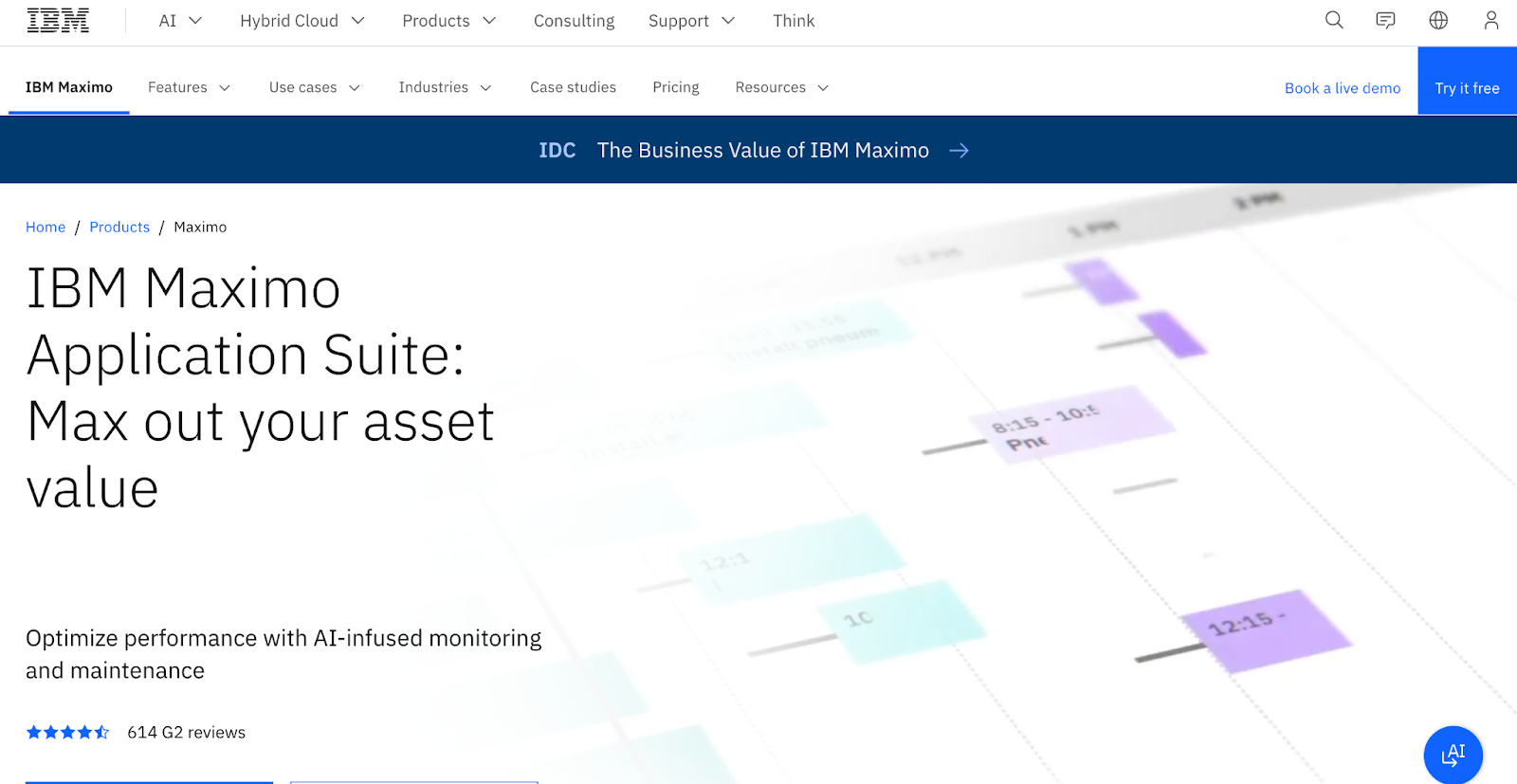
IBM Maximo is an enterprise asset management (EAM) platform with built-in predictive maintenance capabilities, serving industries from manufacturing to utilities.
IBM Maximo offers end-to-end asset lifecycle management, combining maintenance planning, inventory control, and predictive analytics within a unified system.
Maximo’s strength lies in its mature ecosystem and widespread industry adoption. It handles complex enterprise requirements, including compliance tracking, financial integration, and coordination across multiple sites.
Its asset health scoring and failure probability modeling leverage decades of industry data and refined algorithms.
Key Features
- Asset health scoring and failure probability modeling across diverse equipment types
- Mobile workforce management for field technicians, including offline capabilities
- Extensive integration options with ERP, procurement, and financial systems
- Compliance and audit trail features for regulated industries
- Customizable workflows and business rules engine
Pros
- Decades of ecosystem maturity and broad adoption
- Strong integration with ERP and business systems
- Comprehensive compliance features for regulated environments
- Large partner network for implementation and support
Cons
- Complex implementation, often taking 6–12 months
- Higher total cost of ownership, including licensing, implementation, and maintenance
- Can be over-featured for smaller operations with simpler needs
- User interface feels dated compared to modern cloud-native platforms
3.Siemens MindSphere

Siemens MindSphere is an industrial IoT platform with cloud-based predictive analytics, tailored for manufacturing and industrial operations. Its edge-to-cloud architecture collects data from shop floor equipment, processes it in the cloud, and delivers actionable insights via web-based dashboards.
MindSphere performs best when paired with Siemens industrial hardware, offering native connectivity and pre-built analytics for Siemens equipment. The platform supports digital twin capabilities, enabling organizations to create virtual replicas of physical assets for monitoring, simulation, and what-if scenario testing.
Key Features
- Edge-to-cloud architecture optimized for industrial connectivity protocols
- Digital twin framework for virtual replicas of physical assets
- Pre-built analytics applications for common industrial equipment types
- Time-series data storage and analysis tailored for sensor data
- Industrial-grade security and data governance features
Pros
- Strong hardware integration, especially with Siemens equipment
- Scalable cloud infrastructure capable of handling large sensor data volumes
- Effective visualization tools and dashboards
- Active development with regular feature updates
Cons
- Best performance is tied to Siemens hardware ecosystem
- Steeper learning curve for custom analytics beyond pre-built applications
- Cloud-dependent architecture may not suit operations requiring on-premise solutions
- Analytics customization requires specialized skills or professional services
4.SAP Predictive Maintenance

SAP Predictive Maintenance brings maintenance intelligence into the SAP ecosystem, especially within S/4HANA. The platform integrates predictive insights directly with procurement, financial planning, and operational execution, enabling seamless, data-driven maintenance workflows.
For organizations already using SAP infrastructure, this solution removes data integration challenges. Maintenance predictions automatically generate work orders, trigger parts procurement based on anticipated needs, and roll maintenance costs into financial reporting without manual intervention.
Key Features
- Machine learning-based anomaly detection via SAP Leonardo AI
- Native integration with SAP S/4HANA for unified business operations
- Automated work order creation and parts procurement based on predictions
- Financial impact analysis connecting maintenance decisions to business outcomes
- Mobile apps built on SAP Fiori for on-the-go access
Pros
- Seamless integration for existing SAP users, eliminating data synchronization issues
- Unified data model across maintenance, operations, and financial planning
- Strong enterprise reporting and analytics leveraging SAP Business Intelligence
- Consistent user experience with other SAP applications
Cons
- Requires investment in SAP infrastructure, limiting flexibility outside the SAP ecosystem
- Significant licensing costs as part of broader SAP deployment
- Customization often requires SAP-specific development skills
- Less suitable for organizations not already committed to SAP
5.Fiix
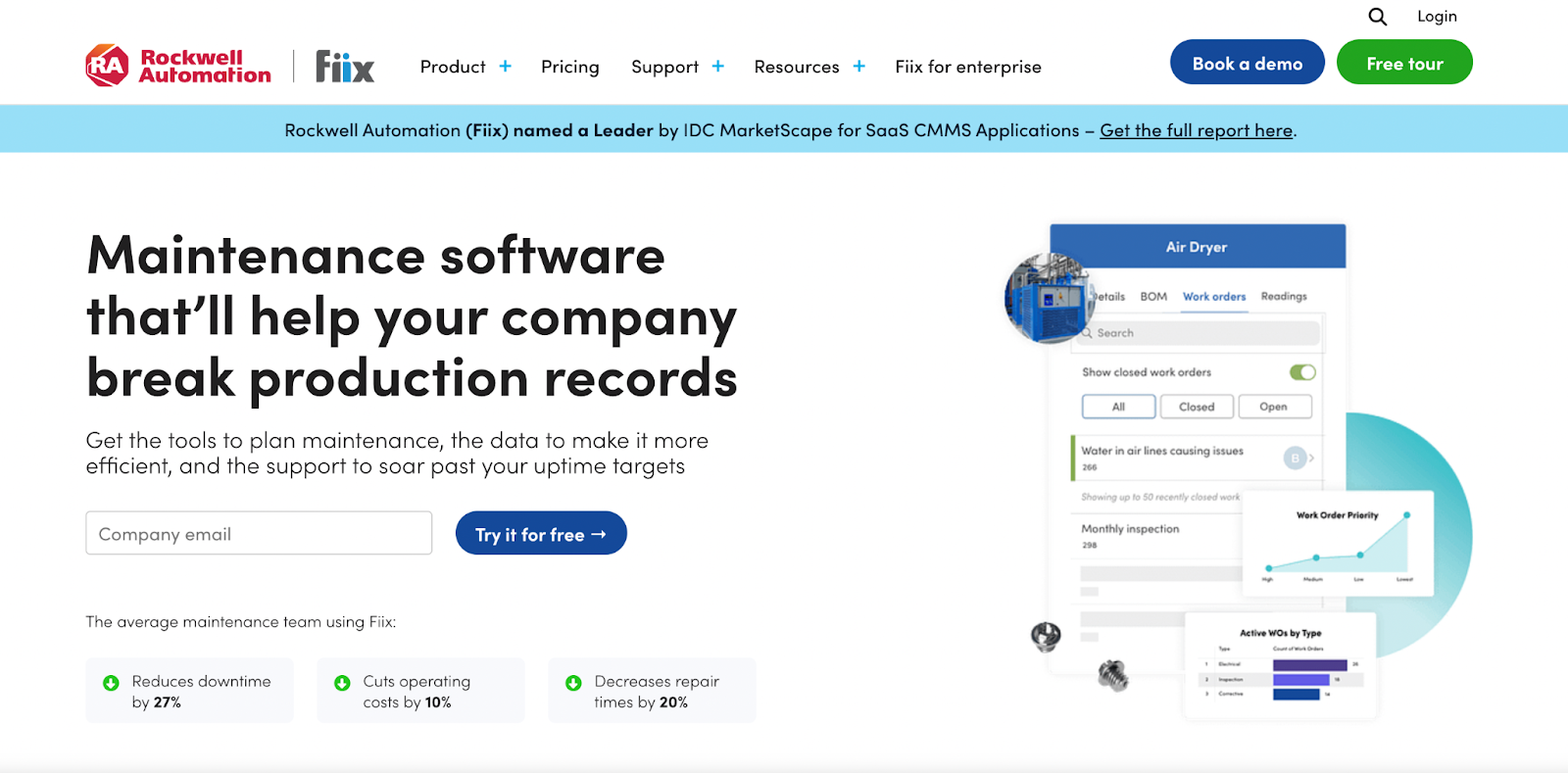
Fiix is a cloud-based CMMS platform with AI-powered predictive maintenance capabilities, designed for small to mid-sized operations seeking quick and simple deployment. The platform emphasizes ease of use and rapid implementation rather than complex enterprise functionality.
Its mobile-first design supports field technicians with intuitive tools for managing work orders, viewing asset history, and completing maintenance tasks efficiently. Predictive capabilities use sensor integrations and AI-driven anomaly detection, eliminating the need for advanced data science expertise.
Key Features
- Asset hierarchy management with intuitive visual organization
- Automated maintenance workflows with customizable triggers and notifications
- Mobile-first design optimized for field technicians
- Quick deployment through a fully cloud-based infrastructure
- AI-powered failure predictions with minimal setup requirements
Pros
- Easy-to-use interface requiring minimal training
- Faster implementation than enterprise platforms (weeks instead of months)
- Transparent, predictable pricing with clear per-user costs
- Strong customer support and responsive assistance
Cons
- Less suited for complex industrial operations with advanced requirements
- Limited customization for specialized workflows or industries
- Smaller partner ecosystem compared with enterprise platforms
- Predictive capabilities less advanced than specialized analytics solutions
What are the key features to consider in a Predictive Maintenance Software
1.Condition Monitoring
Tracks equipment health in real time using sensors that measure vibration, temperature, sound, and other key indicators to spot early signs of trouble.
2.AI and Machine Learning Models
Uses advanced models to find unusual patterns, predict wear, and improve accuracy over time as more data is collected.
3.Custom Dashboards and Reporting
Shows live and historical data in clear visuals so teams can easily track performance, spot trends, and generate reports for planning or audits.
4.Automated Alerts
Sends instant notifications when readings go beyond safe limits, helping teams act quickly to prevent damage or downtime.
5.System Integration
Links with tools like ERP, MES, or CMMS so maintenance insights flow directly into scheduling, procurement, and daily operations.
6.Work Order Management
Turns predictions into action by automatically creating tasks, assigning technicians, and tracking progress in one place.
What are the Benefits of Predictive Maintenance Software?
- Reduced Downtime – Predictive maintenance spots issues early, helping teams fix problems before they cause costly breakdowns or production stops.
- Lower Maintenance Costs – Maintenance happens only when needed, reducing waste and extending the life of parts and equipment.
- Improved Reliability – Each maintenance cycle adds new data, making future predictions more accurate and maintenance strategies more effective.
- Enhanced Safety – Early detection of faults like overheating, leaks, or pressure changes prevents accidents and protects both equipment and people.
- Smarter Maintenance Planning – Data helps teams focus on high-risk assets first, ensuring maintenance resources are used where they matter most.
- Data-Driven Culture – Predictive maintenance builds a habit of making decisions based on facts, not assumptions, leading to continuous improvement across operations.
How Predictive Maintenance Software Works
Step 1: Data Collection
Sensors track machine performance in real time, measuring vibration, temperature, sound, electricity flow, and other key indicators.
For example, vibration sensors can detect early signs of bearing wear, while heat sensors identify overheating components. Over time, this data establishes a baseline for normal operation, helping the system spot deviations.
Step 2: Data Analysis
The software analyzes collected data to identify subtle signs of wear, stress, or anomalies that could lead to failures.
As machines age, the system continuously learns what “normal” looks like, distinguishing between typical wear and actual problems.
Step 3: Prediction and Alerting
Once potential issues are detected, the system predicts when failures might occur such as an overheating motor or a leaking pump and sends alerts with clear guidance on severity and recommended actions — see how quantum algorithms improve maintenance diagnostics for a deeper look at the detection layer — so maintenance teams can intervene proactively.
Step 4: Proactive Maintenance
Maintenance is performed only when needed, rather than on a fixed schedule. This approach maximizes the lifespan of parts, prevents sudden failures, and allows teams to address issues during planned downtime, keeping operations smooth and minimizing costly disruptions.
How BQP Enhances Predictive Maintenance with Quantum-Inspired Optimization
BQP's platform elevates predictive maintenance by solving quantum optimization problems that traditional systems struggle with, including limited failure data, complex equipment behavior, and the need to balance cost, reliability, and safety.
By combining quantum optimization with physics-informed AI models, BQP delivers faster, more accurate insights across mission-critical operations, helping teams predict failures earlier and plan maintenance with greater confidence.
Key Advantages:
- Simulation-validated predictions for rare and high-impact failure modes.
- Digital twins that mirror real-world performance and act as real-time optimization software to optimize maintenance timing in real time.
- Scalable architecture suited for both individual assets and complex systems like fleets or plants.
BQP turns predictive maintenance into a smarter, more reliable system that learns from real-world data and continuously improves how maintenance is planned and performed.
Ready to see predictive maintenance in action?
Discover how BQP can help your team predict failures earlier, cut downtime, and optimize maintenance schedules. Book a demo or start your 30-day free trial today.
Conclusion
Predictive maintenance software gives organizations the power to plan ahead, reduce surprises, and keep equipment running at its best. It replaces guesswork with real data, turning maintenance from a reactive task into a proactive strategy — an approach explored further in next-gen predictive maintenance frameworks for hard-to-maintain assets.
When combined with BQP’s optimization platform, predictive maintenance becomes even smarter. The system learns from sensor data, runs simulations to test different scenarios, and helps teams make better maintenance decisions in real time.
The result is less downtime, longer equipment life, and more confident decision-making. In the end, the real advantage belongs to teams that can predict problems before they happen and keep critical systems performing when it matters most.
FAQs
What is predictive maintenance software?
It’s a tool that uses sensors and data to predict equipment problems before they happen, allowing maintenance teams to fix issues early and avoid breakdowns.
How does predictive maintenance differ from preventive maintenance?
Preventive maintenance follows a set schedule, while predictive maintenance happens only when data shows a real need for service.
What types of sensors are used in predictive maintenance?
Vibration, temperature, sound, current, and pressure sensors are most common. The choice depends on the type of machine and how it can fail.
How accurate is predictive maintenance software?
With good data and setup, it can predict failures with about 85–95% accuracy, improving over time as it learns from more data.
What is the ROI of predictive maintenance software?
Industry data shows predictive maintenance can deliver approximately a 10× return on investment compared with traditional maintenance approaches.
.png)
.png)



.svg)
.svg)
.svg)
.svg)