


Computational bottlenecks in fluid dynamics cost engineering teams weeks of delayed design cycles. BQP has solved this through a collaboration with Classiq and NVIDIA.
The partnership demonstrates a hybrid quantum-classical workflow that speeds up CFD and digital twin simulations. It combines three key technologies into one system.
BQP's Variational Quantum Linear Solver runs on the BQP platform. Classiq provides automated circuit synthesis. NVIDIA supplies the CUDA-Q execution platform.
Teams can now access quantum-ready simulation tools. No need to replace existing HPC infrastructure.
What Is the Variational Quantum Linear Solver?
VQLS is a quantum algorithm that solves systems of linear equations. These equations form the foundation of CFD and digital twin applications.
Engineering simulations involve solving massive matrices. Traditional methods often struggle with scale and speed.
VQLS uses quantum circuits to find solutions faster. The result is quicker processing for complex fluid dynamics calculations.
It also enables more responsive real-time simulations of physical systems. The practical advantage is compatibility with existing tools.
VQLS works alongside classical HPC systems rather than replacing them. Engineering teams adopt quantum methods while keeping their current workflows.
How Does Classiq's Automated Circuit Synthesis Improve VQLS Performance?
What Technical Improvements Were Achieved?
Classiq's platform automatically generates optimized quantum circuits. No manual design required.
For BQP's VQLS implementation, this automation delivered three critical improvements:
These improvements directly address scalability concerns. As matrix sizes grow, the optimized circuits maintain strong performance.
Traditional quantum linear solvers cannot match this behavior. Benchmarks show superior scaling across increasing matrix dimensions.
This matters for large-scale systems. Examples include multi-component aerospace structures or complex thermal dynamics in semiconductor manufacturing.
"By generating optimized circuits automatically and integrating them into established simulation environments, we enable teams like BQP to incorporate quantum-ready methods directly,"
CEO of Classiq.
Why Do Fewer Parameters Matter?
Reducing trainable parameters speeds up training cycles. It also improves solution stability.
CFD applications often involve sparse matrices with specific structural properties. Fewer parameters mean the algorithm converges faster.
The system handles sparse structures more efficiently. This is valuable for rare failure scenarios or edge cases in engineering analysis.
Which Industries Benefit From Hybrid Quantum-Classical CFD?
BQP has integrated these VQLS-based techniques into production offerings. Five major sectors are already using them:
Aerospace Applications
- Fluid dynamics simulations for aircraft wing design reduce computation time for iterative testing
- Aerodynamic optimization for satellite constellations enables faster trajectory calculations
- Thermal analysis for propulsion systems handles complex heat transfer equations more efficiently
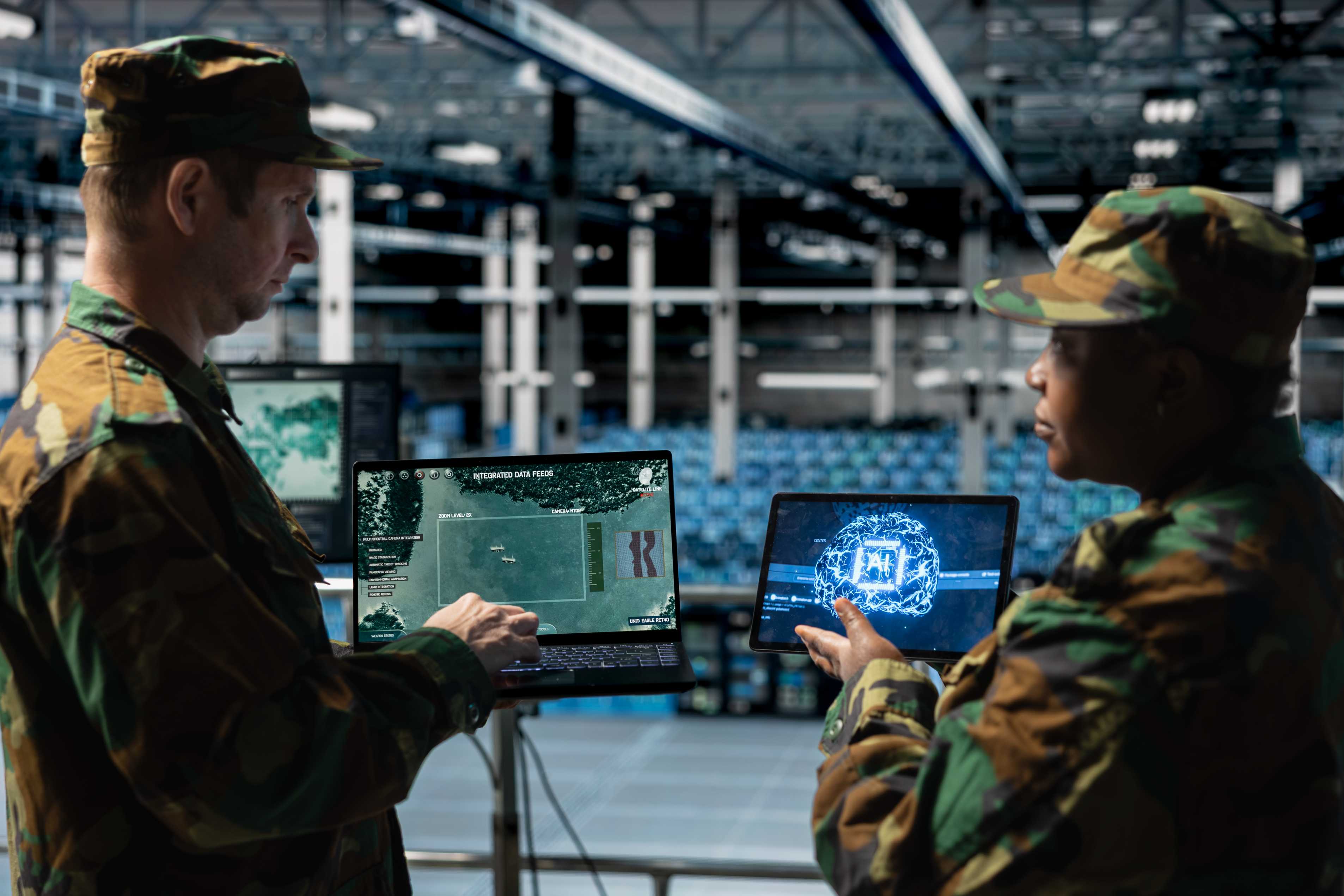
Defense Workloads
- Thermal stress analysis on critical components accelerates failure prediction
- Blast simulation modeling processes shock wave propagation with improved accuracy
- Materials testing under extreme conditions requires solving large coupled equation systems
Automotive Engineering
- Crash simulation models process deformation physics across thousands of mesh points
- Aerodynamic testing for vehicle bodies evaluates drag coefficients in virtual wind tunnels
- Battery thermal management simulations optimize cooling system designs
Semiconductor Manufacturing
- Thermal management in chip design solves heat dissipation equations at nanoscale
- Process optimization for fabrication facilities models chemical vapor deposition flows
- Defect prediction models analyze manufacturing variations across wafer batches
Energy Systems
- Grid optimization balances load distribution across distributed generation sources
- Wind turbine performance modeling simulates turbulent flow around blade geometries
- Renewable energy forecasting integrates weather data with fluid dynamics predictions
What Makes HPC Integration Seamless?
The workflow runs on NVIDIA CUDA-Q. This platform is designed specifically for hybrid quantum-classical computing.
CUDA-Q connects directly to existing HPC pipelines. No middleware or custom integration layers required.
Teams maintain their current numerical methods, solvers, and data preprocessing routines. The quantum capabilities layer on top through standard APIs.
Engineers continue using familiar simulation environments. BQPhy handles the quantum circuit execution in the background.
"The hybrid workflow we developed with Classiq and executed through the NVIDIA CUDA-Q platform strengthens the flexibility and scalability of our tools," said Abhishek Chopra, CEO of BQP.
"It integrates naturally with the engineering systems our customers already rely on."
How Can Engineering Teams Start Using Quantum-Enhanced Simulation?
Getting started with hybrid quantum-classical workflows follows a clear path:
- Use Case Assessment: Identify CFD or digital twin workloads with large matrix systems
- Pilot Program Initiation: Run tests comparing classical and hybrid approaches
- Performance Benchmarking: Measure speed improvements and solution accuracy
- Workflow Integration: Connect BQP to existing HPC environment via CUDA-Q
- Production Deployment: Scale successful pilots to full simulation workloads
BQP offers pilot programs at no obligation. These programs validate technology fit before commitment.
Teams receive hands-on access to hybrid solvers. They can directly compare performance against their current methods.
What Should Teams Consider Before Deployment?
Problem Size and Structure: VQLS shows strongest advantages with large sparse matrices common in CFD. Smaller, dense problems may not benefit as much.
Hardware Access: CUDA-Q integration requires GPU infrastructure. Most modern HPC centers already have this capability.
Data Pipeline Compatibility: Simulation preprocessing and postprocessing workflows remain unchanged. Teams should verify data format compatibility.
Training Requirements: Engineers familiar with HPC simulation can use BQPhy with minimal additional training. The platform hides quantum complexity behind familiar interfaces.
Where Can Teams Find Technical Details?
BQP maintains a detailed technical blog covering VQLS formulation and implementation. The analysis includes circuit depth comparisons and convergence metrics. It also covers scaling behavior across different problem sizes. Teams can start with pilot programs to validate performance on their specific use cases before full deployment.
Frequently Asked Questions
What is VQLS and why does it matter for CFD simulations?
VQLS solves linear equation systems using quantum circuits. It accelerates the matrix operations that form CFD's computational core. This reduces time needed for complex engineering analyses by processing calculations more efficiently than classical methods alone.
How does Classiq's automated circuit synthesis improve performance?
Classiq generates optimized quantum circuits automatically. It reduces circuit size by 30 to 40 percent compared to manual design. Fewer gates and qubits mean faster execution and better scaling for production engineering workloads.
Can this integrate with our current HPC infrastructure?
Yes. NVIDIA CUDA-Q provides direct integration with existing HPC pipelines. Teams add quantum capabilities without replacing current systems. It maintains compatibility with established numerical methods and solvers.
Which industries benefit most from this hybrid approach?
Aerospace, defense, automotive, semiconductor, and energy sectors gain the most value. Any industry solving large sparse matrix problems in CFD can leverage this technology. Real-time digital twins also benefit significantly.
How can we start using this technology?
BQPhy makes VQLS-based workflows available now. Start with a pilot program to test performance on your use cases. Contact BQP to discuss integration with your specific simulation environment and requirements.
Making Quantum-Enhanced Simulation Accessible Today
The collaboration between BQP, Classiq, and NVIDIA removes traditional barriers to quantum computing adoption. Engineering teams gain access to quantum-ready simulation capabilities.
These capabilities integrate with current HPC environments. No infrastructure replacement needed. No workflow disruption required.
Teams get faster CFD and digital twin simulations when they need them. BQPhy's VQLS implementation is available for immediate deployment.
Explore the technical blog for detailed benchmarks and methodology. Contact BQP to discuss how pilot programs can validate performance on your specific engineering challenges.
.png)
.png)


.svg)
.svg)
.svg)
.svg)