


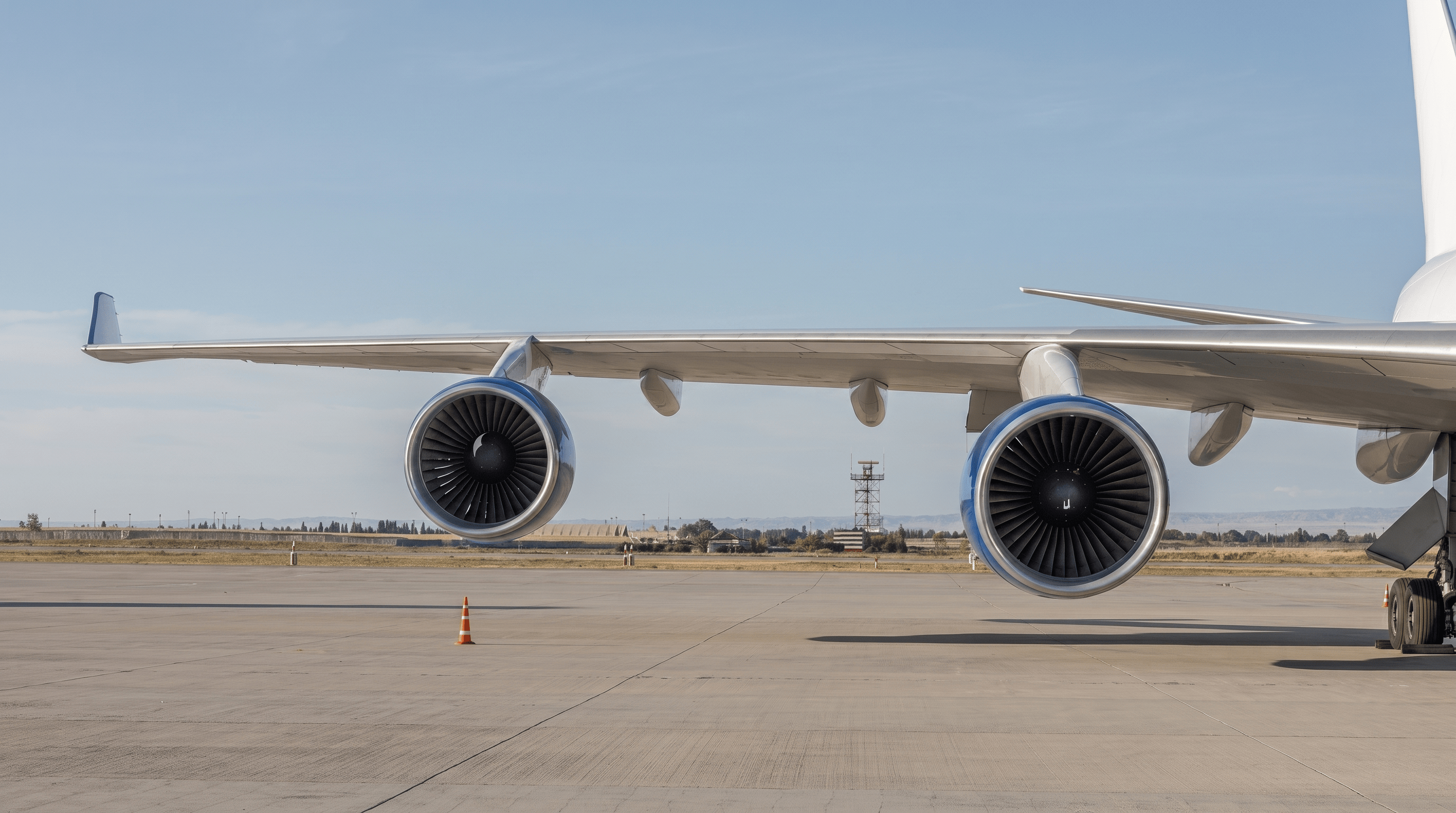

Aerodynamic shape optimization sits at the heart of every serious aerospace design program. Get it right and you gain efficiency, performance, and mission capability. Get it wrong or settle for a locally optimal design because your optimizer couldn't search broadly enough and those losses compound across every flight hour, every mission, every program milestone.
The problem isn't that engineers lack good simulation tools. CFD solvers are mature, accurate, and widely deployed. The problem is the optimizer sitting above those solvers the method that decides which shapes to evaluate, in what order, and when to stop.
For decades, that optimizer has been gradient-based. And for most modern aerospace design problems, gradient-based methods are the bottleneck. This article explains why and what quantum-inspired optimization does differently.
What Aerodynamic Shape Optimization Actually Involves (Beyond Drag Reduction)
Most introductions to aerodynamic shape optimization focus on drag. Drag is real, drag matters, but framing the problem as "minimize drag" misses what actually makes it hard.
A real aerodynamic shape optimization problem looks like this:
- Lift-to-drag ratio must be maximized across a range of operating conditions not just at design point
- Surface heat flux must stay within material limits, especially for high-speed platforms
- Structural loads introduced by shape changes must remain within allowable stress envelopes
- Internal volume constraints exist payload bays, fuel tanks, and system packaging impose hard geometric limits
- Manufacturability requirements limit how extreme a surface curvature change can actually be produced
Every one of these is a constraint. Some are hard limits, violation means the design fails. Others are soft trade-offs. The optimizer must navigate all of them simultaneously while searching a shape parameter space that routinely runs to hundreds of variables.
This is a high-dimensional, multi-constraint, multi-objective design optimization in engineering problems. It is not a drag minimization problem. That distinction determines which optimization method is appropriate and which ones aren't.
Why Gradient-Based Optimizers Fail in High-Dimensional Shape Spaces
Gradient-based methods work by computing the sensitivity of the objective function to each design variable, then stepping in the direction of improvement. They are efficient in smooth, unimodal design spaces where the global optimum is near the starting point.
Aerodynamic shape spaces are not smooth or unimodal. They are:
- Multimodal multiple local optima exist, many of which look attractive until you've committed to them
- Discontinuous in constraint boundaries small geometric changes can push a design across a thermal or structural limit, producing sharp gradients that mislead local search
- Highly coupled changing one shape parameter changes the aerodynamic loading, which changes the structural requirement, which may invalidate a previously feasible region
The consequence is predictable: gradient-based optimizers converge to the nearest local optimum from the starting point. The quality of the solution depends entirely on where you start. Engineering teams work around this by running multiple optimization passes from different starting geometries which multiplies the already substantial CFD evaluation cost.
This is not a limitation of any specific gradient-based code. It is a structural limitation of local search applied to non-convex, multimodal design spaces. The method cannot traverse through locally worse solutions to reach globally better ones.
The CFD Evaluation Budget Problem
Every candidate shape in an aerodynamic optimization requires at least one high-fidelity CFD evaluation to assess its performance. On realistic aerospace geometries, a single high-fidelity CFD run can take hours to days on HPC infrastructure.
The optimizer's job is to find the best possible design within a finite evaluation budget. Gradient-based methods spend that budget efficiently in smooth spaces but inefficiently in multimodal ones, because they get trapped in local optima and cannot recover without a restart.
The practical consequence for engineering programs:
- Design space coverage requires too many resources. Only a small region near the starting geometry gets explored in depth.
- Non-intuitive geometries are never evaluated. Configurations that require passing through a region of worse performance to reach a globally better solution are invisible to gradient descent.
- Convergence requires more restarts, each consuming full CFD evaluation budget, to build confidence that the solution found is globally competitive.
This is why the quantum optimization problems framework matters here: aerodynamic shape optimization, properly formulated, is a combinatorial search problem over a high-dimensional design space with competing objectives and hard constraints. That structure calls for a different class of optimizer.
Quantum-Inspired Search as the Outer-Loop Optimizer
Quantum-inspired optimization replaces gradient descent as the outer-loop search method. Rather than following the local gradient downhill, it uses probabilistic parallel search simultaneously exploring multiple regions of the design space and using quantum-inspired mechanisms to escape local optima that trap classical methods.
The specific mechanism BQPhy® uses is a Quantum-inspired Genetic Algorithm (QGA), designed for multimodal, high-dimensional design spaces of exactly the type that appear in aerodynamic shape optimization.
Key differences from classical gradient methods:
- Global search capability the QGA explores non-contiguous regions of the design space in parallel, finding configurations that gradient descent never reaches
- No restarts required the probabilistic search mechanism naturally escapes local optima without manual intervention
- Efficient budget utilization the algorithm concentrates evaluations in promising regions while maintaining broad coverage, rather than committing early to a local gradient direction
- Native multi-objective handling competing objectives (L/D ratio, heat flux, structural load, volume) are handled in a unified formulation, producing the true Pareto frontier rather than a single collapsed-objective solution
Integration with existing CFD workflows is maintained throughout. BQPhy® operates as the optimization layer above your current solvers it decides which shapes to evaluate, calls your CFD tools to evaluate them, and generates the next candidate set based on results. Your meshing, physics modeling, and post-processing infrastructure stays exactly as it is.
This is a core principle of quantum-inspired optimization for aerospace and defense: the value is in the search intelligence, not in replacing the simulation stack that programs have already invested in.
Multi-Point, Multi-Constraint Shape Optimization The Real Design Problem
Single operating point optimization produces designs that perform well at one condition and degrade at others. Real aerospace vehicles operate across a range of Mach numbers, altitudes, angles of attack, and thermal environments. The shape that minimizes drag at cruise may produce unacceptable separation at high angle-of-attack. The geometry that minimizes heat flux at peak heating may compromise inlet operability at mid-range Mach.
Multi-point aerodynamic shape optimization addresses this by simultaneously optimizing performance across the full operating envelope. The constraints are:
- Angle-of-attack range flow attachment and separation characteristics must be acceptable at all expected attitudes, not just the design point
- Thermal envelope surface heat flux limits apply across the full trajectory, not just at peak heating
- Aeroelastic deformation at high dynamic pressure, structural flexibility changes the effective aerodynamic shape; the optimizer must account for the deformed geometry, not just the nominal one
- Off-design constraint satisfaction hard limits on loads, pressures, and temperatures must hold at all points in the flight envelope
Aerospace optimization techniques that treat multi-point optimization as sequential single-point problems optimize at condition A, verify at condition B, adjust, repeat produce designs where performance at each condition has been traded away incrementally. The unified multi-point formulation that BQPhy® uses finds geometries that are genuinely robust across the envelope, not just acceptable at each condition in isolation.
How BQPhy® Applies to Aerodynamic Shape Optimization Programs
BQPhy® integrates as an optimization layer above your existing simulation tools. The CFD solver, structural FEA code, and any other physics tools remain exactly as they are. The QGA optimizer decides which shape candidates to evaluate, calls your existing tools to assess them, and generates the next candidate set repeating until convergence within the evaluation budget.
For aerodynamic shape optimization specifically:
- Shape parameters are encoded as combinatorial variables surface control points, geometric design variables, topology parameters
- The QGA searches the combined parameter space with probabilistic parallel search, exploring non-contiguous regions simultaneously
- High- and low-fidelity CFD data are fused to reduce the high-fidelity evaluation budget required for convergence lower-fidelity evaluations screen out poor candidates before committing expensive HPC runs
- Multi-objective results are returned as a Pareto frontier across competing metrics, giving engineering teams direct visibility into the available design trade-offs
Integration paths available:
- MATLAB for teams whose aerodynamic, structural, and acoustic models are MATLAB-based or MATLAB-orchestrated
- Python SDK for Python-orchestrated multi-physics pipelines connecting CFD, FEA, and other solvers
- REST API for enterprise environments integrating BQPhy® into a broader simulation orchestration platform
No quantum hardware is required. BQPhy® runs on existing HPC and cloud infrastructure. Most deployments are operational within weeks of scoping. The ROI of quantum optimization in this context comes from two sources: better designs found within the same evaluation budget, and fewer wasted CFD evaluations on regions of the design space that gradient methods would have committed to prematurely.
Where Aerodynamic Shape Optimization Connects to Broader MDO
Aerodynamic shape does not exist in isolation. Every shape change couples into at least three other disciplines:
- Structural loads change with aerodynamic pressure distribution shape optimization and structural sizing are inherently coupled
- Thermal protection system (TPS) mass is driven by surface heat flux which is driven by shape
- Trajectory interacts with aerodynamic performance across the flight envelope a more efficient shape may enable a different, better trajectory
Treating these disciplines sequentially optimize shape, then size structure, then design TPS, then optimize trajectory produces locally feasible designs that are globally suboptimal. The interaction effects between disciplines contain real performance margin that sequential MDO leaves on the table.
BQPhy handles aerodynamic shape optimization as either a standalone problem or as the aerodynamic discipline within a full multi-disciplinary optimization. The same QGA framework that searches shape parameter space can simultaneously handle structural, thermal, and trajectory variables producing the true coupled optimum that sequential methods cannot reach.
This is where the platform's value extends beyond individual design tasks and into program-level impact: better designs found faster, with full visibility into the trade-off space, using the simulation infrastructure already in place.
Ready to Move Beyond Local Optima?
Gradient-based optimizers have been the default for decades — not because they find the best designs, but because nothing better was accessible on standard HPC infrastructure. That constraint no longer exists.
BQPhy brings quantum-inspired search to aerodynamic shape optimization programs running on the infrastructure you already have. Better designs, fewer wasted CFD evaluations, and full Pareto visibility across competing objectives — without replacing your simulation stack or waiting for quantum hardware.
Start your free trial , See what your shape space actually contains.
Frequently Asked Questions
What is aerodynamic shape optimization?
It is the process of finding vehicle or component geometries that maximize aerodynamic performance, lift-to-drag ratio, heat flux management, pressure recovery, or other metrics subject to structural, thermal, volumetric, and manufacturability constraints. It is distinguished from basic CFD analysis by the active search over geometry, rather than evaluation of a fixed geometry.
Why do gradient-based optimizers struggle with aerodynamic shape optimization?
Aerodynamic shape spaces are multimodal, multiple local optima exist, and gradient methods converge to the nearest one from the starting point. They cannot traverse regions of worse performance to reach globally better solutions, and they require expensive restarts to build confidence in the result.
What does "quantum-inspired" mean in this context? Does it require quantum hardware?
No. Quantum-inspired optimization uses algorithms that borrow mathematical principles from quantum mechanics superposition, tunneling, interference to design more effective classical search algorithms. BQPhy® runs on standard HPC and cloud infrastructure. No quantum processors are involved.
How does BQPhy® integrate with existing CFD tools?
BQPhy® operates as an optimization layer above existing simulation tools. It calls your CFD solver to evaluate candidate geometries and generates the next set of candidates based on results. The solver, meshing, and post-processing workflows are unchanged. Integration is available via MATLAB, Python SDK, and REST API.
What results does quantum-inspired shape optimization produce compared to classical methods?
On aerospace design problems of equivalent complexity, BQPhy®'s platform has demonstrated up to 20× faster convergence than classical MDO methods reaching better solutions with significantly fewer high-fidelity CFD evaluations.
.png)
.png)



.svg)
.svg)
.svg)
.svg)