


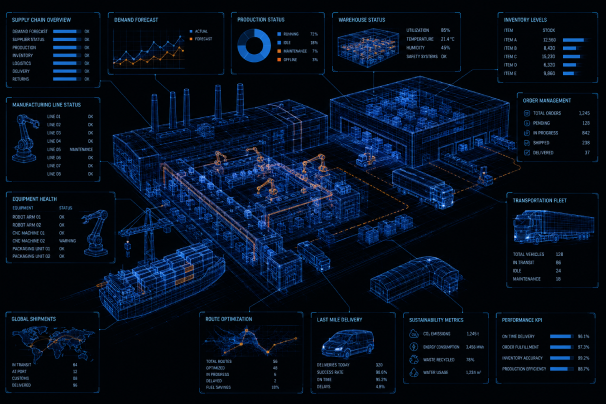
Fleet management optimization is the process of applying data-driven algorithms and AI-powered decision systems to improve how fleets are routed, scheduled, and allocated across complex, high-volume logistics environments.
Modern logistics and transportation systems have grown far more complex than they appear on the surface. Managing a fleet today means coordinating multiple interdependent variables simultaneously from routing logic and fuel economics to delivery windows and resource utilization and doing so at a speed and scale that makes optimization not just useful, but operationally essential.
Traditional fleet management approaches were designed for simpler environments. As fleets grow and operational variables multiply, these systems fail to keep pace with fragmented data sources, manual intervention in decision-making, and an inability to respond to real-time operational changes create compounding inefficiencies that are difficult to diagnose and even harder to fix.
The insights here are grounded in simulation-driven optimization methodologies and advanced algorithmic approaches designed to address high-dimensional logistics challenges where cost, constraints, and real-world variability interact across large, dynamic fleet environments.
Why Traditional Fleet Management Approaches Break at Scale
The core limitation of conventional fleet systems is that their decision-making complexity grows exponentially not linearly with fleet size. As routes, vehicles, delivery points, and time constraints multiply, the number of possible configurations becomes too large for static or manual systems to evaluate meaningfully, leading to suboptimal decisions across routing, scheduling, and resource allocation.
In practice, this translates directly to measurable operational drag: inefficient routes that burn excess fuel, vehicles sitting idle while demand surges elsewhere, deliveries running late because no system adjusted dynamically, and cost overruns that accumulate quietly across thousands of daily decisions.
The underlying cause is structural, not incidental. Traditional systems rely on reactive rather than anticipatory logic; they respond to problems after the fact rather than adjusting in advance. Without real-time data integration and adaptive planning models, fleet managers are always operating on yesterday's information in today's operational environment.
Key breakdown points in traditional fleet systems:
- Inability to optimize routes dynamically based on real-time traffic, demand shifts, and delivery constraints
- Increasing operational costs with fleet expansion and growing logistics complexity
- Limited scalability in handling multi-variable constraints such as time windows, vehicle capacity, and regulatory requirements
- Dependency on manual planning and static scheduling models that cannot adapt to changing conditions
This is precisely where fleet management optimization systems introduce a more intelligent, data-driven, and scalable approach one capable of addressing these problems systematically rather than one dispatch at a time.
How Fleet Management Optimization Works
At its core, fleet optimization is a multi-dimensional decision problem. Optimization systems ingest large volumes of real-time and historical data vehicle positions, traffic conditions, delivery demand, fuel prices, capacity constraints and use that information to make dynamic decisions continuously across routing, scheduling, and resource allocation.
What makes this different from basic fleet tracking is the simultaneous evaluation of operational variables. Rather than solving for route first, then schedule, then capacity which introduces compounding error optimization models treat fuel consumption, delivery windows, vehicle load, and demand patterns as interconnected variables that must be balanced together.
Advanced systems integrate AI models and quantum optimization algorithms alongside telematics and data platforms to improve both the speed and accuracy of these decisions, moving from periodic batch planning to near-continuous operational adjustment.
Key working principles behind modern fleet optimization:
- Dynamic routing based on real-time traffic, delivery conditions, and shifting demand patterns
- Data-driven decision-making across multiple operational variables evaluated simultaneously, not sequentially
- Continuous optimization through feedback loops that incorporate outcomes from past decisions into future planning
- Ability to balance competing objectives minimizing cost, maximizing throughput, meeting delivery commitments within a single optimization framework
Modern enterprise-grade systems increasingly rely on AI-driven and simulation-based optimization to handle the combinatorial scale of large fleet operations effectively, a capability that rule-based or human-planned approaches simply cannot match.
Where Fleet Management Optimization Delivers Measurable Impact
The operational impact of fleet optimization becomes most visible where cost, time, and efficiency are directly determined by routing quality, vehicle utilization, and decision-making speed in other words, in most serious logistics environments.
- Reduces fuel consumption by optimizing routes and minimizing unnecessary mileage through continuous route refinement, delivering significant cost savings across large-scale fleet operations where delivery density is high and route efficiency compounds daily.
- Improves delivery timelines by dynamically adjusting routes and schedules in response to real-time variables traffic disruptions, demand spikes, driver availability ensuring commitments are met even as operational conditions shift throughout the day.
- Increases fleet utilization by identifying idle vehicles, balancing load distribution across the fleet, and ensuring optimal vehicle-to-route assignment based on capacity, location, and demand reducing dead mileage and underperforming assets.
- Enhances decision-making speed by enabling automated, real-time optimization across multiple operational variables simultaneously, reducing the latency between changed conditions and updated routing or scheduling responses.
- Minimizes operational disruptions by incorporating predictive maintenance signals into scheduling logic, reducing unplanned downtime, and ensuring consistent fleet performance across high-volume operational periods.
Fleet Management Optimization Use Cases Across Industries
Fleet optimization delivers measurable impact across industries where routing complexity, delivery volume, and multi-variable constraints exceed what static planning can handle. Below are the primary sectors where optimization creates the most direct operational gains.
E-commerce and Last-Mile Delivery
Last-mile delivery is where optimization pressure is most acute. Route density, delivery time windows, customer expectations, and return logistics all interact simultaneously. Fleet optimization systems handle these competing constraints dynamically, reducing last-mile cost per delivery while improving on-time performance in environments where demand fluctuates by the hour.
Logistics and Supply Chain Operations
Large-scale logistics networks involve interdependencies that static planning cannot model effectively. Fleet optimization improves routing across distribution networks, reduces empty backhaul miles, and coordinates inventory movement to align with both supply schedules and demand signals, creating measurable efficiency gains across the entire supply chain.
Ride-Sharing and Mobility Platforms
Dynamic driver allocation and real-time demand-supply balancing are optimization problems at their core. Fleet optimization models match available drivers to active demand efficiently, reduce passenger wait times, and improve overall platform utilization in a continuously shifting operational environment with no fixed routes or schedules.
Energy and Utility Fleets
Field service operations in energy and utility sectors face scheduling complexity driven by geography, regulatory requirements, and maintenance urgency. Optimization systems sequence service routes efficiently, coordinate maintenance scheduling to minimize disruption, and allocate specialized crew resources to the right locations based on real-time operational needs.
Manufacturing and Industrial Fleets
Internal logistics within manufacturing environments, including material movement between production stages, parts delivery, and finished goods transport, benefit directly from optimization. Reduced transit delays, better vehicle utilization within constrained facility layouts, and tighter alignment between production schedules and logistics capacity improve throughput across the operation.
Fleet Management Optimization in Aviation: Aircraft, Crew & Ground Operations
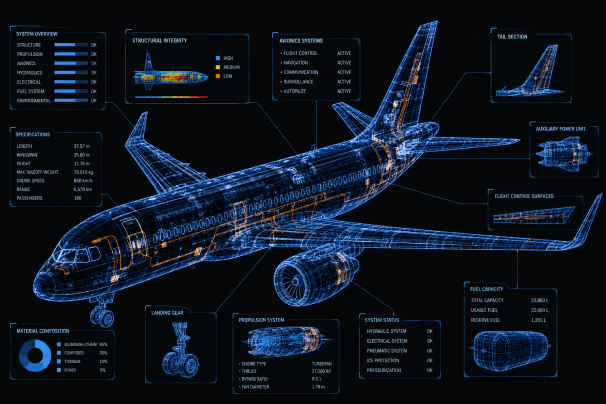
Aviation fleet management operates under some of the most demanding optimization conditions across any industry. Aircraft, crew, gates, ground equipment, and maintenance schedules must be coordinated across hundreds of daily flights under strict regulatory constraints, with minimal tolerance for error and high cost consequences for each hour of unplanned disruption.
Aircraft Utilization and Turnaround Optimization
Fleet optimization systems help carriers maximize aircraft utilization by minimizing turnaround times, reducing ground idle periods, and dynamically reassigning aircraft in response to disruptions such as weather delays or mechanical issues. Rather than relying on pre-built schedules that break down under disruption, optimization models continuously recalculate aircraft-to-route assignments to protect on-time performance across the network while keeping asset utilization as high as operationally possible.
Crew Scheduling and Regulatory Compliance
Advanced optimization models align crew scheduling with aircraft routing to reduce deadhead costs, ensure regulatory compliance on rest requirements, and maintain on-time performance across the network. Crew scheduling involves combinatorial complexity that classical approaches cannot solve at scale, where thousands of flight pairings, duty time limits, base locations, and qualification requirements must be evaluated simultaneously to produce legal, cost-efficient crew plans.
Fuel Efficiency Across Fleet Types and Route Profiles
Fuel accounts for 20 to 30% of total airline operating costs, making it one of the highest-leverage targets for fleet-level optimization. Optimization systems factor aircraft type, payload, route distance, altitude profiles, and wind data into fuel planning decisions, identifying the most efficient aircraft-to-route assignments across a mixed fleet. For carriers operating widebody and narrowbody aircraft on overlapping route networks, this means moving beyond average cost assumptions to route-specific fuel modeling that reduces consumption without compromising schedule reliability or payload commitments.
Fleet Management Optimization vs Traditional Fleet Management
The distinction between optimization-driven and traditional fleet management shows up most clearly across decision-making approach, operational scalability, and the ability to handle multi-variable logistics environments at enterprise scale.
When Should Businesses Invest in Fleet Management Optimization?
Not every fleet operation requires advanced optimization from day one. The investment case depends on operational scale, the number of variables in play, and the degree to which current inefficiencies are generating measurable cost or service quality impacts.
- When fleet operations involve complex routing, high delivery volumes, and multiple simultaneous constraints time windows, vehicle capacity, regulatory requirements that make manual or static planning unreliable and error-prone at scale.
- When fuel costs, delivery delays, and vehicle underutilization are generating significant operational expense that cannot be addressed through process changes alone, and where data-driven routing decisions would directly reduce that cost base.
- When real-time responsiveness is operationally critical because demand, traffic, weather, or service requirements shift during execution in ways that pre-planned routes cannot accommodate without human intervention at every step.
- When improving fleet efficiency has direct downstream impact on customer satisfaction, delivery performance, and competitive positioning making optimization an investment in sustainable operational capability rather than a cost center.
Challenges and Limitations of Fleet Management Optimization
Fleet optimization offers substantial performance benefits, but implementing these systems involves real challenges related to data infrastructure, technology integration, and organizational change management that should be evaluated honestly before committing to deployment.
- High implementation costs and infrastructure requirements can create a meaningful barrier for small and mid-sized fleet operations that lack existing data platforms, telematics systems, or technical resources for system integration.
- Integration with existing ERP, telematics, and legacy dispatch systems can be technically complex and time-consuming, particularly when data formats, APIs, and operational workflows were not designed with optimization in mind.
- Data quality and availability issues directly limit optimization effectiveness algorithms perform only as well as the data they receive, and inconsistent or incomplete operational data degrades both routing quality and decision-making accuracy.
- Organizational resistance to automated, data-driven systems is a recurring implementation challenge, particularly in environments where dispatchers and fleet managers have long relied on experience-based judgment rather than algorithmic recommendations.
- Performance improvements are contingent on proper system configuration and ongoing alignment with actual operational workflows out-of-the-box optimization systems rarely deliver full value without calibration to the specific constraints and objectives of the fleet.
Why Simulation-Driven Fleet Optimization Is the Practical Path Today
Simulation-driven optimization addresses a core gap in fleet management: the distance between theoretical optimization models and real-world execution. By enabling organizations to test multiple routing and operational scenarios computationally before committing to execution, simulation reduces the risk of deploying untested strategies at scale. This approach aligns with broader advances in quantum-inspired optimization for aerospace and defense fields where high-stakes decision environments demand rigorous pre-execution validation.
- Enables evaluation of multiple routing and scheduling scenarios in simulation without real-world risk, improving decision confidence and allowing teams to identify optimal strategies before they affect live operations.
- Improves optimization accuracy by incorporating real-world variables, historical traffic patterns, seasonal demand shifts, vehicle performance data, and operational constraints into the simulation environment rather than relying on idealized assumptions.
- Accelerates experimentation and iteration cycles, reducing the time and cost required to identify high-performing fleet strategies compared to trial-and-error approaches in live operations.
- Bridges the gap between theoretical optimization models and practical logistics execution ensuring that the solutions generated by optimization algorithms are actually implementable within the operational and regulatory constraints of real fleets.
Organizations are increasingly adopting simulation-driven approaches precisely because they provide a lower-risk path to handling complex fleet systems enabling decision-makers to build confidence in optimization outputs before they are deployed at scale in dynamic operational environments.
How BQPhy® Powers Fleet Management Optimization
Fleet management at scale is fundamentally a combinatorial optimization problem. The number of possible route configurations, vehicle assignments, and scheduling permutations across a large fleet grows faster than any classical solver can evaluate within operational time constraints. This is where BQPhy® delivers its strongest advantage.
BQPhy® applies quantum-inspired optimization algorithms to the hardest layers of fleet decision-making: problems with discrete choices, competing constraints, and solution spaces too large for gradient-based or rule-based systems to navigate effectively. Rather than replacing existing telematics or fleet management platforms, BQPhy® integrates with current infrastructure and handles the optimization workload that classical systems cannot scale to.
Solving Vehicle Routing at Combinatorial Scale
The Vehicle Routing Problem (VRP) is one of the most computationally demanding problems in logistics. As fleet size, delivery stops, and time window constraints grow, the number of feasible route combinations expands exponentially. BQPhy®'s quantum-inspired solvers explore this solution space globally, identifying near-optimal route configurations 10 to 20 times faster than conventional heuristics with fewer simulation evaluations required to reach a high-quality solution.
Multi-Objective Scheduling Across Fleet and Crew
Fleet scheduling is rarely a single-objective problem. Cost, utilization, regulatory compliance, driver availability, and delivery commitments must be balanced simultaneously. BQPhy® handles mixed-integer, multi-objective scheduling natively, evaluating trade-offs across all constraints in a single optimization pass rather than solving each dimension sequentially and accepting the compounding error that creates.
Simulation-Driven Validation Before Live Deployment
BQPhy® enables organizations to test routing and scheduling strategies in simulation before committing to live execution. This reduces the risk of deploying untested optimization decisions at scale, allowing fleet operators to validate performance improvements against real operational constraints, including traffic variability, load profiles, and demand shifts, before those decisions affect service levels or cost targets.
Integration with Existing Fleet Infrastructure
BQPhy® is built for hybrid deployment. It integrates with existing HPC, cloud, and GPU infrastructure without requiring a platform replacement. Fleet teams continue using current telematics, ERP, and dispatch systems while BQPhy® handles the optimization layer, feeding improved routing and scheduling outputs back into operational workflows with minimal integration overhead.
Is Fleet Management Optimization a Competitive Advantage?
Fleet management optimization has moved from a specialized capability to a foundational requirement for logistics and transportation operations that need to perform efficiently at scale. The ability to make better routing, scheduling, and resource allocation decisions continuously rather than periodically drives measurable reductions in cost and improvements in delivery performance that compound over time.
The reality is that basic route optimization is now widely implemented across the industry. The organizations building genuine competitive advantage are those deploying advanced systems that leverage AI, simulation, and hybrid optimization frameworks to handle the full multi-variable complexity of modern fleet operations, not just the routing layer.
Organizations that adopt data-driven and simulation-based fleet optimization strategies are better positioned to scale operations efficiently, respond to market changes faster, and maintain consistent service quality creating a durable operational advantage over competitors still relying on static planning approaches.
Ready to Optimize Your Fleet Operations?
Move beyond traditional fleet tracking. Experience simulation-driven, multi-variable optimization that scales with your logistics complexity. Sign Up for a Free Trial at bqpsim.com
Frequently Asked Questions
What is fleet management optimization?
Fleet management optimization uses algorithms, real-time data, and simulation to make the best possible decisions across routing, scheduling, fuel consumption, maintenance timing, and asset utilization. Unlike traditional fleet management, which focuses on monitoring and reporting, optimization actively finds the most efficient configuration across all operational variables simultaneously, balancing cost, time, capacity, and constraints rather than solving each in isolation.
The core challenge is scale. A fleet of 50 vehicles with 200 daily stops generates billions of possible routing combinations. Platforms like BQPhy® explore this full solution space using quantum-inspired algorithms, identifying routes and schedules that reduce fuel spend, minimize idle time, and meet delivery commitments without manual trade-off decisions.
How does route optimization improve fleet efficiency?
Route optimization improves fleet efficiency by dynamically identifying the most effective path for each vehicle based on real-time conditions traffic, delivery windows, vehicle capacity, and demand patterns rather than relying on pre-set routes that cannot adapt. The impact extends well beyond fuel savings.
Better routes reduce driver hours, improve on-time delivery rates, decrease vehicle wear, and allow fleets to handle higher delivery volumes without proportional increases in cost compounding operational efficiency across every route, every day.
What technologies are used in fleet optimization?
Modern fleet optimization draws on a combination of AI and machine learning models, telematics and GPS systems, IoT sensors, real-time traffic data platforms, and advanced optimization algorithms including hybrid and quantum-inspired approaches for high-complexity problems.
These technologies work together to ingest operational data, model constraints and variables, generate optimized decisions, and feed results back into the system for continuous improvement. The integration of simulation environments allows organizations to evaluate scenarios before deployment, reducing implementation risk.
How does AI improve fleet management?
AI improves fleet management by enabling systems to process large volumes of operational data and make optimization decisions far faster and more accurately than manual processes allow. Machine learning models identify patterns in historical data route performance, fuel consumption, delivery outcomes and use those patterns to improve future routing and scheduling decisions continuously.
The result is a system that becomes more effective over time, adapts to changing conditions automatically, and reduces the cognitive load on human dispatchers while handling a level of operational complexity that no manual process can match.
Is fleet management optimization suitable for small businesses?
Fleet management optimization is most impactful for operations where routing complexity, delivery volume, and multi-variable constraints exceed what manual or static planning can handle effectively which typically means mid-to-large fleets. However, the threshold is lower than it once was.
Scalable optimization platforms now offer modular implementations that allow smaller operations to start with focused capabilities, route optimization or utilization tracking and expand as complexity grows. The key question is whether current inefficiencies in fuel, time, or utilization are generating costs that outweigh the investment in optimization tooling.
.png)
.png)



.svg)
.svg)
.svg)
.svg)