



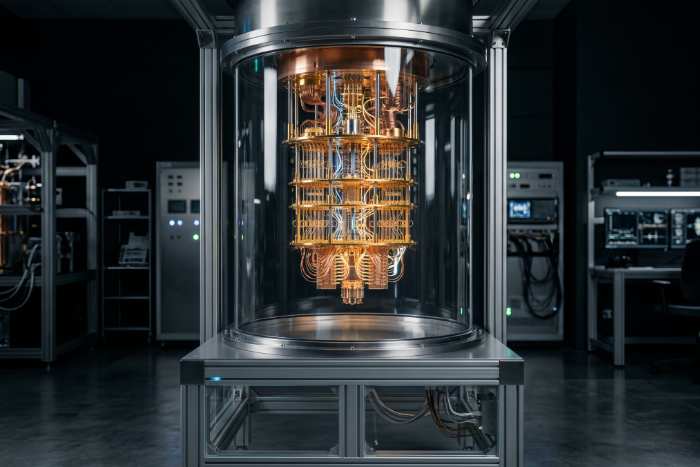

India's quantum computing sector is no longer just a research story it's becoming a commercial reality. With over $730 million committed through the National Quantum Mission, a growing network of specialized startups, and academic institutions like IISc and IIT Madras driving foundational research, India is positioning itself as a serious contender in the global quantum race.
The market tells the same story: India's quantum computing market was valued at approximately $80 million in 2024 and is projected to reach $240–$305 million by 2030, growing at 20–25% annually. Eight startups have already been formally selected under the National Mission, with a target of at least 10 globally competitive companies each exceeding $100 million in revenue by 2035.
But India's quantum ecosystem isn't monolithic. It spans four distinct layers:
- Hardware building quantum processors and qubit systems
- Software & simulation quantum-inspired algorithms running on today's HPC and GPU infrastructure
- Cryptography quantum-safe communication and encryption
- Education & tooling developer platforms and talent pipelines
Choosing the right quantum computing company depends on where your industry sits within this landscape and what problems you need to solve today versus in five years.
This guide breaks down India's top quantum computing companies in 2026, what each does best, where they fall short, and how to evaluate which fits your organization.
Top Quantum Computing Companies in India (2026 Edition)
1. BQP(formerly BosonQ Psi) - Quantum-Inspired Engineering Simulation
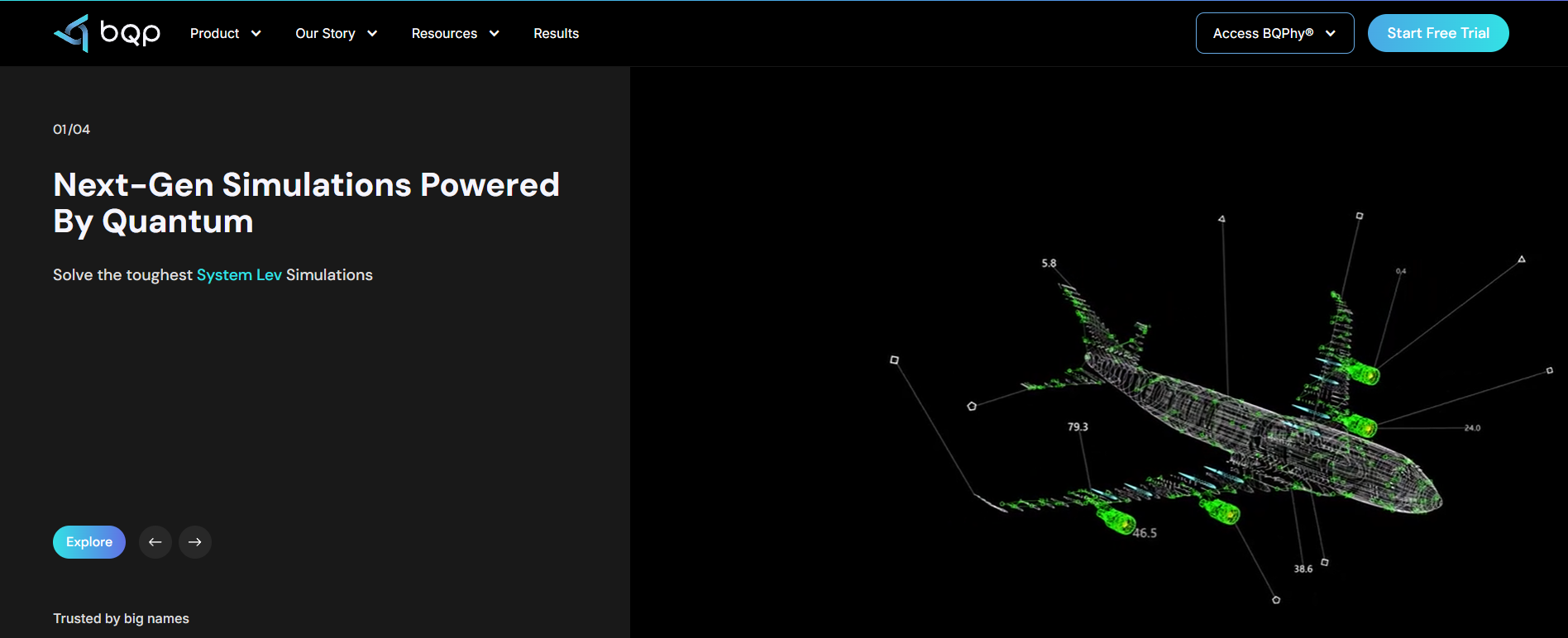
BQP is India's first quantum-inspired engineering simulation platform, purpose-built for aerospace, automotive, defense, and energy industries. Unlike hardware-focused quantum companies, BQP runs quantum-inspired algorithms on existing HPC and GPU infrastructure delivering measurable performance gains today, without waiting for fault-tolerant quantum computers.
Its platform handles complex design optimization in engineering, structural analysis, trajectory planning, and predictive maintenance giving engineering teams up to 20× faster simulation cycles with physics-informed accuracy. For industries working on aerospace optimization techniques or quantum optimization problems, BQP offers a practical, deployable path forward right now.
- Quantum-inspired algorithms optimized for HPC and GPU systems
- Up to 20× faster optimization for complex engineering problems
- Physics-informed simulations combining speed with real-world accuracy
- Industry-specific templates for aerospace, defense, and automotive workflows
- Multi-objective optimization balancing cost, performance, and safety
- Continuous learning loops that improve with live operational data
Pros:
- Delivers real value today no quantum hardware dependency
- Proven deployments in production engineering environments
- Scales across large systems, fleets, and industrial networks
- Strong fit for quantum inspired optimization aerospace defense applications
Limitations:
- Not a general-purpose quantum computing platform
- Requires HPC/GPU infrastructure for full performance benefit
Best For: Aerospace and defense firms, automotive manufacturers, and energy companies needing fast, accurate simulation and optimization on today's hardware.
2. QpiAI Tech India's Quantum Hardware Pioneer
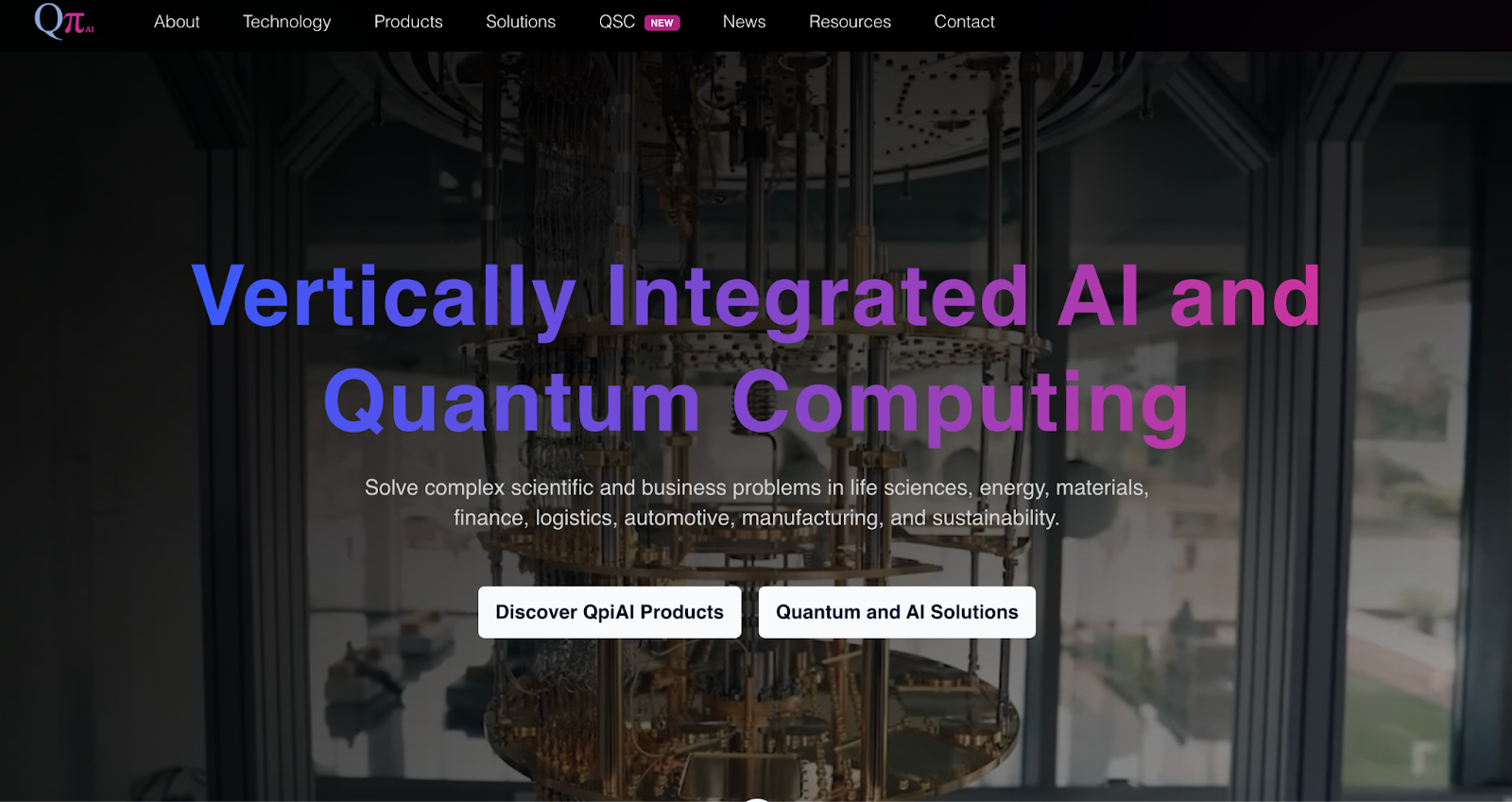
QpiAI Tech is building India's first full-stack superconducting quantum computer. The company has developed a 25-qubit superconducting processor, making it one of the most advanced hardware-focused quantum startups in the country. It takes a full-stack approach covering qubit control, software layers, and application development and integrates AI with quantum modeling to target materials science and pharmaceutical research.
QpiAI reduces India's dependence on foreign quantum cloud infrastructure by developing indigenous hardware capabilities. Its platform follows the path pioneered by IBM and Google, adapted for Indian research and commercial priorities.
Key Features:
- 25-qubit superconducting quantum processor India's most advanced
- Full-stack quantum computing platform from hardware to application
- Quantum-AI convergence for practical research applications
- Indigenous capability reducing reliance on foreign quantum systems
- Targeted applications in drug discovery and materials design
Pros:
- Genuine quantum hardware development not simulation-based
- Strong alignment with national quantum research goals
- Addresses pharma and materials science at the computation layer
Limitations:
- Quantum hardware remains pre-commercial for most enterprise use cases
- Limited production deployments outside research environments
- High infrastructure complexity for non-research organizations
Best For: Research institutions, pharmaceutical companies, and materials science organizations exploring genuine quantum hardware capabilities.
3. QNu Labs - Quantum Security Leader

QNu Labs develops quantum-safe cryptography and secure communication systems for defense, telecom, and data security. Their core products Quantum Key Distribution (QKD) systems and Quantum Random Number Generators (QRNG) are already deployed in critical infrastructure across defense networks, banking systems, and government agencies.
As quantum computers advance, traditional encryption becomes increasingly vulnerable. QNu Labs addresses both the present and future threat landscape protecting sensitive data today while guarding against "harvest now, decrypt later" attacks that adversaries may execute once quantum computing scales.
Key Features:
- Deployed QKD systems providing provably secure encryption keys
- QRNG products generating truly random numbers for cryptographic use
- Active presence across defense, telecom, and government infrastructure
- Future-proof architecture against quantum-enabled decryption threats
- Ready-to-deploy solutions not roadmap-stage promises
Pros:
- Only Indian quantum company with proven critical infrastructure deployments
- Addresses both immediate and long-horizon security threats
- Strong government and defense sector credibility
Limitations:
- Narrow focus cryptography only, not applicable to optimization or simulation
- Enterprise adoption requires significant security infrastructure alignment
- Less relevant for industries outside defense, finance, or government
Best For: Defense organizations, banks, and government agencies requiring quantum-safe communication and data security.
4. Qulabs.ai Quantum Software and Education
Qulabs.ai, based in Noida, is one of India's earliest quantum software startups. The company builds quantum simulators that allow developers to test and refine quantum algorithms on classical computers before committing to real quantum hardware. Alongside its developer tools, Qulabs.ai runs educational platforms that are actively building India's quantum talent pipeline.
Its work addresses a structural gap in India's quantum ecosystem: the shortage of trained quantum engineers and developers. By making quantum programming accessible, Qulabs.ai supports both near-term skill development and long-term ecosystem growth.
Key Features:
- Quantum simulators for fast algorithm testing on classical hardware
- Developer-friendly tools simplifying quantum programming workflows
- Educational platforms training students and professionals
- Focus on quantum algorithm development and testing
- Accessible entry point for organizations new to quantum computing
Pros:
- Lowers the barrier to quantum learning and experimentation
- Fills a critical talent development gap in India's ecosystem
- Cost-effective way to explore quantum algorithms without hardware
Limitations:
- Not a production-grade quantum computing platform
- Limited applicability for enterprise-scale optimization or cryptography
- Primarily educational commercial deployment capabilities are early stage
Best For: Educational institutions, students, and developers building foundational quantum computing skills
5. Quanfluence Cloud Quantum Computing

Quanfluence, based in Hyderabad, provides cloud-based quantum computing access for enterprise research and experimentation. Its platform removes the need for costly quantum hardware investment by enabling organizations to run quantum algorithms and hybrid quantum-classical workloads through the cloud on both real quantum processors and simulators.
The company focuses on scalable hybrid frameworks that let enterprises explore quantum use cases, test applications, and build internal quantum capabilities without setting up physical infrastructure.
Key Features:
- Cloud access to quantum resources no hardware investment required
- Hybrid quantum-classical computing frameworks for versatile workloads
- Scalable platform for enterprise experimentation and learning
- Supports both real quantum processors and simulation environments
- Reduces adoption barriers for organizations beginning quantum exploration
Pros:
- Fast path to quantum experimentation without infrastructure overhead
- Flexible access model suited for research and pilot programs
- Hybrid approach bridges classical and quantum workflows effectively
Limitations:
- Cloud dependency introduces latency constraints for time-sensitive applications
- Limited production-scale deployments compared to established players
- Less suited for organizations requiring on-premise quantum solutions
Best For: Enterprises exploring quantum potential, research teams needing flexible access, and organizations building quantum capabilities without infrastructure investment.
6. QRDLab Quantum Research and Development

QRDLab focuses on translating quantum computing theory into practical algorithms for real business problems including quantum optimization algorithms, quantum machine learning models, and quantum-inspired classical algorithms. The company operates at the intersection of academia and industry, converting research outputs into deployable solutions.
QRDLab's collaboration model helps companies identify where quantum solutions deliver genuine advantages over classical methods and guides implementation across optimization, pattern recognition, and data analysis applications.
Key Features:
- Quantum algorithm development for optimization and machine learning
- Strong academia-industry collaboration model
- Quantum-inspired classical algorithms for near-term business value
- Expertise in pattern recognition and data analysis applications
- Quantum consulting to identify high-value use cases
Pros:
- Bridges theory and practical deployment effectively
- Useful for organizations unsure where quantum applies to their operations
- Quantum ML capabilities applicable across multiple industries
Limitations:
- Research-oriented longer timelines to production deployment
- Not suited for organizations needing turnkey quantum products
- Commercial scale and track record still developing
Best For: Companies seeking quantum algorithm consulting and organizations exploring quantum machine learning for data analysis and optimization.
How to Choose the Right Quantum Computing Company
Not every quantum company solves the same problem. Here's how to evaluate fit before committing:
Hardware vs. Software vs. Quantum-Inspired: If you need genuine qubit-based computation for research, look at QpiAI. If you need quantum-safe security, QNu Labs is purpose-built for that. If you need to solve complex engineering or quantum optimization problems today on existing infrastructure, a quantum-inspired platform like BQP delivers immediate ROI without hardware dependency.
Industry Fit
- Aerospace, defense, automotive, energy → BQP
- Research, pharma, materials science → QpiAI
- Defense, banking, government security → QNu Labs
- Education, developer tools → Qulabs.ai
- Enterprise quantum exploration → Quanfluence
- Algorithm consulting, quantum ML → QRDLab
Budget and Maturity Level Early-stage quantum exploration on a limited budget fits cloud platforms like Quanfluence or educational tools from Qulabs.ai. Production-scale engineering operations with defined ROI requirements are better served by BQP's quantum-inspired simulation platform, which is already in active commercial deployment.
Use-Case Alignment Ask one question: do you need results now or are you investing in quantum readiness for 3–5 years out? If now quantum-inspired is the practical answer. If building for the future hardware and software platforms are the right foundation.
Quantum Computing Use Cases in India
Engineering Simulation and Optimization
Aerospace, automotive, and defense industries are using quantum-inspired platforms to run faster, more accurate simulations for design optimization in engineering, reducing development cycles and cutting reliance on physical prototypes. Learn more with our quantum optimization algorithms guide.
Cryptography and Cybersecurity
Quantum Key Distribution and quantum-safe encryption are protecting critical communications in defense and banking networks both against current threats and future quantum-enabled decryption attacks.
Drug Discovery and Materials Science
Quantum hardware platforms are being used to model molecular interactions and accelerate materials design use cases where quantum's computational advantage over classical methods is most theoretically significant.
Finance and Risk Modeling
Portfolio optimization, risk simulation, and fraud detection are emerging quantum computing applications in financial services areas where quantum optimization can evaluate more variables simultaneously than classical solvers.
What Is the Current State of Quantum Computing in India?
India's quantum ecosystem is advancing across research, policy, and commercial deployment simultaneously.
Government Support
- National Mission on Quantum Technologies and Applications (NM-QTA) INR 6,000 crore ($730 million) over eight years
- Eight startups formally selected to drive core quantum technologies
- Target: 10 globally competitive quantum companies with $100M+ revenue by 2035
Academic Leadership
- IISc Bengaluru superconducting qubit development
- IIT Madras quantum algorithms and applications research
- DRDO defense-focused quantum initiatives
Private Sector Momentum
- BQP delivering quantum-inspired simulation for engineering industries today
- QpiAI advancing indigenous quantum hardware development
- QNu Labs deploying quantum cryptography in critical infrastructure
India's goal is clear: become a global quantum technology leader by 2030, backed by sustained investment, a growing talent pipeline, and structured academia-industry collaboration.
Challenges in Advancing India's Quantum Industry
Despite strong momentum, several structural challenges remain and matter directly to businesses evaluating quantum adoption:
Hardware Readiness
India has limited domestic quantum hardware facilities, creating dependency on imported equipment and components. This slows hardware-layer development and raises costs for indigenous quantum computer projects.
Why it matters: Organizations relying on quantum hardware for production use face longer timelines and supply chain uncertainty.
Talent Gap
Specialized skills spanning quantum mechanics, algorithm development, and hardware engineering are in short supply. Qulabs.ai and university programs are addressing this but the gap remains significant.
Why it matters: Internal quantum capability is difficult and expensive to build without a ready talent pool.
Commercialization Speed
Translating lab-stage quantum research into production-ready products is slow. It requires entrepreneurial execution and patient capital both of which remain limited in India's quantum ecosystem.
Why it matters: Businesses need deployable solutions, not research roadmaps.
Funding Cycles
Quantum R&D operates on long return timelines. Venture capital, which favors quicker exits, is often misaligned with the investment horizon quantum development requires.
Standardization
Incompatible tools, protocols, and platforms across quantum companies slow integration and limit interoperability making vendor selection a longer-term commitment than it might appear.
How BQP Shapes India's Quantum Future
While India's broader quantum ecosystem matures, BQP is delivering quantum-inspired value with a clear QIO strategy in production engineering environments today. Its advantage is structural: by running quantum inspired optimization on existing HPC and GPU systems, BQP bypasses the hardware dependency that limits most quantum companies.
- Quantum-Inspired Advantage Operates on today's HPC and GPU infrastructure, no quantum hardware required. Organizations deploying quantum optimization software through BQP get optimization performance well beyond classical solvers without waiting for fault-tolerant quantum computers.
- Real-World Deployment Active production deployments in aerospace, defense, automotive, and energy solving live engineering challenges, not pilot programs.
- QIO value in action: Up to 20× faster optimization on complex engineering problems, compressing design cycles and reducing time-to-market across simulation-heavy workflows.
- Industry Focus Purpose-built for engineering industries with domain-specific templates, physics-informed simulation, and multi-objective optimization across cost, performance, and safety constraints.
- Hybrid HPC Compatibility Scales across large systems, fleets, and industrial networks integrating with existing engineering infrastructure without requiring platform overhaul.
Conclusion
India's quantum computing landscape is shifting from research investment to real-world adoption. The National Quantum Mission provides funding and direction. Academic institutions are building foundational capabilities. Startups are translating concepts into commercial products and some, like BQP, are already in production deployment.
The companies profiled here represent distinct layers of India's quantum stack hardware, simulation, cryptography, software, and education. The right choice depends on your industry, your timeline, and the problems you need to solve.
What's clear is that the window between quantum as a research concept and quantum as a competitive business tool is closing faster than most organizations expect. India's trajectory sustained investment, growing talent, and strong commercial momentum is actively shaping the future of aerospace with quantum simulation and positioning India as a genuine global quantum leader by the end of this decade.
Frequently Asked Questions
What are the top quantum computing companies in India?
India's leading quantum companies in 2026 include BQP (quantum-inspired simulation), QpiAI Tech (quantum hardware), QNu Labs (quantum cryptography), Qulabs.ai (quantum software and education), Quanfluence (cloud quantum access), and QRDLab (quantum algorithms and ML). Each serves a distinct segment of the quantum ecosystem.
How do quantum startups differ from traditional tech companies?
Quantum startups address fundamentally different computational problems optimization, cryptography, and simulation at scales classical computers handle inefficiently. Unlike traditional tech firms, they operate at the intersection of physics, mathematics, and engineering, with longer R&D timelines and more specialized use cases.
Which industries benefit most from quantum computing in India?
Aerospace, defense, automotive, and energy sectors benefit most from quantum-inspired simulation and optimization today. Banking and government benefit from quantum-safe cryptography. Pharma and materials science stand to benefit most from hardware-based quantum computing as it matures.
Is quantum computing commercially available in India?
Quantum-inspired computing is commercially available and in active production use today BQP being the clearest example. Hardware-based quantum computing remains primarily in research and early commercial stages. Quantum cryptography products from QNu Labs are deployed in critical infrastructure.
How do I choose the right quantum computing company?
Start with your use case. If you need engineering simulation and optimization today, evaluate quantum-inspired platforms like BQP. If you need data security, look at QNu Labs. If you're exploring quantum for research or future readiness, QpiAI or Quanfluence are more relevant. Match the company's maturity and focus to your timeline and budget.
What is the difference between quantum and quantum-inspired computing?
Quantum computing uses qubits and quantum mechanical phenomena superposition and entanglement to process information in fundamentally new ways. Quantum-inspired computing applies algorithms derived from quantum principles to classical HPC and GPU hardware, delivering significant performance improvements over standard classical methods without requiring quantum hardware. BQP operates in this space making the performance gains accessible today.
.png)
.png)



.svg)
.svg)
.svg)
.svg)