



Quantum computing uses the laws of quantum physics to solve problems that traditional computers cannot handle efficiently. It is a different way of processing information.
This article is for enterprise buyers, simulation engineers, and technical leaders. You will walk away with a practical, structured explanation of the field.
We cover how quantum computing works, where it is being applied today, its current limitations, and what it means for engineering-intensive industries like aerospace and defense.
BQP is featured in this article as a company offering quantum-inspired computing solutions. This mention is disclosed for transparency.
What is quantum computing?
Quantum computing uses quantum bits, called qubits, instead of classical bits. It processes information in ways classical systems cannot.
Classical computers process one state at a time. Quantum computers can evaluate many states simultaneously.
Quantum computing is not a replacement for classical computers. It is a specialized tool suited to specific categories of hard problems.
The domains where it holds the most promise include simulation, optimization, cryptography, and materials research.
How does classical computing compare to quantum computing?
This comparison matters for readers evaluating quantum computing's practical relevance to their current infrastructure and engineering workflows.
How does quantum computing work?
Quantum computers rely on three principles of quantum physics: superposition, entanglement, and interference. Each one shapes how qubits process information.
1. Qubits: the basic unit of quantum information
A qubit is the basic unit of quantum information. Unlike a classical bit that is either 0 or 1, a qubit can exist in both states at the same time until measured.
At measurement, superposition collapses to a definite state. Probabilities depend on how the qubit was manipulated before that point.
2. Superposition
Think of a spinning coin. While it spins, it has neither heads nor tails.
A qubit in superposition behaves like that wave of possibilities. It represents multiple states at once.
3. Entanglement
Two qubits can be linked so that the state of one instantly determines the state of the other, regardless of distance. This property is the source of quantum computing's exponential scaling potential.
4. Interference
Quantum algorithms use wave-like behavior to cancel wrong answers and amplify correct ones. This makes final measurement results more accurate and computationally efficient.
What are the key components of the quantum computing stack?
Quantum computing is not a single machine. It spans hardware, software, infrastructure, cloud platforms, and end-user applications.
Hardware and components
Quantum hardware consists of physical qubits and specialized systems required to create, control, and measure quantum states reliably.
- Quantum processors: Superconducting, trapped-ion, photonic, and neutral atom architectures represent the leading approaches to building scalable quantum systems.
- Cryogenic infrastructure: Many quantum processors require temperatures near absolute zero to preserve qubit stability and minimize environmental interference.
- Control electronics: Specialized electronics generate precise signals that manipulate qubits, execute gates, and coordinate measurements across the system.
- Component supply chain: Precision manufacturers provide vacuum systems, photonic components, materials, sensors, and testing infrastructure required for quantum hardware development.
Software and infrastructure
Software connects quantum hardware to practical business applications through algorithms, orchestration, and hybrid computing workflows.
- Quantum algorithms: Purpose-built algorithms target optimization, simulation, cryptography, and other computationally intensive workloads. See this guide on quantum inspired algorithms for more detail.
- Error correction and compilation: Software layers improve reliability, optimize circuit execution, and mitigate hardware limitations during computation.
- Cloud access platforms: Organizations access quantum systems through cloud services such as IBM Quantum, Azure Quantum, and Amazon Braket. A comparison of quantum software platforms covers current options.
- Hybrid HPC infrastructure: Most practical deployments combine classical computing resources with quantum or quantum-inspired workloads to maximize performance.
Who is using quantum computing today?
Quantum computing adoption is being driven by organizations seeking solutions for computationally difficult business and engineering problems.
- Finance: Portfolio optimization, risk modeling, and pricing simulations. Applications in quantum computing data analysis are expanding.
- Healthcare: Molecular modeling, protein analysis, and drug discovery workflows.
- Logistics: Routing, scheduling, and supply chain optimization. Read more about airline route optimization as one example.
- Engineering: Multi-physics simulation, design exploration, and NP-hard optimization problems across sectors like defense and aerospace.
What are the core applications of quantum computing?
Quantum computing's value comes from specific problem types where it outperforms classical systems. Three categories stand out.
Quantum computing for molecular simulation and drug discovery
Quantum computers naturally simulate quantum systems. That makes them well-suited for modeling molecular structures, chemical reactions, and protein behavior relevant to pharmaceutical R&D.
Quantum computing for optimization?
Quantum approaches can evaluate far more variable combinations at once. This is useful for supply chain routing, financial portfolio balancing, and large-scale engineering design trade-offs.
A detailed breakdown of quantum optimization problems explains the math behind these gains. The quantum optimization algorithms guide covers specific methods in practice.
Quantum computing for cryptography and security
Quantum computers threaten current encryption methods like RSA by factoring large numbers exponentially faster. They also enable new quantum-secure communication protocols.
Q-Day refers to the point when quantum machines can break today's standard encryption. That timeline remains uncertain but actively tracked.
What are quantum computing use cases across industries?
While quantum computing is still maturing, several industries are already exploring or piloting quantum and quantum-inspired approaches for specific high-value problems.
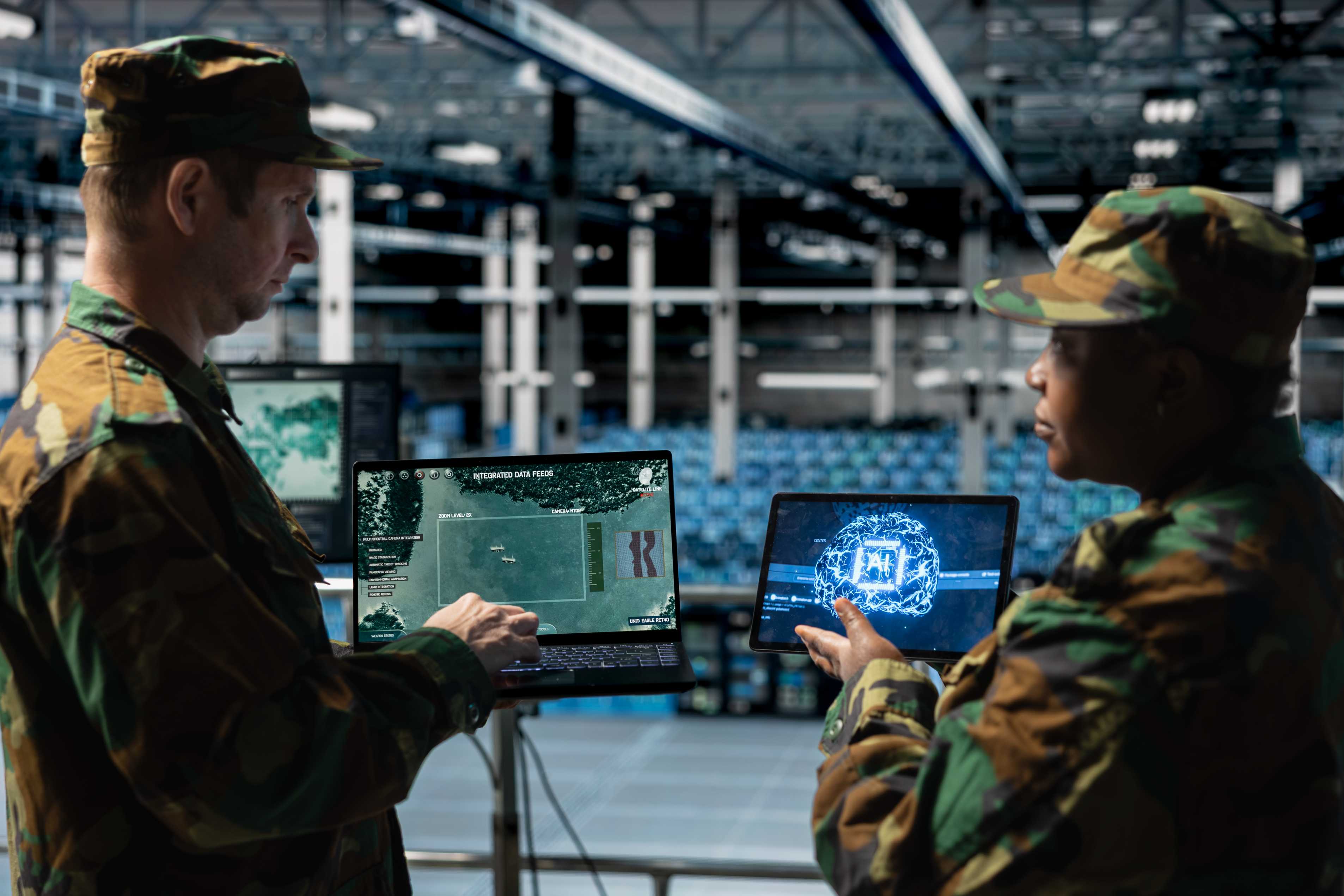
- Aerospace and defense: Optimizing complex mission planning, structural design, and materials testing scenarios that involve enormous variable spaces beyond classical solver limits. More on quantum technology in defense and aerospace simulation software explores current adoption. Applications like ballistic missile detection and quantum air traffic control show sector-specific potential.
- Semiconductors: Accelerating design space exploration and process simulation for chip fabrication, where even small efficiency gains have massive downstream value.
- Energy: Modeling molecular behavior to design better batteries, optimize grid distribution, and accelerate research into next-generation energy materials.
- Pharmaceuticals: Simulating molecular interactions and protein folding to compress drug discovery timelines and reduce expensive wet-lab iterations.
- Finance: Solving large-scale portfolio optimization, risk modeling, and fraud detection problems that involve too many simultaneous variables for classical methods.
- Advanced manufacturing: Running multi-physics simulations and design optimization workflows faster to reduce product development cycles and engineering risk.
What are the current challenges in quantum computing?
Despite its promise, quantum computing faces real engineering and physics obstacles. These will take years to fully resolve at commercial scale.
Decoherence is the primary enemy. Qubits are extremely sensitive to heat, vibration, and electromagnetic noise. Even small environmental disturbances destroy quantum information before calculations complete.
The cooling challenge compounds this. Superconducting systems require temperatures near absolute zero. That demands expensive, large-footprint dilution refrigerators not suited to everyday deployment environments.
Commercially useful fault-tolerant quantum computing likely requires millions of stable qubits. Today's best systems operate in the hundreds to low thousands.
Error correction in quantum systems is far harder than in classical systems. Measuring a qubit destroys its quantum state, making traditional correction methods impossible.
The field remains in the NISQ era: Noisy Intermediate-Scale Quantum. Practical fault-tolerant systems are still years away.
Who are the major players in quantum computing?
The race toward quantum practicality spans large technology companies, cloud vendors, and specialized startups taking different architectural approaches. A full list of quantum computing companies covers the broader field. For regional perspective, see this overview of quantum computing companies in India.
When is quantum computing superior to classical computing?
Quantum computers are not universally faster. They offer advantages only for specific problem structures involving massive combinatorial search or quantum simulation.
Quantum computers will not replace web browsing, gaming, word processing, or data storage. The vast majority of everyday business computing stays classical.
How is BQP helping companies adopt quantum-inspired computing today?
Most organizations cannot afford to wait for fault-tolerant quantum computers before tackling their most complex engineering challenges. BQP bridges that gap by delivering quantum-inspired computational performance on today's high-performance computing (HPC) and GPU infrastructure, enabling organizations to realize practical benefits without investing in quantum hardware.
At the center of this approach is BQPhy®, BQP's flagship platform. By combining quantum-inspired algorithms, physics-based simulation, and hybrid computing architectures, BQPhy® helps engineering teams solve large-scale optimization and simulation problems across industries such as aerospace, defense, space systems, semiconductors, energy, and advanced manufacturing.
Key capabilities of BQPhy® include:
- Engineering Design Optimization: Explore and evaluate vast design spaces to identify optimal solutions faster.
- Structural and Thermal Analysis: Simulate complex physical behaviors with high accuracy across multiple operating conditions.
- Digital Twin Enablement: Support the development and operation of digital twins for real-time monitoring and performance prediction.
- Design Space Exploration: Analyze thousands of design alternatives at scale, beyond the practical limits of many traditional solvers.
- Multi-Physics Simulation: Integrate multiple physical domains into a unified simulation workflow for more realistic results.
- Hybrid Computing Workflows: Leverage existing HPC and GPU infrastructure without requiring specialized quantum hardware.
By connecting the capabilities of classical computing with the principles that power quantum computing, BQP enables organizations to achieve measurable performance improvements today while preparing for future quantum advancements.
Frequently asked questions about quantum computing
What is quantum computing in simple terms?
Quantum computing uses the behavior of quantum particles to process information in ways that classical computers cannot easily replicate, especially for complex optimization and simulation.
Instead of binary bits that are strictly 0 or 1, quantum computers use qubits that can exist in multiple states simultaneously. This allows them to explore many possible solutions at once before collapsing to a result.
How is quantum computing different from classical computing?
Classical computers process information sequentially using binary logic. Quantum computers use superposition, entanglement, and interference to evaluate many possibilities simultaneously for the right problem type.
The difference is not raw speed. It is the structure of the computation. Quantum advantage only appears for specific problem classes, such as molecular simulation, large-scale optimization, and cryptographic factoring.
What are the main applications of quantum computing?
Quantum computing shows the most near-term promise in drug discovery, materials research, cryptography, financial optimization, and engineering simulation. These are areas where classical solvers hit practical limits.
For engineering-intensive industries like aerospace, defense, and semiconductors, quantum-inspired approaches that apply quantum mathematical principles to today's HPC infrastructure are already delivering measurable performance gains without waiting for quantum hardware at scale.
What is the current state of quantum computing in 2026?
Today's quantum systems are classified as NISQ devices: Noisy Intermediate-Scale Quantum. They have hundreds to low thousands of qubits but high error rates and limited fault tolerance.
Large-scale, commercially useful fault-tolerant quantum computing is still years away. Organizations that need quantum-level performance today are turning to quantum-inspired software platforms that run on existing HPC and GPU infrastructure, like BQP's BQPhy®.
Why should engineering teams pay attention to quantum-inspired computing now?
Fault-tolerant quantum hardware remains years away. But the optimization and simulation problems facing aerospace, defense, and semiconductor teams exist today.
Quantum-inspired platforms like BQPhy® apply quantum mathematical principles on current HPC and GPU systems. This lets engineering teams capture performance gains now, without waiting for quantum hardware to mature or requiring new infrastructure investments.
.png)
.png)


.svg)
.svg)
.svg)
.svg)